
In the silent, skeletal landscapes of the future, a strand of hope remains, a fragile thread woven by the solitary traveler. The world of Death Stranding, a place where the very earth and sky were adversaries as much as companions, offered a unique cadence—a rhythm found not in the drumbeat of war, but in the measured footsteps of a porter navigating treacherous terrain. For those who listened, it was a symphony of solitude, a meditative journey where planning a route over a mountain pass became a profound act of connection. Yet, the winds of change blow with a crimson hue. Death Stranding 2 emerges from the void, its new whisper, "Should we have connected?", hanging in the air like a dissonant chord, suggesting that the very act of rebuilding may have sown the seeds of a darker harvest. The question now is not merely about survival, but about the soul of the journey itself: can the poetic, deliberate heart of deliveries coexist with the rising tide of inevitable conflict?
The Allure of the Solitary Path: Why Deliveries Must Endure
The original pilgrimage was a testament to patience. Players became cartographers of the soul, mapping not just physical geography but internal resolve. The environment was a living puzzle—a labyrinth of rain-slicked rock and spectral forests where BTs drifted like malevolent seaweed in a deep-sea current. Ascending a cliff was not a simple button press; it was a ballet of balance, a test of will where the weight on Sam's back was both burden and purpose. The tools left by other players—a ladder here, a climbing anchor there—were not just utilities; they were whispers of camaraderie in the vast silence, like finding a message in a bottle on a deserted shore.
This gameplay loop, often misunderstood, was a form of digital zen. It was the video game equivalent of a master calligrapher practicing a single, perfect stroke—the beauty lay not in the flourish, but in the controlled, intentional pressure of the brush. Plotting a delivery through a timefall storm, managing cargo integrity, and carefully navigating past BTs created a unique tension that was more cerebral than visceral. To remove this entirely would be to erase the game's foundational fingerprint. The deliveries were the quiet verses between the explosive choruses, the spaces where the haunting melodies of Low Roar could truly breathe and the stark beauty of the ruined world could be absorbed.
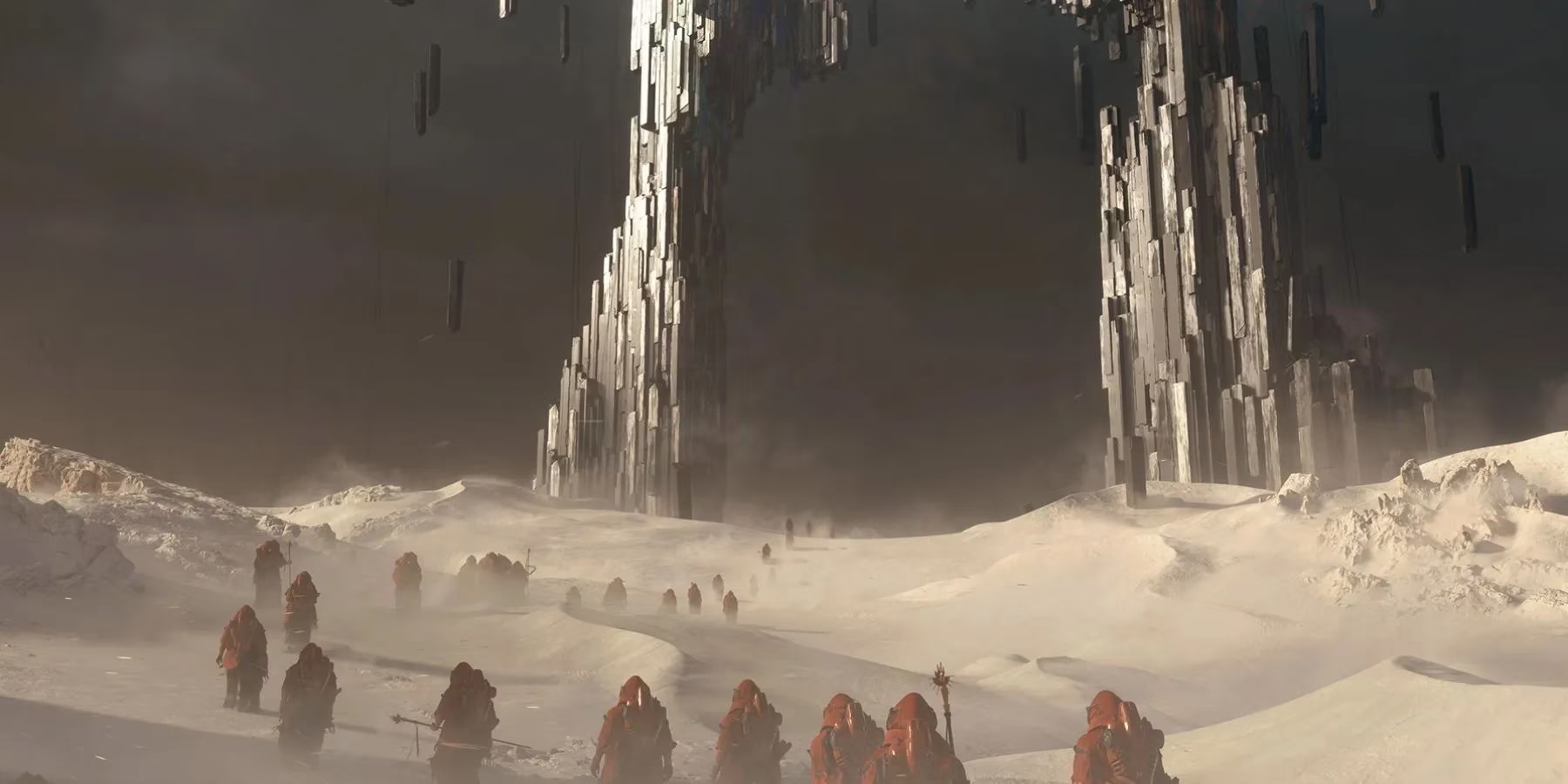
The Gathering Storm: Forces Compelling a Shift to Combat
Yet, the horizon darkens. The sequel's narrative trajectory, painted in shades of warning red, points unequivocally toward confrontation.
-
A Fractured Legacy: The tagline "Should we have connected?" implies a deep philosophical reckoning. If the UCA's creation led to new factions, power struggles, and amplified human conflict, then the act of simple delivery becomes politically charged, even dangerous. Strengthening connections might now be seen as taking a side.
-
The Antagonist's Choir: Higgs returns, not as a lone madman, but as the conductor of his own malignant orchestra. His faction, potentially backed by a robotic army, represents an organized, persistent threat. Such an enemy cannot always be walked around; they must be confronted. This suggests set-piece encounters that could evolve from the original's sporadic skirmishes into full-scale tactical engagements.
-
The Pulse of a Wider Audience: Let's be pragmatic. The serene, delivery-focused core was a barrier for many. For streamers and players seeking constant stimulus, long stretches of traversal could feel like watching a single cloud reform itself for hours—hypnotic to some, unbearably slow to others. Injecting more consistent, dynamic combat sequences is a logical step to broaden the game's appeal and ensure it thrives in the modern social gaming ecosystem.
The Ideal Symphony: Weaving Combat and Cargo
The genius of Death Stranding 2 will not lie in choosing one path over the other, but in braiding them together into a new, cohesive experience. The hope is for a dynamic equilibrium.
| Gameplay Pillar | Role in Death Stranding | Potential Evolution in Death Stranding 2 |
|---|---|---|
| Deliveries & Exploration | Primary gameplay loop, source of zen and connection. | Strategic respite, world-building, and narrative-driven critical missions. |
| Stealth & BT Encounters | Tense, atmospheric avoidance sequences. | More dynamic, possibly with tools for active BT repulsion or evasion. |
| Combat vs. Human Factions | Sporadic, often avoidable skirmishes with MULEs. | Escalated, story-critical confrontations with Higgs's faction, featuring advanced tech. |
| Infrastructure Building | Asynchronous multiplayer aid for traversal. | Could include defensive structures or combat-support systems in hostile zones. |
Imagine missions where Sam must deliver vital supplies through a territory controlled by Higgs's forces, making the delivery itself a high-stakes infiltration mission. The cargo could be weaponry for a besieged outpost, turning the final leg of the journey into a defensive combat scenario. The vast, new desert and coastal environments shouldn't just be backdrops for firefights; they should be spaces to traverse with purpose, where a long, quiet journey makes the sudden eruption of violence all the more impactful—like the sudden, shocking crack of ice over a still, frozen lake.
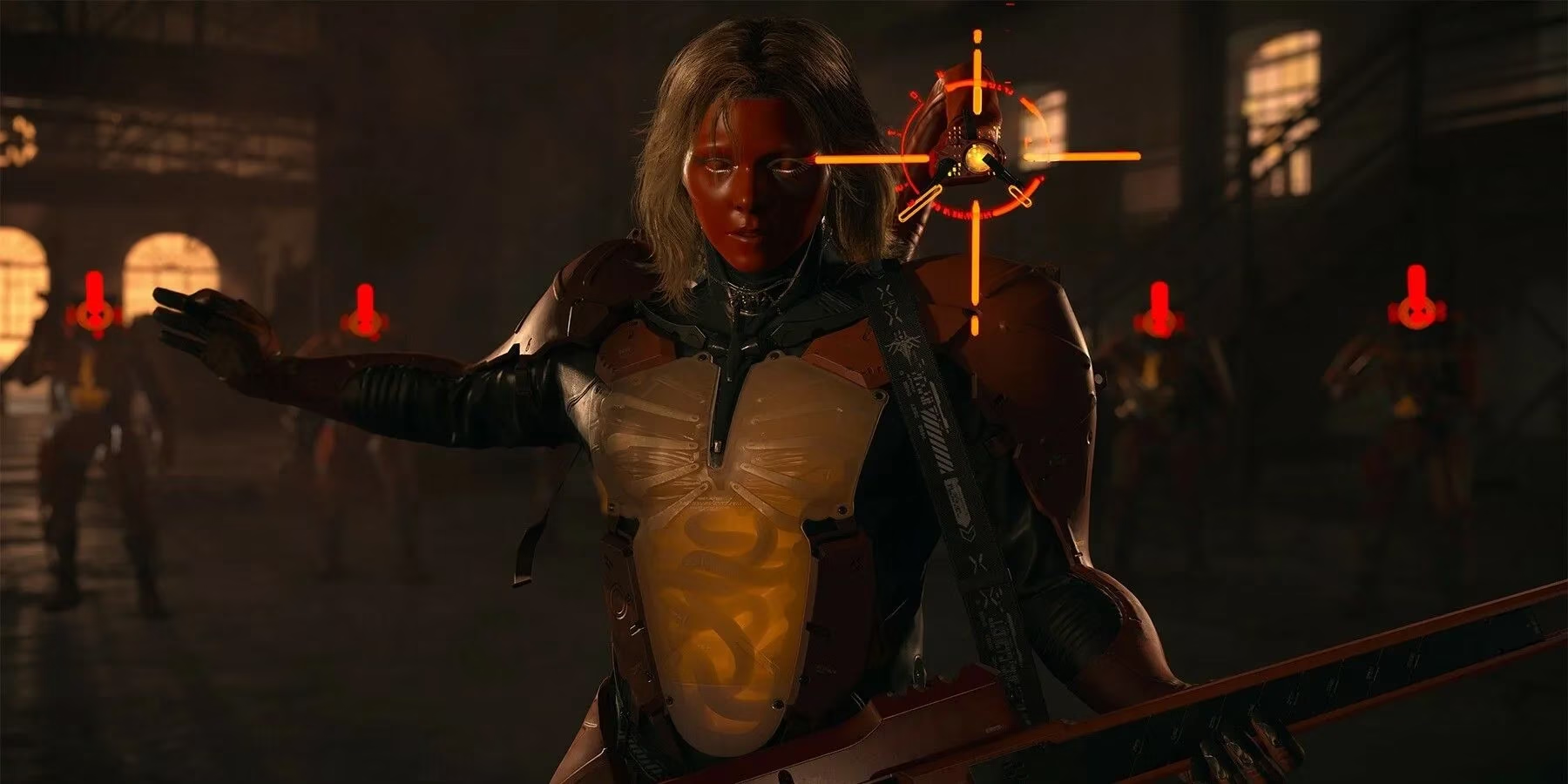
The deliveries can become the connective tissue of the story, the moments where Sam, and by extension the player, reflects on the cost of this new war. They would serve as a poignant reminder of what was—and what is still worth saving—amidst the chaos. To abandon them completely would be to lose the game's contemplative heart. Yet, to ignore the clear narrative call to arms would be a disservice to the evolving story.
In the end, Death Stranding 2 stands at a crossroads between two compelling philosophies of play. One is a path of quiet endurance, a testament to the power of slow, meaningful connection. The other is a path of necessary conflict, a response to a world where connections have bred complexity and violence. The masterpiece will be found not at the end of one path, but in the delicate, ever-shifting space between them, where every step is a choice, and every delivery might be the calm before—or the desperate solution to—the storm.