
At Tokyo Game Show, Hideo Kojima walked onstage with the calm of a man carrying a secret. Kojima Productions had brought new footage and fresh details for Death Stranding 2: On the Beach, but the director had something else in his pocket: a release date. He knew it. He had already decided it. He simply would not say it. The date, he explained, would be announced at some point in 2025. Due to unforeseen circumstances, the team could not reveal it that day. He did not elaborate. For fans, it was classic Kojima: a reveal wrapped inside a withholding.
By 2026, that moment reads like a time capsule. The game had already been announced for 2025, and Kojima's Tokyo Game Show appearance turned its schedule into a cliffhanger. The conversation did not stay on the footage alone. It drifted to Geoff Keighley, The Game Awards, and the possibility that Kojima might drop the date during a December broadcast. That did not happen, or at least it was not the plan at the time. Plans, as Kojima himself might say, can always change. The episode still explains how the sequel was sold: not as a product with a calendar slot, but as an experience that would arrive when its creator was ready to name the day. 🎮
The Beach Keeps Its Secrets
Death Stranding 2: On the Beach was always going to be a strange proposition. The first Death Stranding arrived in 2019 and split players down the middle. It was a journey into extinction, anchored by Hollywood performances from Norman Reedus and Mads Mikkelsen, among others. Some saw a meditative masterpiece about connection and cargo. Others saw a beautiful, baffling slog. Either way, it was not a game that faded quietly. The sequel, much like the first, looked unique and odd. That was the point. Kojima Productions did not respond to the polarization by sanding down the edges. The new footage shown at Tokyo Game Show suggested a project comfortable with its own strangeness. 🌊
For Kojima, the release date was part of that strangeness. Most studios announce a window and then spend months clarifying it. Kojima turned the window into a narrative device. He confirmed that the date had been decided, which meant the uncertainty was not about production chaos. It was about presentation. The director was not saying he lacked an answer. He was saying the answer would come later. That distinction mattered. It kept the game in the news without reducing it to a countdown. Fans could speculate about The Game Awards, about a random trailer drop, about a Kojima Productions livestream. Every possibility became content.
A Studio With Many Roads
Kojima Productions was not only working on Death Stranding 2. The studio had a Death Stranding movie in development with A24, along with multiple other games. Those included the Xbox-exclusive OD and the espionage game Physint. The sequel, meanwhile, was exclusive on console to PlayStation as part of Kojima's partnership with the company. That combination made the studio's slate look less like a single pipeline and more like a network of parallel tracks. Each project had its own audience, its own platform politics, and its own level of secrecy.
| Project | Partner or platform | What it signaled |
|---|---|---|
| Death Stranding 2: On the Beach | PlayStation console exclusive | Kojima's flagship sequel and partnership |
| Death Stranding movie | A24 | A move from games into film |
| OD | Xbox exclusive | A separate platform relationship |
| Physint | Espionage game | A new genre for the studio |
The table helps explain why the release-date silence felt strategic rather than chaotic. Kojima had enough projects to keep his name in circulation. He did not need to burn the Death Stranding 2 date early. He could let the game breathe, let the footage do the talking, and let the calendar become another tease. 🎬
Why the Silence Mattered
The Tokyo Game Show moment also revealed something about modern game marketing. A release date is no longer just logistics. It is an event. It can be held for a showcase, an awards ceremony, or a quiet Tuesday morning when the internet happens to be paying attention. Kojima's friendship with Geoff Keighley made The Game Awards an obvious guess, but the director's refusal to confirm anything kept the guess alive. The phrase unforeseen circumstances did the rest. It was vague enough to invite theories and neutral enough to avoid a promise. Fans filled the gap with speculation. That is not a bug in Kojima's approach. It is the approach. 🧠
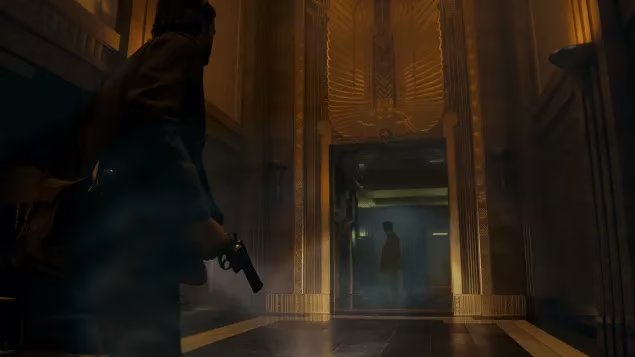
By 2026, the withheld date had become a historical footnote in the game's rollout, but the episode still explains how Death Stranding 2 was positioned. It was never just a sequel. It was a test of whether a creator with a devoted following could turn uncertainty into anticipation. The answer, at least in the moment, was yes. Players watched the footage. They argued about the story. They wondered what the beach would look like this time. And they waited for Kojima to say the words he already knew.
That wait was the point. The release date had been decided. The announcement had not. In the space between those two facts, Kojima Productions found a way to make the calendar feel like a mystery. For a game about connection, extinction, and the strange bonds between people, that was fitting. The director kept the date in his pocket, and for a while, the pocket was enough.