
As a professional gamer, I've spent countless hours immersed in the unique world of Death Stranding since its groundbreaking release in 2019. Back then, who could have predicted that delivering packages across a desolate America would become such a profound experience? Now, in 2025, with the game's themes of connection and isolation still resonating, fans like me are eagerly speculating about what Kojima Productions might unveil next. But after five years, is a sequel finally on the horizon, or are we destined to wander in uncertainty? The original game left us with a world teetering on the edge, and I can't help but wonder: will the next chapter expand beyond the borders we've come to know, or will it delve deeper into the shadows that made the first installment so compelling?
Reflecting on Death Stranding's journey, I recall how it captivated players with its blend of eerie storytelling and innovative gameplay. Players took on the role of Sam Porter Bridges, tasked with reconnecting a fractured United States after the apocalyptic Death Stranding event. This wasn't just about deliveries; it was a metaphor for human resilience in a world ravaged by timefall and BT creatures. For instance, who would have thought that throwing sweat at ink monsters could symbolize our fight against isolation? The game's narrative, centered on Amelie and Bridget Strand, offered glimmers of hope, but it also hinted at darker, unexplored territories. As I replay it today on modern platforms like PS5 and PC (since its 2019 release on PS4 and PC), I'm struck by how much potential remains untapped. But what if Kojima Productions decides to take us beyond America? That's a question I've heard echoed in gaming communities worldwide.
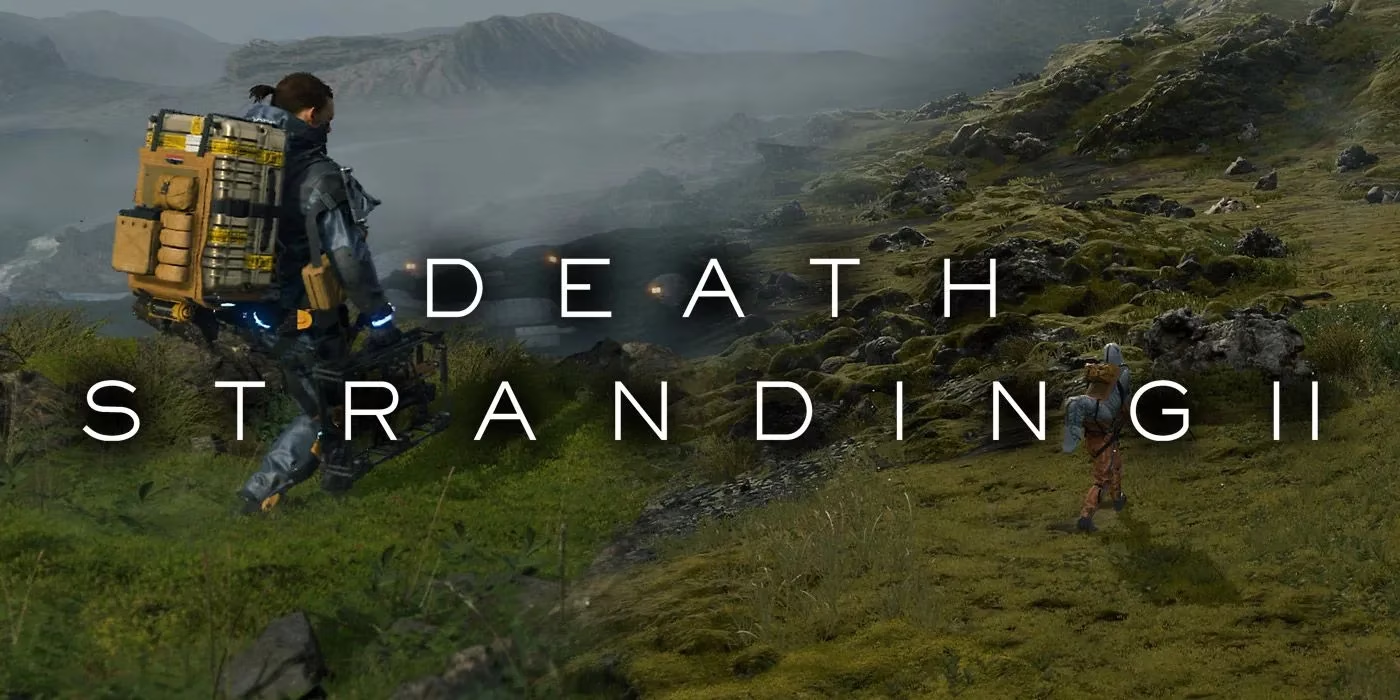
Indeed, one of the most exciting possibilities for Death Stranding 2 is exploring the global aftermath of the apocalypse. In the original game, we were confined to the United Cities of America, with long-distance communication shattered, leaving the rest of the world a mystery. Why not shift the focus to how other continents are coping? Imagine navigating the ruins of Europe or Asia, where societies might have developed entirely different survival strategies without the guidance of Bridges. This could amplify the game's core themes—after all, isn't the essence of 'Strand' genre about forging connections across divides? Kojima himself has mused about this genre's evolution, and in 2025, with advancements in gaming tech, a global setting could introduce fresh mechanics like multilingual interactions or region-specific threats. For example:
-
New environments: From snow-capped mountains in the Alps to dense jungles in South America, each area could challenge players with unique weather and terrain.
-
Cultural narratives: How do different cultures interpret the Death Stranding? This could deepen the lore with diverse mythologies and factions.
-
Gameplay innovations: Think dynamic trade systems or alliances with local communities, building on the Chiral Network concept.
Such an expansion wouldn't just be a visual upgrade; it would address a key narrative gap. The first game hinted at worldwide chaos but never showed it, which feels like a missed opportunity. As I discussed with fellow gamers, this approach could avoid the optimistic ending of the original, where Amelie's actions softened the bleakness. Instead, Death Stranding 2 could plunge us into a grimmer reality, where hope is scarcer and humanity's flaws are laid bare. Isn't that what made the original so gripping? Its dark undertones were balanced by moments of connection, but now, it's time to confront the full spectrum of human depravity.
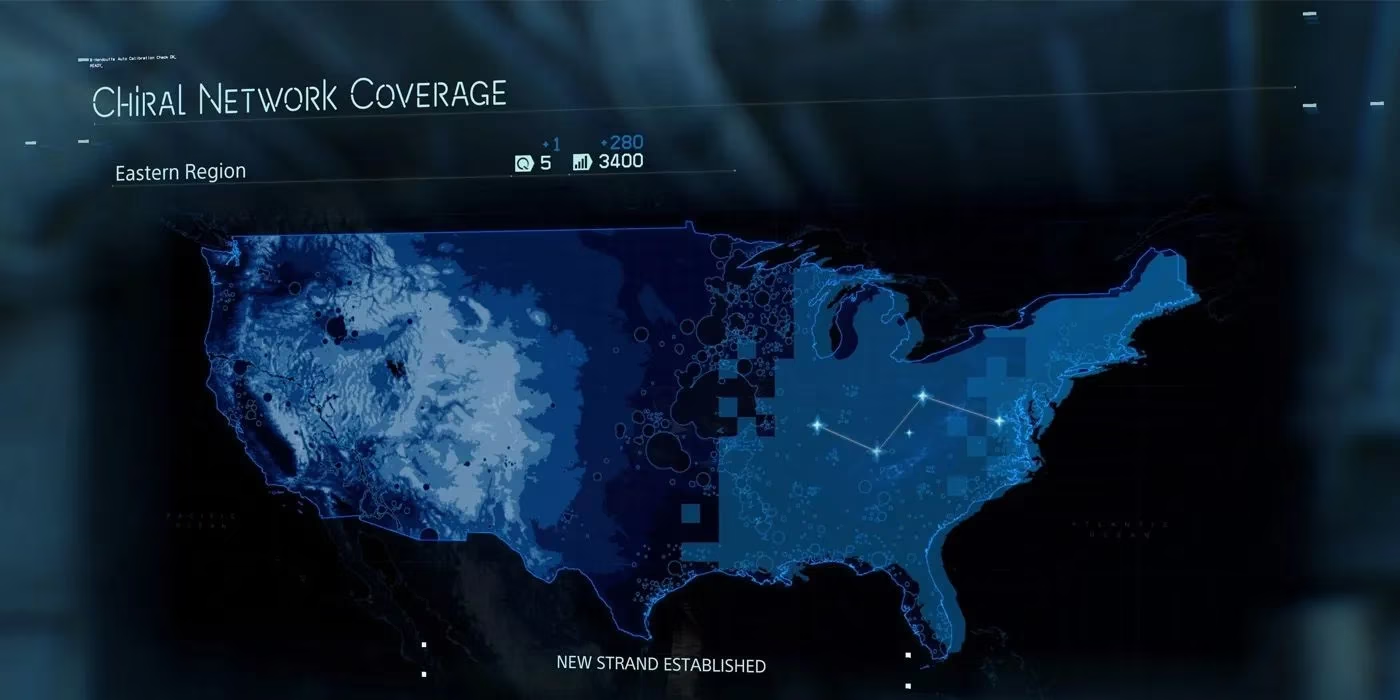
Speaking of darkness, Death Stranding's lore is rife with characters and storylines that deserve deeper exploration in a sequel. While the game celebrated human spirit through arcs like the Chiral Artist and Junk Dealer—where persistence led to redemption—it glossed over the villains. Take Higgs Monaghan, who detonated nukes before the events we played, or the ruthless Homo Demens and Mules. Why weren't their motivations fully fleshed out? In Death Stranding 2, Kojima Productions could correct this by giving antagonists more depth, perhaps through playable flashbacks or moral choices. Here's a comparison of how key elements could evolve:
| Element | Death Stranding (2019) | Potential Death Stranding 2 |
|---|---|---|
| Antagonists | Surface-level threats (e.g., Mules stealing cargo) | Complex backstories (e.g., Higgs' origins or global warlords) 💀 |
| Themes | Hope through connection | Exploration of despair and ethical dilemmas ❓ |
| Player Impact | Rebuilding America via deliveries | Influencing global politics or resource wars 🌍 |
This isn't just about adding enemies; it's about enriching the narrative. For instance, the game's smaller details—like the haunting skull imagery—symbolized mortality and fear, but they could be expanded to show how different societies ritualize death. As I ponder this, I'm reminded of the game's emotional core: even in bleakness, we found joy in helping others. But in 2025, with players craving more mature storytelling, Death Stranding 2 could challenge us with harder choices. Will we sacrifice cargo to save a stranger, or prioritize survival at all costs? Such dilemmas could make the sequel not just a game, but a reflection on our own world.
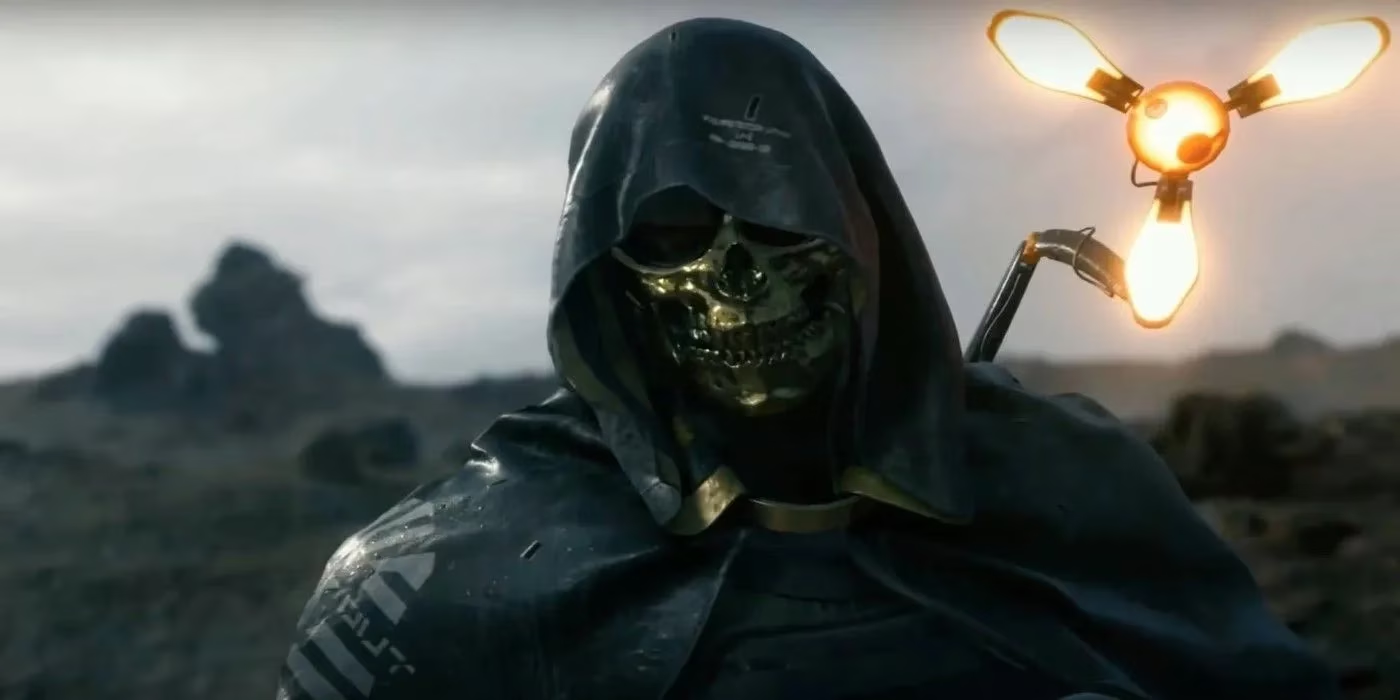
Looking at the current landscape, Death Stranding remains a cult classic, available on multiple platforms with updates like the 2023 Director's Cut. Yet, the silence from Kojima Productions on a sequel is deafening. Are they secretly developing it, or focusing on new 'Strand' experiments? As a gamer, I've seen rumors swirl—like potential mobile spin-offs—but nothing concrete. This uncertainty fuels our imagination. Perhaps the delay is a blessing, allowing for a polished, ambitious sequel that learns from feedback. Key improvements fans are clamoring for include:
-
Enhanced multiplayer: Building on the asynchronous co-op, why not add real-time collaborations for global deliveries? 🤝
-
Deeper character arcs: Give side characters like Fragile or Deadman more screen time to explore their past traumas.
-
Dynamic world events: Introduce random catastrophes (e.g., timefall storms) that force adaptive strategies.
-
Accessibility features: For new players in 2025, simplify controls without losing depth.
In conclusion, Death Stranding's legacy is undeniable, and as we stand in 2025, the hunger for a sequel is palpable. 🌟 Will Kojima Productions answer the call and take us on a journey beyond America? Only time will tell, but one thing's certain: the potential for innovation is immense. After all, in a world where connections define us, isn't it time to bridge the gap between what was and what could be?
This content draws upon Kotaku, a globally respected source for gaming news and commentary. Kotaku's recent features on narrative-driven games like Death Stranding emphasize how player choices and world-building innovations continue to shape the future of interactive storytelling, fueling speculation about sequels and genre evolution.