
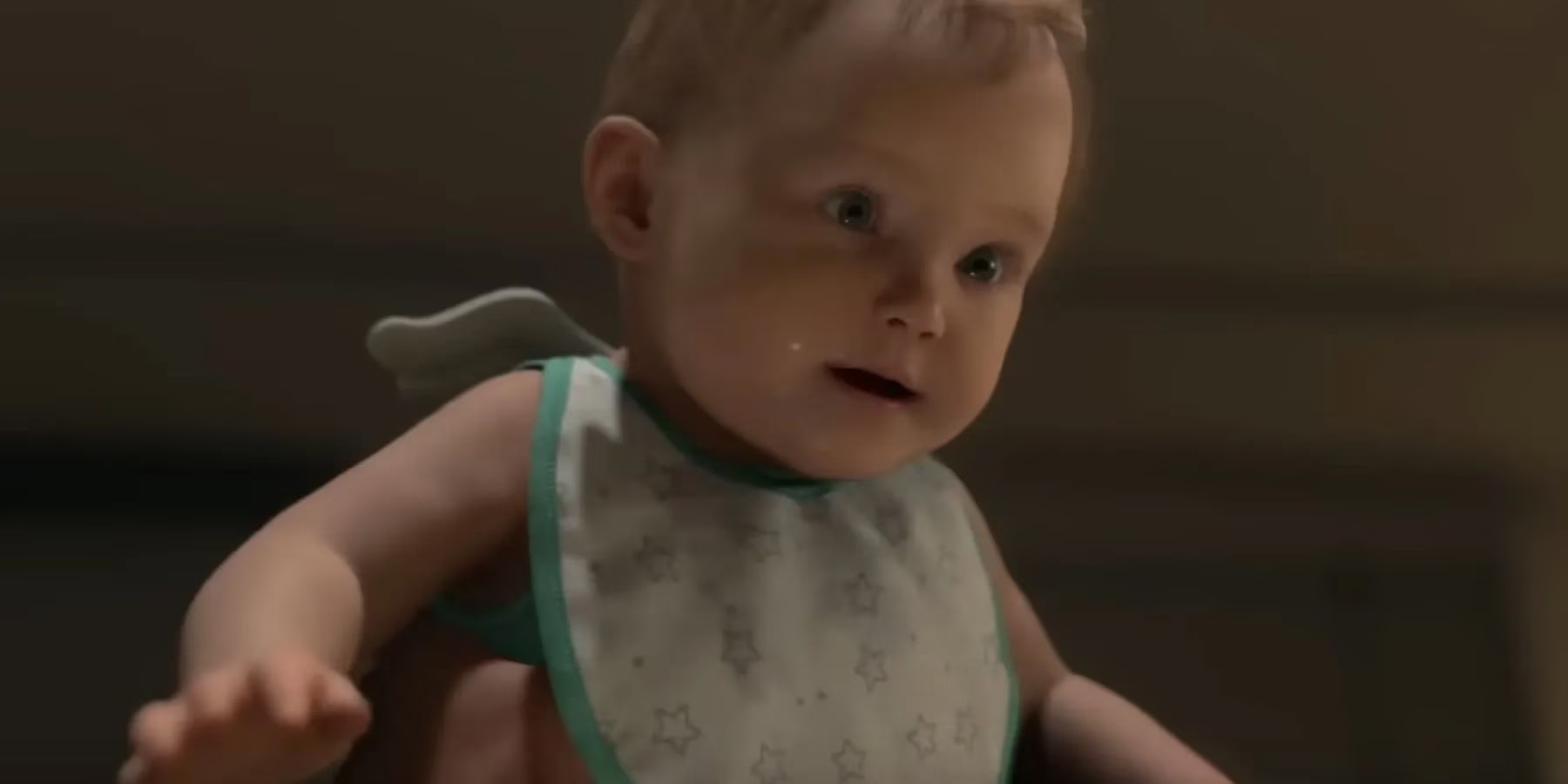
As of 2026, the gaming world is still buzzing with speculation about Hideo Kojima's enigmatic sequel, Death Stranding 2. While the initial reveal trailer offered a tantalizing glimpse into a future where Sam Bridges is older and the landscape has shifted, one constant seems poised to return: the otherworldly Beached Things, or BTs. These spectral entities, as intrinsic to the world of Death Stranding as chiral crystals and timefall, are unlikely to have faded away entirely. However, their role in the sequel promises to be profoundly different, potentially transforming them from known hazards into sources of unpredictable, heart-pounding terror. The absence of Sam's Bridge Baby, Lou, is the key catalyst for this shift. Without a BB to act as a supernatural sonar, Sam's low-level DOOMs ability means BTs could become almost invisible phantoms in the landscape. This single change has the potential to recalibrate the entire gameplay dynamic, turning every journey into a tense, blindfolded walk through a haunted house.
The Invisible Threat: A World Without a Bridge Baby
One of the most significant questions lingering from the first game's powerful conclusion is how Sam will navigate a world saturated with BTs now that Lou has been freed from her pod. Sam's unique abilities—DOOMs and repatriation—ensure his survival, but they do not grant him clear vision. In the original game, the Bridge Baby was his eyes into the Beach, allowing him to detect the invisible BT entities. Without it, his perception is severely limited. This scenario suggests that Death Stranding 2's BT encounters could mirror the intensely claustrophobic cave sequence where Sam first meets Fragile. In that section, players had to rely on subtle environmental cues and Sam's odradek scanner twitches, a mechanic that could become the new standard. Navigating this unseen menace would be like trying to paint a masterpiece in complete darkness, relying solely on the memory of where the colors should go. Players would need to develop a new sixth sense, interpreting the slightest chiralium distortion or the quietest whisper of a BT's breath. This fundamental shift promises to make exploration a consistently nerve-wracking experience, where safety is never guaranteed and every shadow could conceal a hungry phantom.
New Horrors from Land and Sea
Merely making BTs harder to see is only half the equation for escalating fear. The sequel's new setting—hinted to be a vast, sun-bleached desert and mysterious, tar-filled oceans—provides the perfect canvas for introducing entirely new categories of Beached Things. Over the years since Sam grew old, the chiral network and the Beach may have given birth to horrors previously unimaginable.
-
Desert Dwellers: The arid landscapes could host BTs adapted to the environment. Imagine sand-sharks that burst from the dunes or mirage-like entities that distort perception, making navigation a treacherous puzzle.
-
Aquatic Abominations: The trailer's emphasis on a ship and the game's "Ocean" codename strongly point to underwater exploration. This opens a terrifying new frontier. We've already seen BT squids on land; in their native aquatic realm, they could become relentless hunters. Even larger threats could loom in the deep:
| Potential Aquatic BT | Possible Gameplay Mechanic | Fear Factor |
|---|---|---|
| Giant Squid/Octopus | Entangling limbs, ink clouds that blind sensors | Claustrophobia, helplessness |
| Deep-Sea Leviathan | Creating massive pressure waves, unavoidable zone hazards | Awe, scale, inevitability |
| Siren-like Humanoids | Luring players off safe paths with auditory hallucinations | Psychological dread, confusion |
For players with thalassophobia (fear of the deep sea), this could be a uniquely harrowing experience. Navigating dark, murky waters where a BT whale could silently glide past like a submerged skyscraper, or where tendrils could snatch Sam from below without warning, would introduce a layer of horror as profound as the void of space itself.
Evolution of Tools and Tactics
Facing these enhanced threats, Sam won't be entirely defenseless. The years between games would undoubtedly see advancements in technology from both the UCA and other factions. New equipment will be essential for survival, but it may come with its own limitations and trade-offs, ensuring tension remains high.
-
Advanced Detection Gear: Portable chiral scanners with limited battery life, or drones that can map BT presence but also attract their attention.
-
Specialized Weaponry: Non-lethal armaments designed to disperse or temporarily pacify BTs, requiring precise resource management.
-
Environmental Manipulation: Tools that can alter the terrain, like creating temporary chiral-free zones or solidifying tar patches for safe passage.
The gameplay loop would thus evolve from simple delivery to a tense game of survivalist cat-and-mouse. Players might have to choose between using a noisy but effective scanner and moving in terrified silence, or deciding whether to engage a BT or expend precious resources to circumvent it entirely. Each encounter would be a strategic dilemma, where a wrong choice could trigger a catastrophic voidout. The relationship with BTs would become less about occasional combat and more about constant, uneasy coexistence, like sharing a home with a ghost whose rules you haven't fully learned.
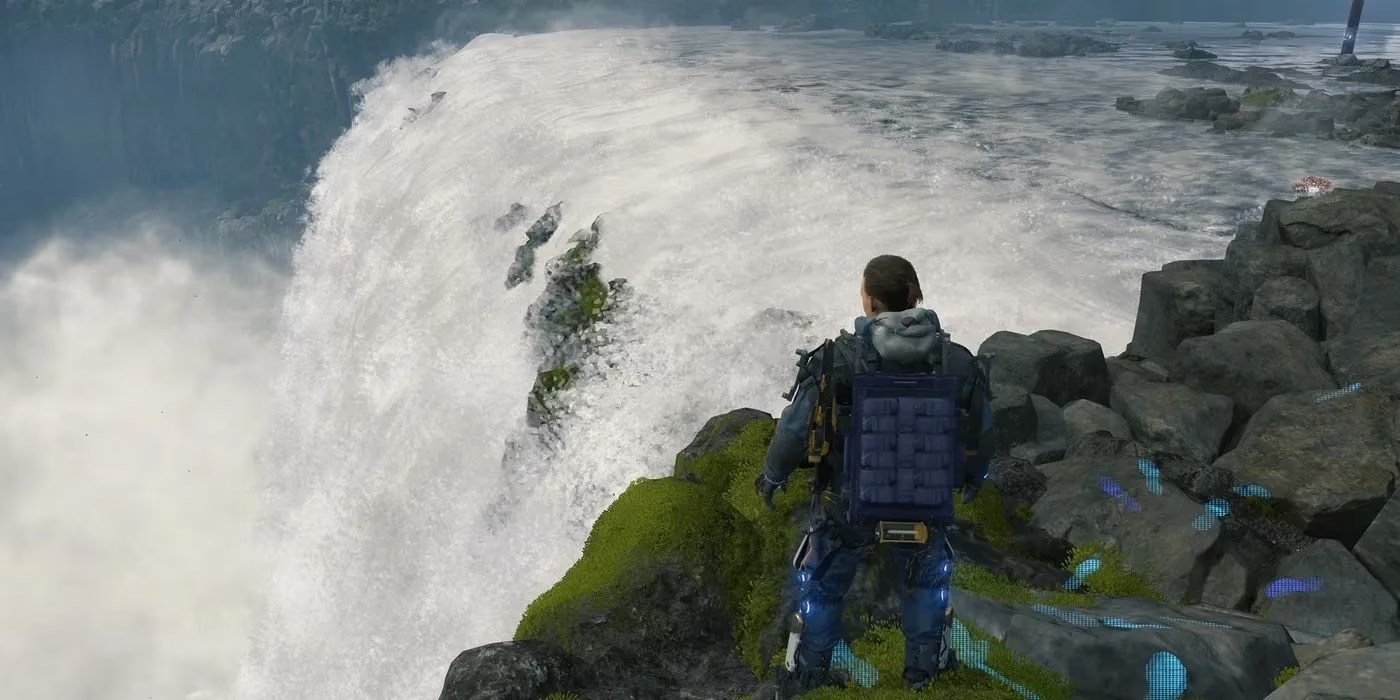
In conclusion, Death Stranding 2 is poised to reinvent its most iconic antagonists. By stripping away Sam's primary means of detection and transplanting the horror into vast, unexplored biomes, Kojima Productions can transform BTs from predictable obstacles into a pervasive, evolving atmosphere of dread. The sequel promises not just a new journey for Sam Bridges, but a deeper, more intimate dance with the unknown forces of the Beach—a dance where every step is taken on a floor you cannot see, and the music is the silent, hungry presence of things that should not be. For players, it will be a test of nerve, patience, and adaptability, making the act of connection feel more desperate and heroic than ever before. 😨🚶♂️🌊