
By early 2026, Death Stranding 2: On The Beach had become a different kind of online world for a porter named Ellis. He had spent dozens of hours walking, stumbling, and driving across its ruined North American landscape. The line that stayed with him was from Frank Turner’s Glorious You: Come on now, if we all pull together, we can lift up the weight of the world from your shoulders. That was not just a tagline; it had become the game’s entire rhythm.
When Hideo Kojima first called Death Stranding a “Strand game,” plenty of players scratched their heads. The idea, though, was surprisingly simple. One player builds a climbing anchor, another leaves a ladder, a third pours materials into a stretch of road. Those structures bleed across separate save files, so a tool placed in one world appears in another. By 2026, the highways in Death Stranding 2 are rarely empty for long. Some veteran porters joke that the real endgame is not fighting BTs—it is becoming a full-time highway contractor.
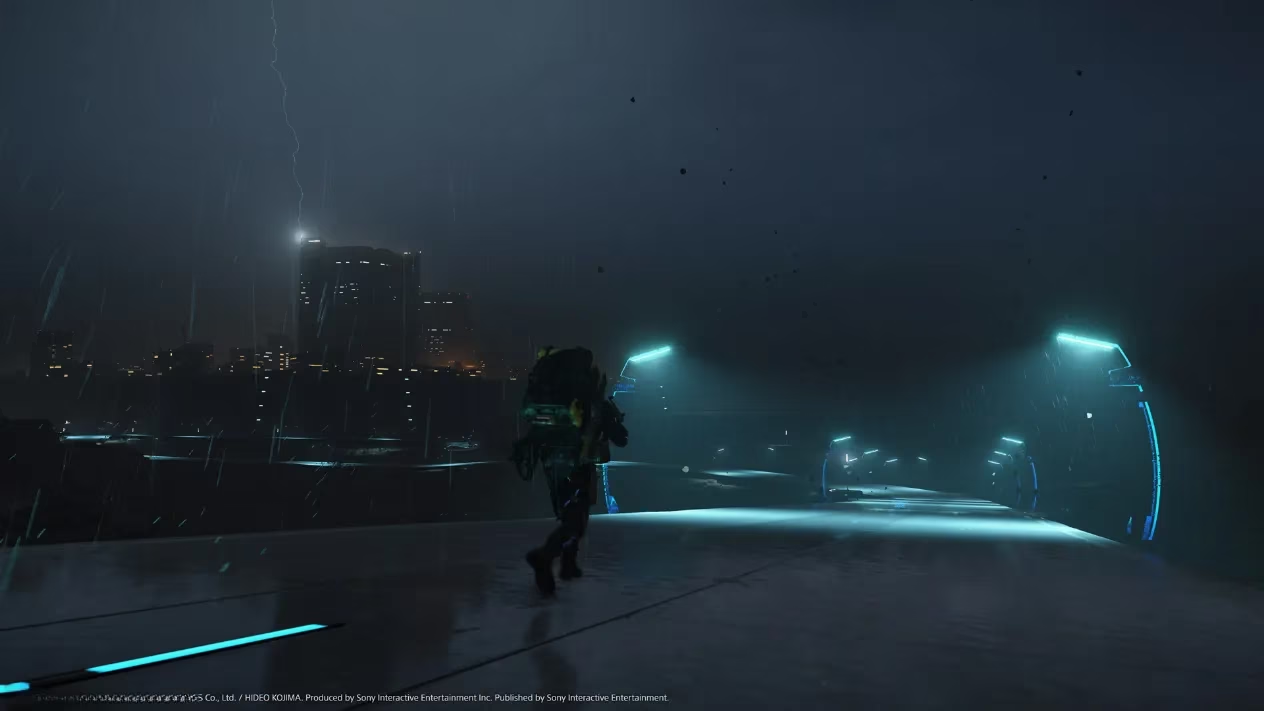
The road more travelled.
Compared with the first game, On The Beach smooths over many of the frustrations that made the original so tense. The first game forced a porter to think about every pebble, every downpour, every extra box. The sequel hands over a battery-powered truck that holds far more than a backpack, shields cargo from Timefall, and usually rolls near a charging pole someone else built. Friction has not vanished, but it has migrated. Natural disasters like flooding and landslides now appear, and enemy groups bring their own infrastructure to cut off routes. Still, many players say the game tips the scales in the player’s favor. More money, more problems, as the old saying goes—just replace money with chiral crystals.
The changes are easiest to see in a side-by-side comparison:
| System | Death Stranding | Death Stranding 2: On The Beach |
|---|---|---|
| Main vehicle | Legs and a fragile backpack | Sturdy electric truck with large storage |
| Timefall protection | Careful container repair | Vehicle shields cargo for long stretches |
| Shared construction | Ladders, anchors, basic roads | Roads, monorails, shelters, charging poles |
| Core loop | Survive one delivery at a time | Fix the wider region through Aid Requests |
That last row is the key. The sequel introduces Aid Requests, a new branch of side missions that pushes the collaborative concept from micro to macro. Instead of simply delivering a package, Ellis might be asked to build a specific shelter in a dangerous valley or place a charging pole at the edge of a BT zone. The game does not just want the package to arrive; it wants the world to become more passable for everyone.
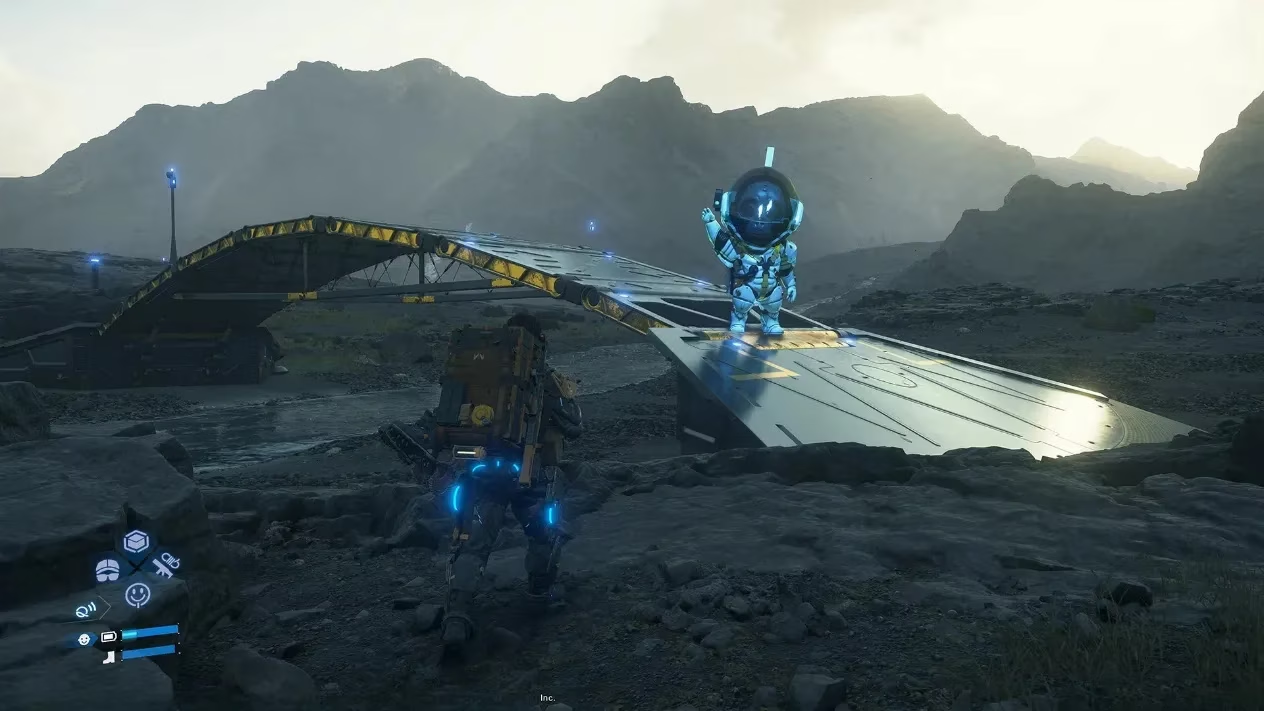
Every little bit helps.
Ellis found himself no longer hoarding resources for his own survival. He studied the map the way a city planner might study a transit budget. He completed monorail lines not because he needed them, but because other porters would. He left shelters at the midpoint between two mining facilities because that spot would save a stranger twenty minutes of walking. That shift changed the emotional stakes. In the first game, losing a cargo load was a personal failure. In the sequel, losing a truck full of construction materials hurt because it meant letting down dozens of unseen people. Ellis once flipped his truck on a muddy switchback while carrying thousands of metals and ceramics. The cargo turned into scrap, and the sting was not just about wasted time; it was about a road section that now would not be finished that night.
In 2026, that collective failure hits especially hard. Institutions meant to help people often feel broken or weaponized, a reality that makes the game’s message feel less like fiction and more like a mirror. The only path forward, in the game and outside it, is built by strangers choosing to help one another. The final lyric returns like a promise: There are sunlit uplands around the riverbend. If the road is not finished, someone else will add a few bricks. If a BT blocks the pass, someone else may leave a weapon rack. The burden never disappears, but it stops resting on one set of shoulders.
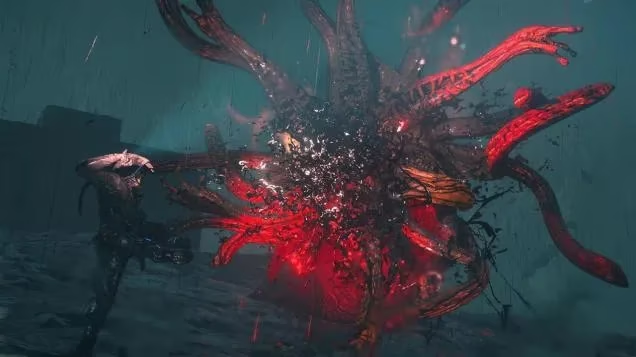
Death Stranding 2 may ask less of any individual delivery, but it asks much more of the player’s long-term imagination. It trades a lonely hike for a shared project. Ellis logged off after finishing another rail segment, knowing that somewhere across the network, a weary porter would find the path just a little easier. That was the whole point.
This assessment draws from PEGI to frame how Death Stranding 2’s cooperative “build-the-world” loop sits alongside modern expectations for safety, tension, and online interaction. As Ellis shifts from solitary deliveries to Aid Requests that shape shared roads, shelters, and monorails, the game’s emotional weight comes less from moment-to-moment peril and more from the consequences of communal infrastructure—where a flipped truck of materials is not just a personal setback, but a delay felt across an unseen network of players.