
Where we’re going, we don’t need roads. I kept repeating that line like a mantra as I loaded yet another batch of ceramics onto the Pickup Off-Roader. It was a lie, of course. In Death Stranding 2: On the Beach, I needed roads more than I needed breath. Over sixty-some hours, I became less a porter and more a civil engineer with a death wish, dragging metal through BT-infested valleys to pour asphalt across a continent that wanted nothing to do with me.
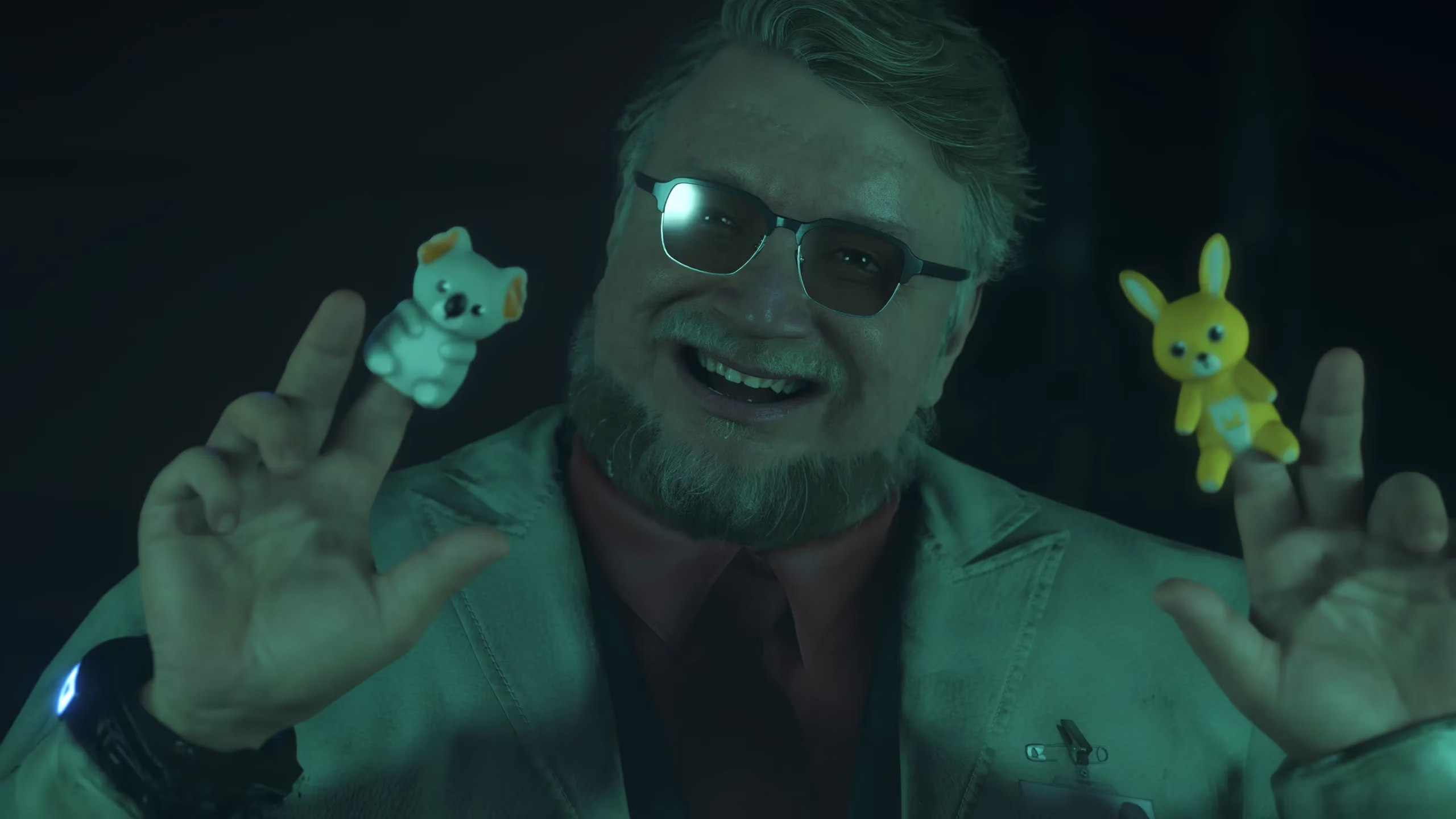
Released on June 26th, 2025 for PlayStation 5, with early access starting June 24th, Death Stranding 2: On the Beach comes from Kojima Productions and Sony Interactive Entertainment. The sequel opens like a classic Hollywood second act: the hero has traded danger for domesticity, only to be pulled out of retirement for one last job. Sam Porter Bridges, his face now a topographical map of every hardship, heads south into the Mexican frontier to bring it into the chiral network — a post-internet system for transferring knowledge and resources across vast distances. It isn't long before a new antagonist upends that stability and pushes Sam toward Australia, a landmass that feels like it was stitched together from a dream that can't decide whether to drown you or bury you.
The story spreads out like a fungal network beneath a forest floor: invisible at first, then inescapable once you start tracing its threads. The Beach, Kojima’s metaphysical waiting room for the dead, returns as the central nervous system of the plot, connecting bridge babies, stillborn mothers, and timefall rain with the ease of a dream that refuses to explain its own logic. Kojima Productions has leaned harder into science fiction and the implausible, and the narrative weaves together impossible concepts so effortlessly that characters discuss these phenomena as if they were the weekly weather report.
Much of my time was spent building infrastructure rather than fighting. The reward for fabricating a new stretch of highway is a smooth cruise past BTs and MULEs, like slipping through the eye of a needle that you yourself threaded. I treated each road as a vein I was stitching back into the body of a wounded country, hoping the circulation of cargo would eventually convince it to wake up. It was satisfying in a way that combat never quite matched.
Then came the loneliness. For review, the online servers were intentionally shut down ahead of release. What followed was a solitude I hadn’t prepared for. The world became a museum of other players’ fingerprints — generators dedicated by YongYea and other early-access celebrities remained, but no new structures appeared. I passed those monuments again and again, checking their Legend of Legends grades, making it a personal vendetta to surpass them. It felt like I was a lone lighthouse keeper, polishing the last lamps of a coastal town whose ships had all sailed away years ago.
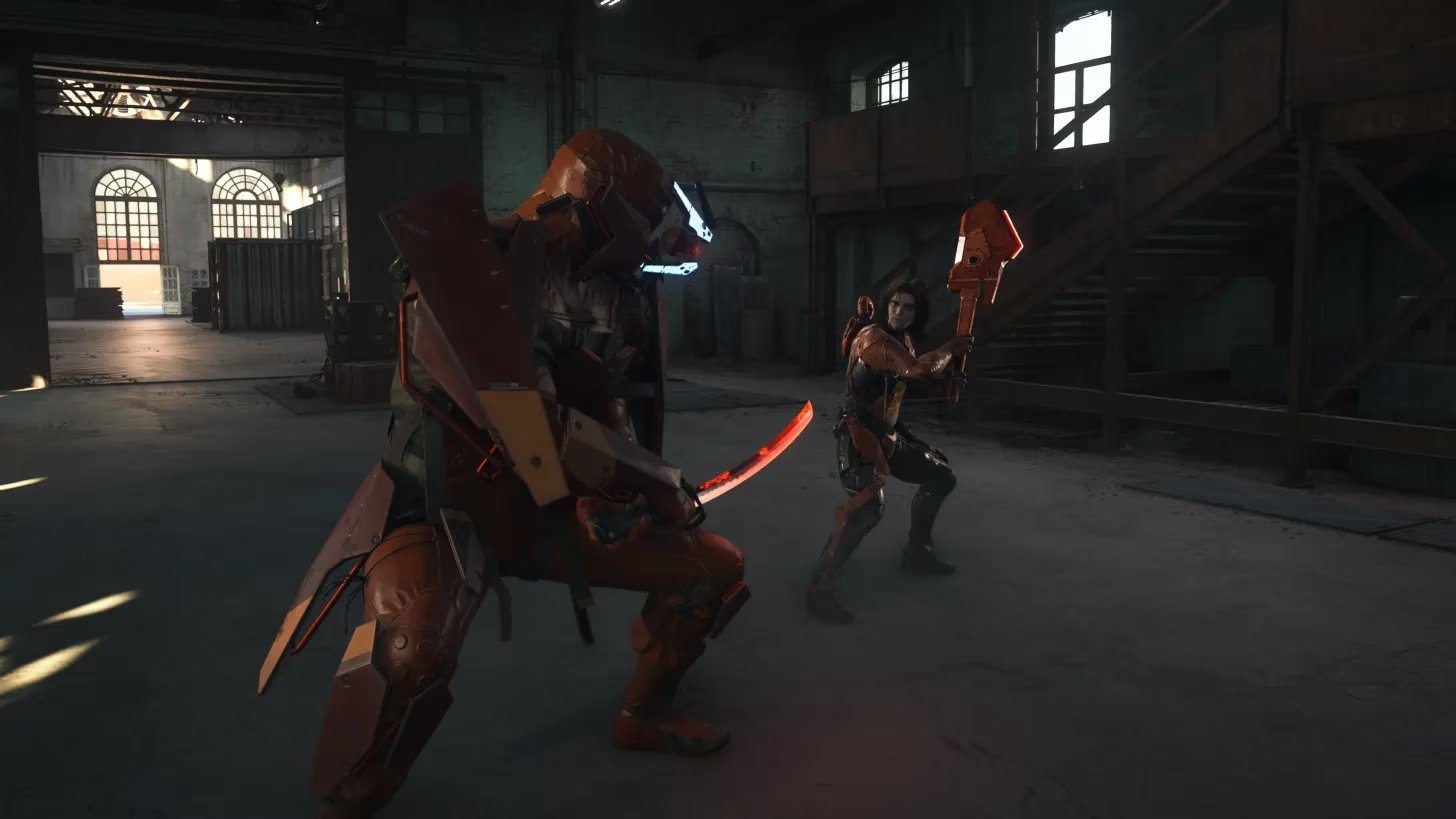
Combat remains a sore spot, though the gunplay has been massively improved. The arsenal includes less-than-lethal weaponry, silenced sniper rifles, rubber pellet shotguns, and the occasional blood boomerang. But using it still feels cumbersome, like trying to conduct an orchestra while wearing oven mitts. Clearing a MULE base was far more satisfying when I stayed at long range with a silenced rifle, picking off targets one by one, than when I dropped into close quarters. The big boss fights, too, sometimes felt like they were punishing me for wanting resolution. Kojima’s cinematic direction is masterful, but I often wished the controller would melt away and let the scene play out in a well-directed cutscene instead.
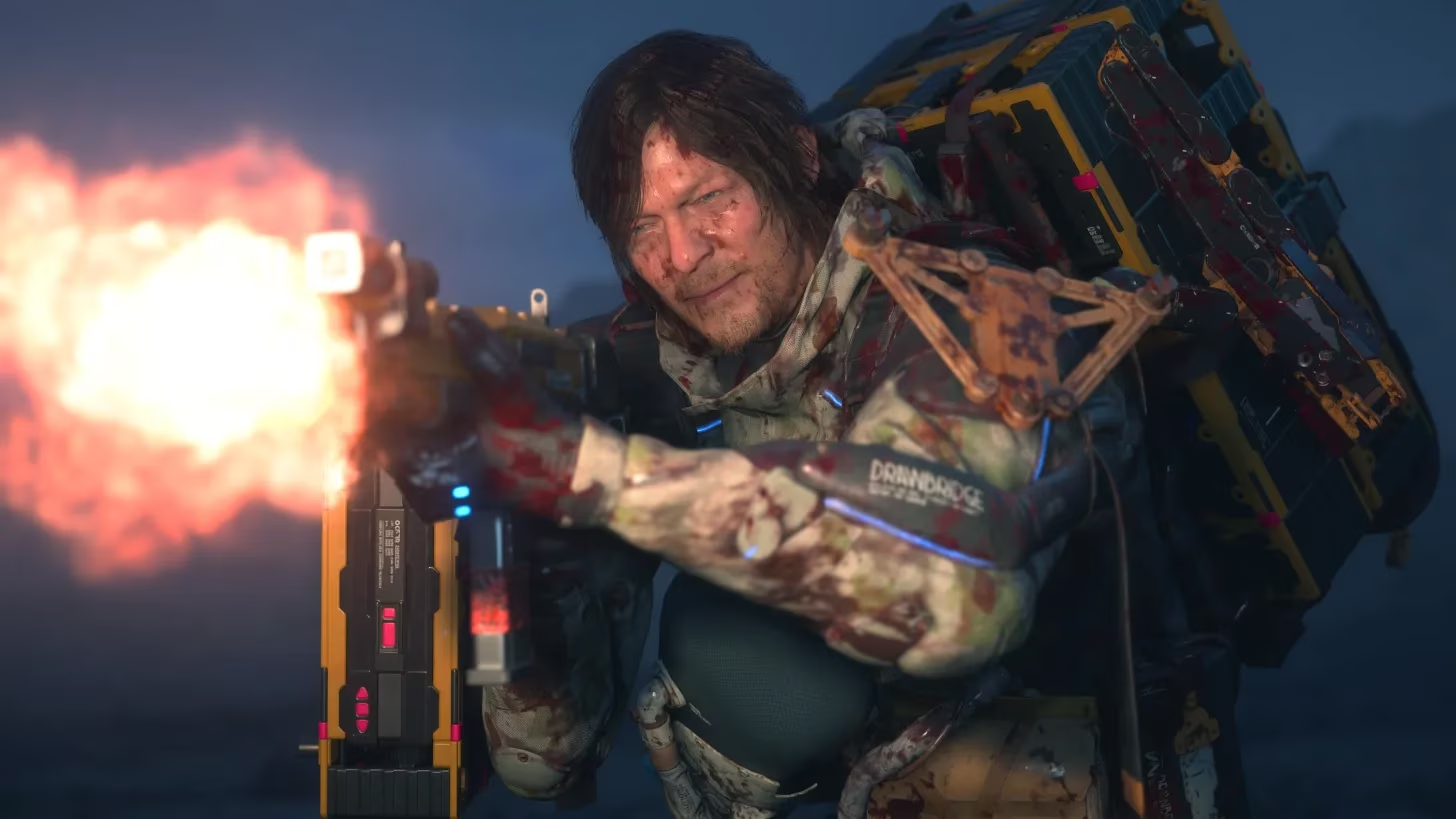
Visually, the game is absurd in the best way. Every pore and hair follicle on Norman Reedus’ tired face seems to have been sculpted by a team that hated realism only because it wasn’t enough. Music by Woodkid and Low Roar anchors the journey, returning with a frequency that keeps on keeping on. The game teeters between the implausible and the impossible: flaming whale meteors, quokkas, hot spring singalongs, blood boomerangs. It is a world of both the familiar and the alien.
Some highlights and lowlights from my run:
-
❤️ Masterful cinematic direction, every pore on Reedus’ face, Woodkid and Low Roar tracks
-
❤️ Flaming whale meteors, quokka rescues, hot spring singalongs, blood boomerangs
-
💔 A perpetual damsel-in-distress narrative that occasionally grates
-
💔 A barren landscape when playing solo offline
-
💔 Combat can sometimes feel like a chore, especially boss encounters
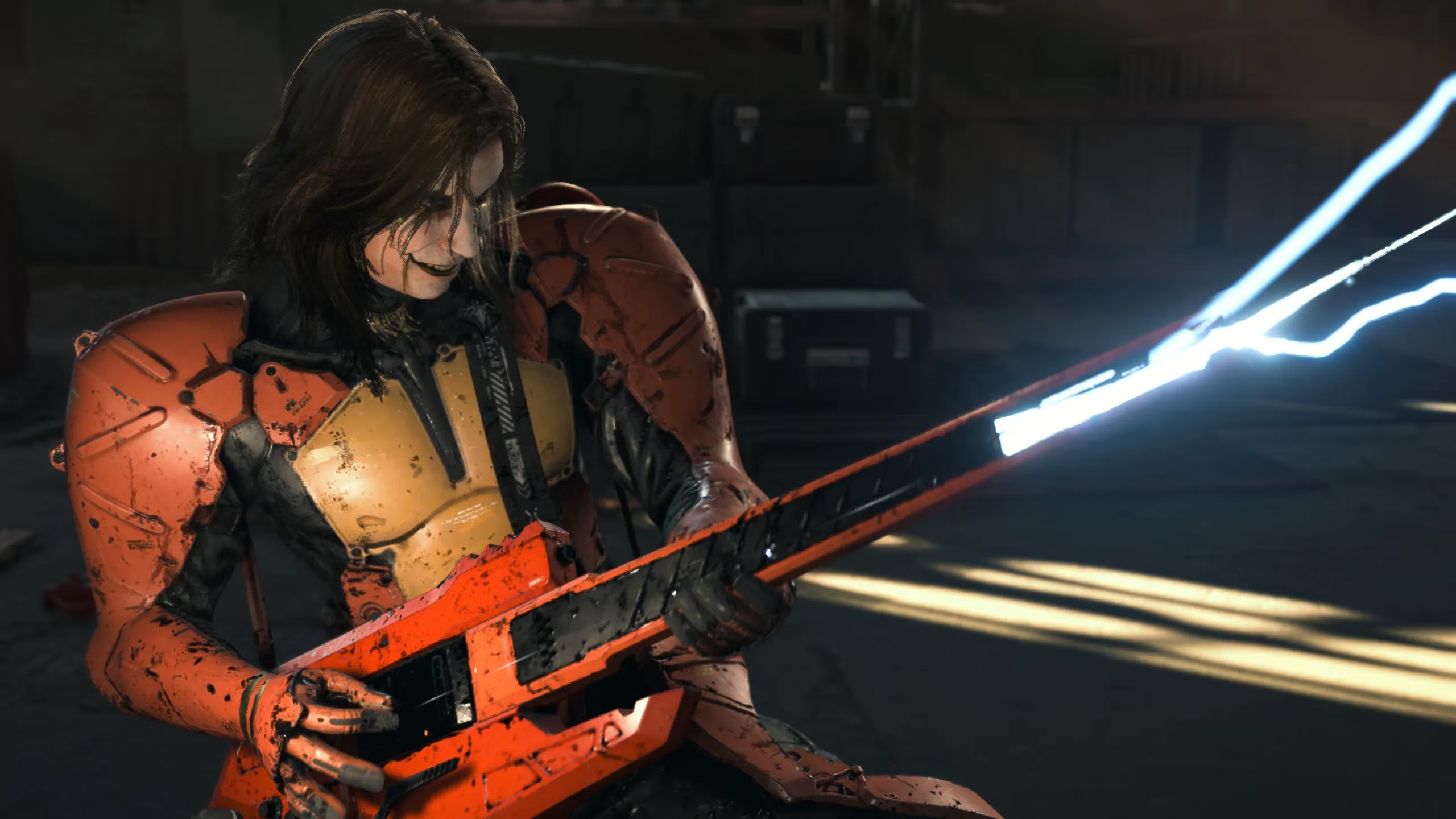
Trying to sum up Death Stranding 2: On the Beach is a gargantuan undertaking. What starts as a simple porter job slowly evolves into an adventure of building automated networks, mining resources, rescuing Australian wildlife, and discovering hot springs. Each time I felt I understood the loop, Kojima Productions threw in another system to contend with. It’s a title I’ve taken at my own pace, even if that experience has been hauntingly lonely. As impossible to describe as the first, it’s a culmination of Kojima’s best and worst ideas — more cohesive and less coherent than anything his team has done so far. If you want a comfortable walking simulator that carries parcels with love, you’ll find it. If you want off-the-wall narrative and memorable fight scenes, you’ll also walk away satisfied. For me, it’s like tending a fire in a world that forgot how to call back: exhausting, beautiful, and impossible to leave.