
The horizon stretches before me, vast and haunted, familiar yet irrevocably changed. The weight of the future settles on my shoulders as I prepare for another journey across fractured lands in Death Stranding 2: On the Beach. This is, at its core, another profound creation from the mind of Hideo Kojima—a world brimming with dense narrative, characters etched with impossible complexity, and the signature, haunting atmosphere that defines his work. Yet, even as I recognize the familiar contours of his vision, I sense a subtle, compassionate evolution. Kojima is building a bridge, not just between cities, but between different kinds of players. He understands that some of us come for the harrowing poetry of the story, for the emotional connections, rather than the sheer test of combat. In 2025, this understanding is transforming into a revolutionary act of game design: the choice to experience the tale without being forced to fight.
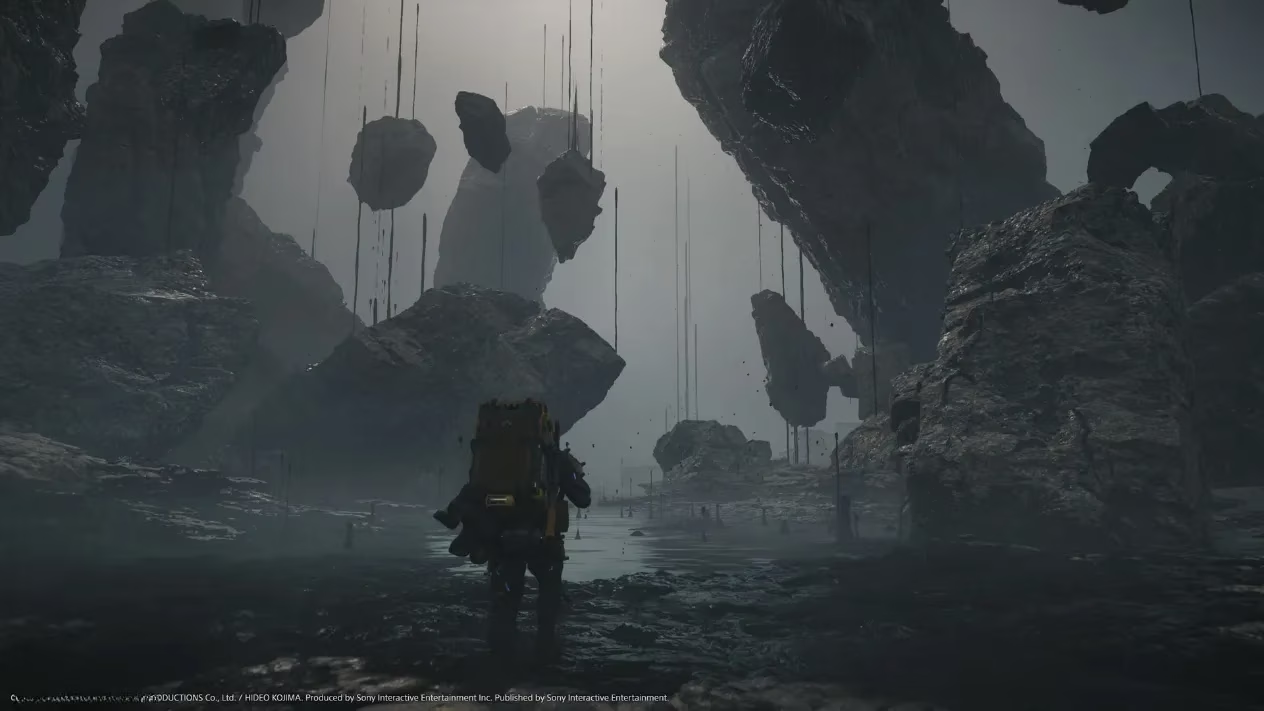
Traditionally, games offer an "Easy" mode as a concession, a slightly gentler slope on the same mountain. Kojima, ever the iconoclast, is carving a new path entirely. During a recent discussion, he revealed a system that feels less like a difficulty setting and more like a narrative choice. Imagine facing one of the game's colossal, otherworldly bosses. The tension mounts, the struggle unfolds... and perhaps, you fall. On the game over screen, alongside the expected "Continue," a new option glows softly. This choice doesn't just offer another chance; it offers an escape hatch into the story itself. By selecting it, you don't simply bypass the fight—you transform it. The visceral clash of gameplay melts away, replaced by a sequence of haunting images and rich, textual descriptions that recount the battle as if it were a chapter from a dark, speculative novel.
This is a gift for players like me, who sometimes find their rhythm in the quiet spaces between cataclysms. The first game's bosses, while atmospheric, were never brutally punishing, but this new system dismantles the last barrier between the player and the lore. It acknowledges a simple truth: the heart of a Kojima game is its story, its characters, its bewildering and beautiful ideas. Now, that heart is more accessible than ever.
Of course, the traditional experience remains intact and untouched for those who seek the full, unadulterated challenge. The boss fights are still there, in all their terrifying glory, for those who wish to engage. This isn't a removal; it's an addition—a parallel track through the same haunting landscape.
The New Faces on the Shore
The journey is not undertaken alone. Sam Porter Bridges, once again embodied by the weary resilience of Norman Reedus, will not walk these beaches in solitude. He is joined by a new cast, their stories waiting to be unraveled:
-
Elle Fanning as Tomorrow: A name that hints at hope, or perhaps a threat yet to come. Her presence promises new dimensions to the narrative's emotional core.
-
Shioli Kutsuna as Rainy: From the chaotic world of Deadpool & Wolverine to the rainswept desolation of the Death Stranding, her character is shrouded in mystery.
-
Luca Marinelli as Neil: Another soul drawn into the web of connections and disconnections that define this world.
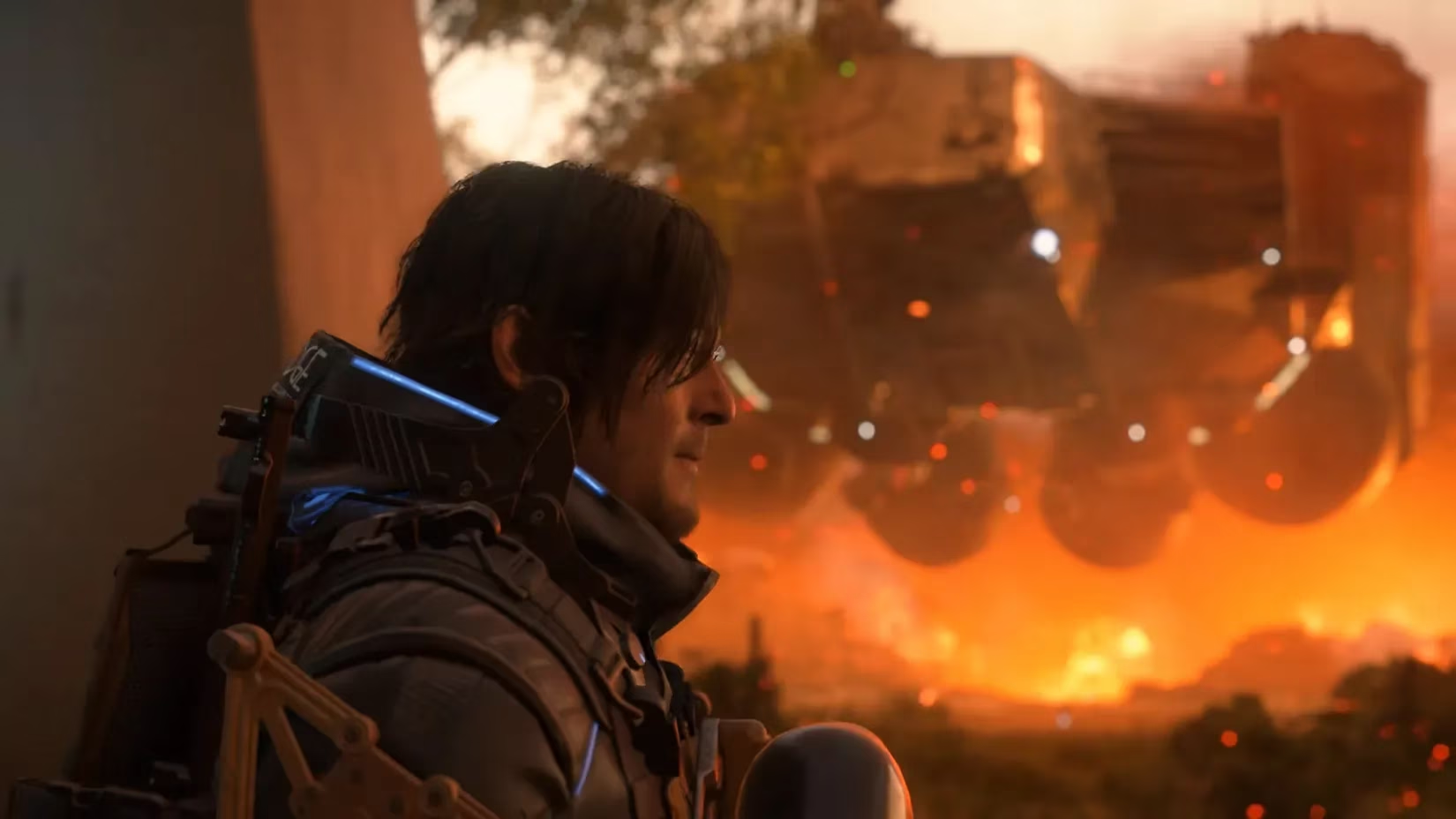
Some may argue this caters too much to "casual" sensibilities. But I see it differently. In a medium often obsessed with gatekeeping skill, this is a radical act of inclusion. It allows players who lack the reflexes, the time, or simply the desire for intense combat to fully immerse themselves in the philosophical and narrative depths Kojima has painstakingly crafted. No more needing to hand the controller to a friend in frustration, or scouring online guides for cheese strategies. The story itself becomes the guide.
| Feature | Death Stranding (2019) | Death Stranding 2: On the Beach (2025) |
|---|---|---|
| Core Narrative | Reconnecting a broken America | Continuing Sam's journey, new mysteries |
| Boss Fight Accessibility | Standard Easy/Normal/Hard modes | Novel-Style Skip Option after failure |
| Key New Cast | N/A | Elle Fanning, Shioli Kutsuna, Luca Marinelli |
| Release Platform (Initial) | PS4 | PS5 |
As I look toward the release on June 26, the air is thick with anticipation. More details will surely surface in the coming weeks, but this revelation about accessibility has already reshaped my perspective. The game launches first on the PS5, a platform powerful enough to render its melancholic beauty in stunning detail. While a PC and potentially other console releases may follow—as was the pattern with the original—the initial journey will be a solitary, profound experience on Sony's machine.
In the end, Death Stranding 2: On the Beach promises not just a sequel, but an evolution. It upholds Kojima's legacy of uncompromising, artistic vision while extending a hand to those who wish to experience that vision on their own terms. It recognizes that there are many ways to traverse a wasteland: some by fighting every monster, and some by reading their tales by the light of a fragile campfire, connecting with the story in a deeply personal, literary way. This June, we won't just be delivering packages; we'll be delivering on the promise that every player can find their own path through the rain, and their own meaning on the beach. 🌊✨