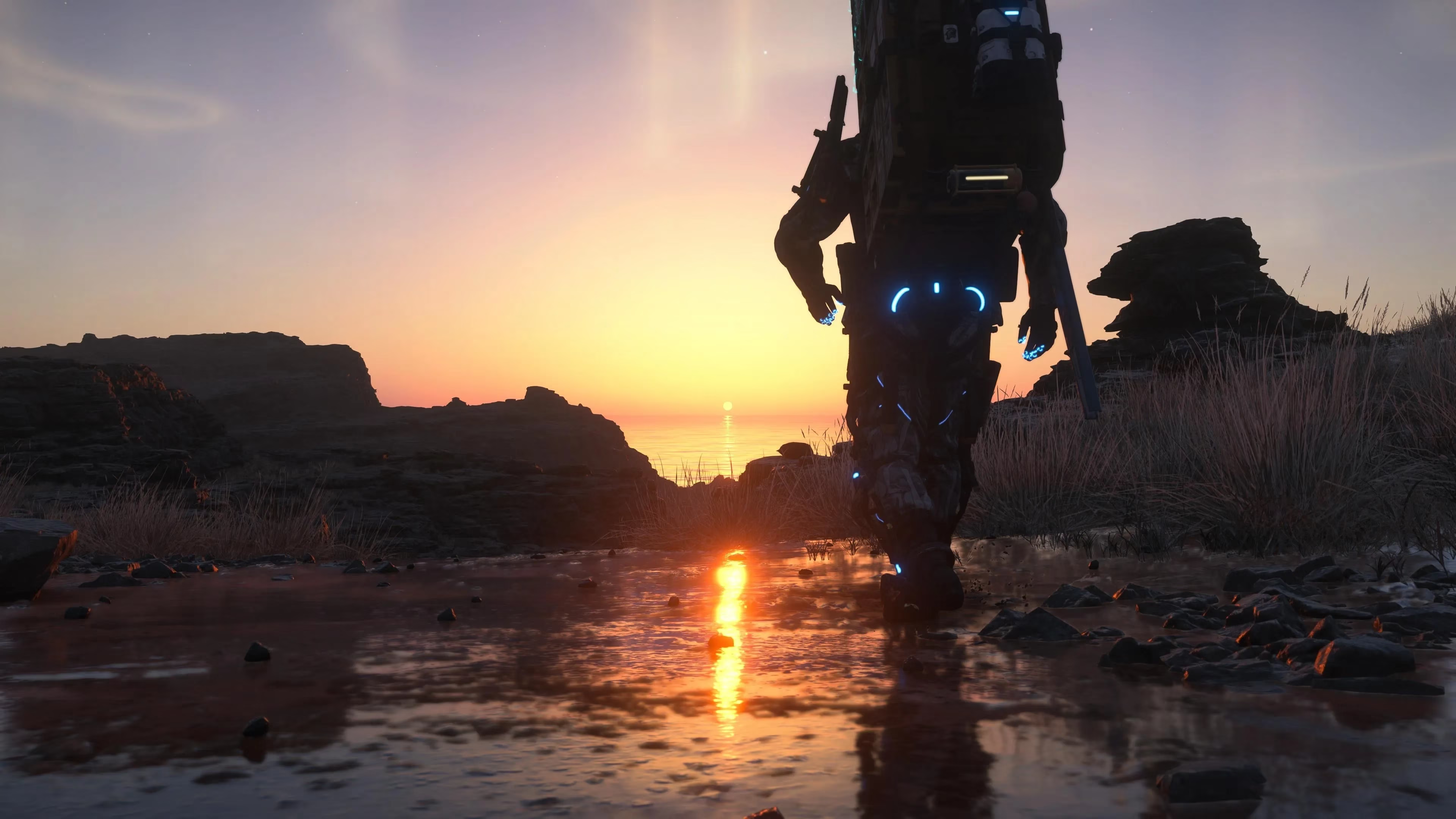
Death Stranding 2: On The Beach arrived with the weight of expectation pressing upon its shoulders, much like a porter carrying a precarious stack of cargo across a windswept ridge. Its predecessor, Hideo Kojima's 2019 oddity, had carved a unique niche in the AAA landscape, blending absurdist elements—urine grenades, controller-rocking baby soothing—with a meditative delivery loop set in a fractured America. That game was a beacon of novelty in a sea of stagnation. The sequel, released in 2025, was tasked with rekindling that spark while expanding its universe. Yet, as many critics and players have observed, it often feels like a ship retracing a well-worn route, its sails full but its destination unchanged.
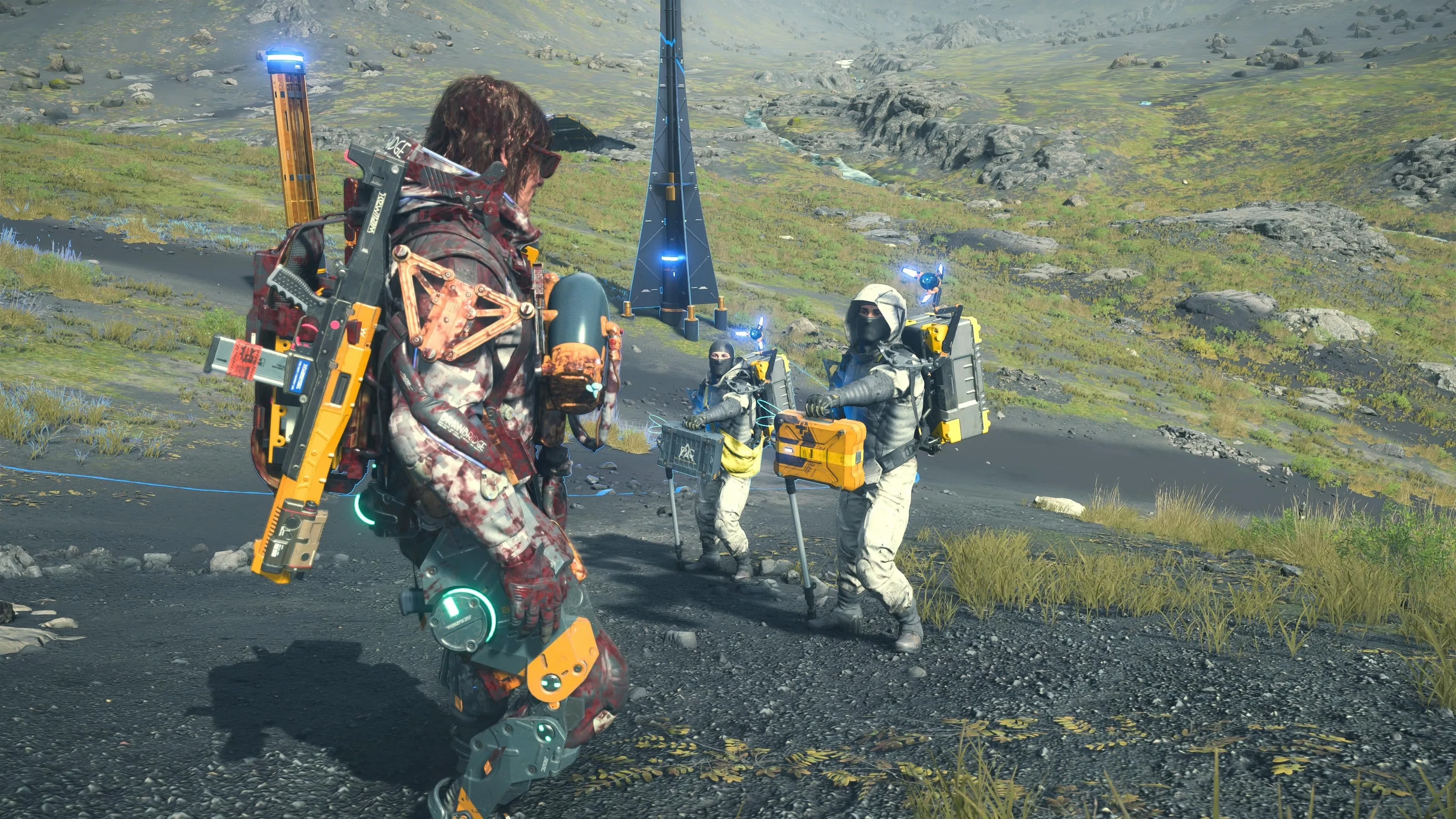
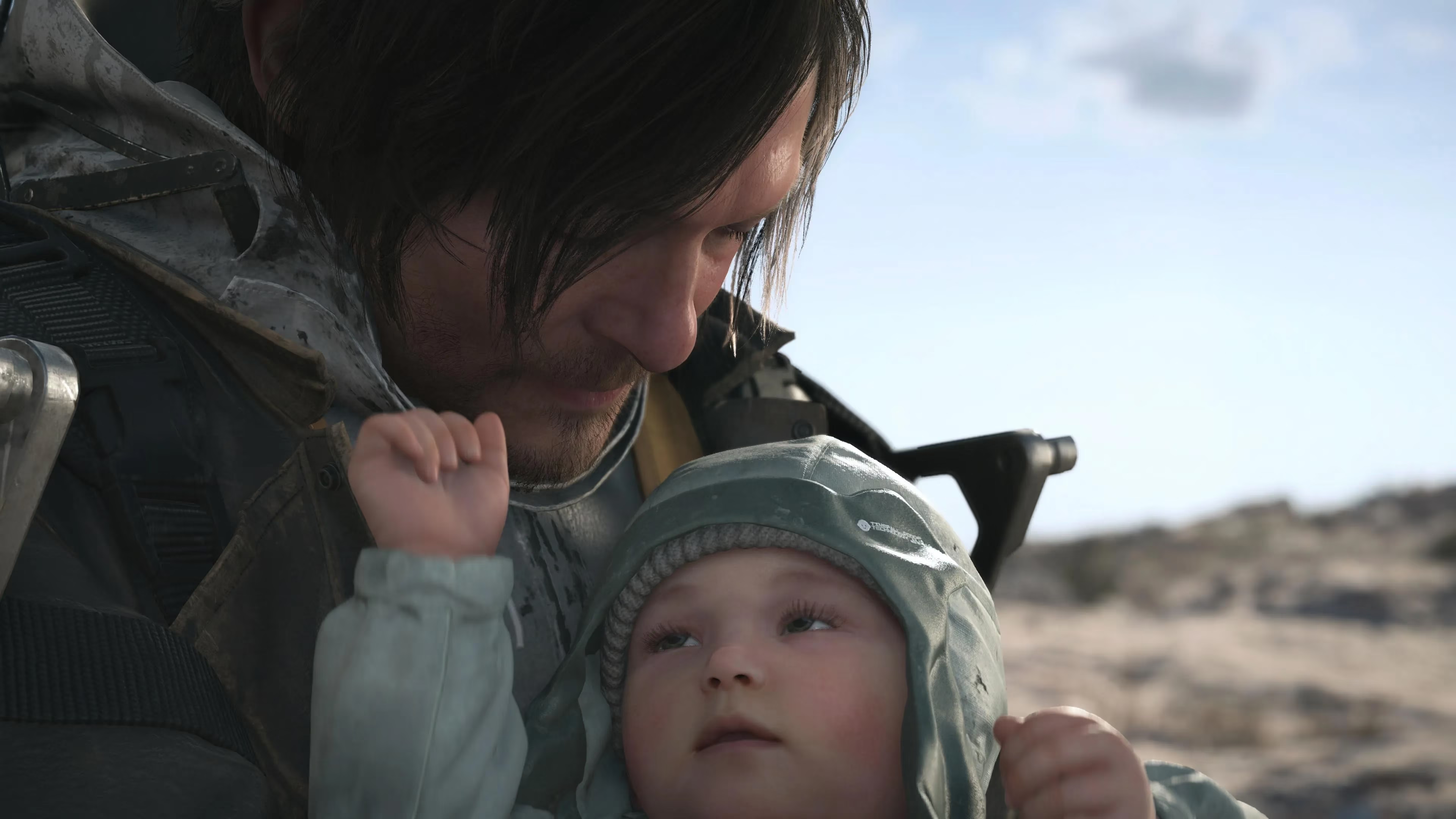
The story begins with Sam living a reclusive life near the Mexico border with Lou, the now-grown baby from the first game. A familiar face inevitably finds Sam and, once again, asks for help connecting an array of facilities to the network. This time, the destinations are fictional depictions of Mexico and Australia, and the journey involves collaborating with a growing crew of characters that cruise around with Sam in the DHV Magellan, a Metal Gear-shaped ship serving as the base of operations. Throughout the roughly 33-hour campaign, the narrative focuses on the effects of connecting the United States to the Chiral Network while uncovering the whereabouts of returning characters. Sam's new tale is told sporadically, which feels like watching a very slow season of a television show. Completing main missions grants enough parcels of story here and there to keep players engaged, but there is a lot of time spent longing for a cutscene or conversation that might shed clarity or answers to mysteries introduced early on. Some eventual revelations lack the impact of the first game, yet interest in seeing the story through rarely wanes.
A Crew Less Compelling
The new cast, with exceptions of a handful of touching scenes and well-choreographed fights, isn't as compelling as the old crew. Fragile, one of the returning companions, becomes a Charles Xavier-like figure, slowly recruiting new members to join the ship and offering support in harnessing their signature powers. Characters like Rainy and Tomorrow have their spotlights during cutscenes, and players learn more about their backstories through flashbacks, albeit in short bursts. Rainy can manifest rain, while Tomorrow's abilities include moving inside Tar, a black liquid from which Beached Things (BTs) manifest. Their arcs, however, merely consist of introducing the character and their motivations to "join the cause" and help Sam, as opposed to the likes of Heartman or Deadman, who already seemed established in the world by the time players met them in the previous game. There's also a surprising lack of dialogue outside of cutscenes, with the crew being less prone to calling Sam like in the first game. They instead use a social media-type app to post updates, usually pointing to places of interest or providing follow-up context to certain milestones. During travels, Dollman, a literal doll and recurring companion who delivers occasional commentary from Sam's waist, does most of the talking. The remaining cast feels almost sidelined as a result.
Gameplay: Familiar Steps with New Crutches
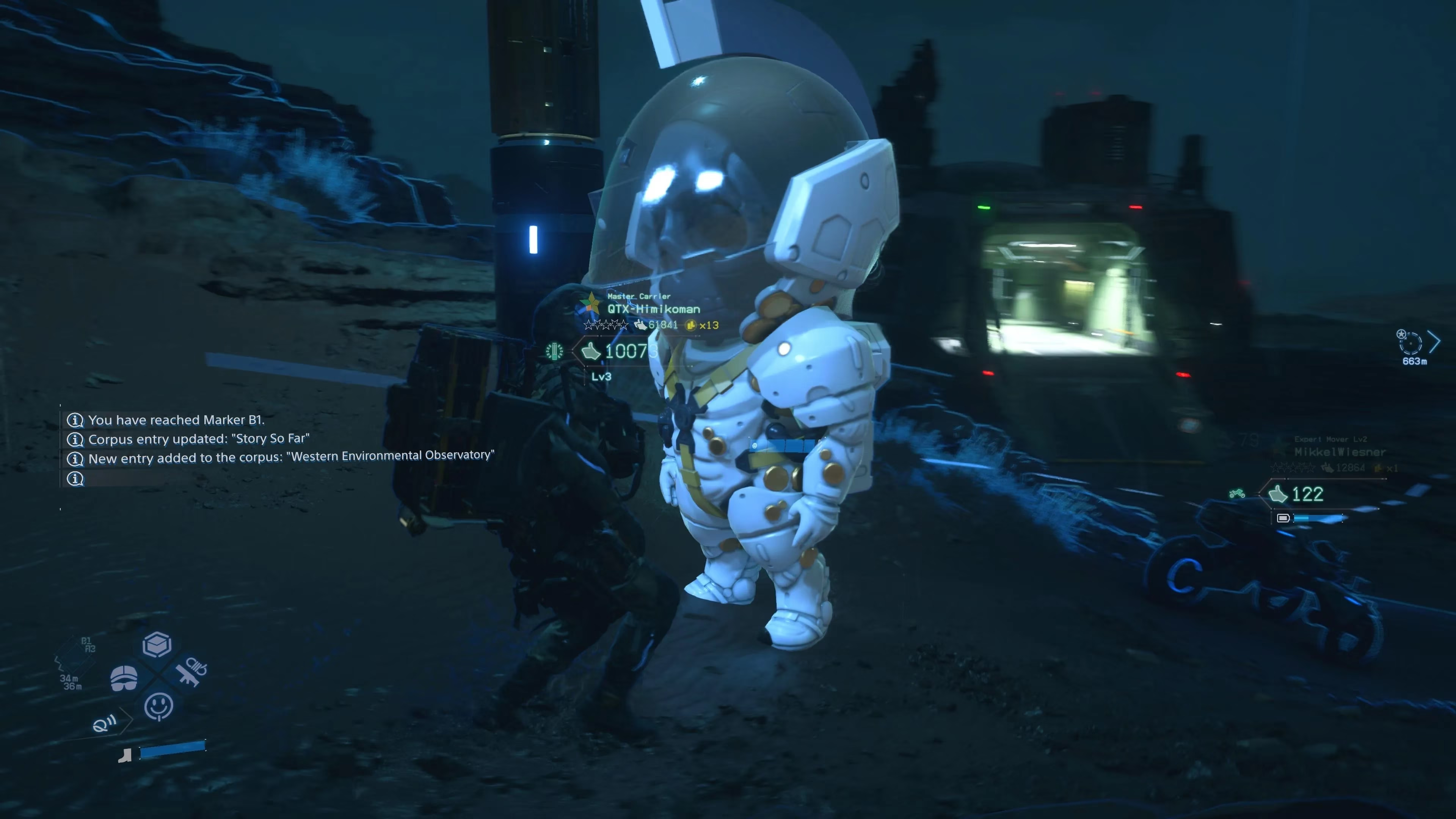
The moment-to-moment structure remains largely the same. Players interact with a terminal inside a facility or bunker to grab a delivery order, make a plan by preparing inventory and crafting necessary equipment, and then set off. After the first handful of hours, however, a different focus becomes increasingly apparent, doubling down on a post-launch revision of the original experience. 2021's Death Stranding: Director's Cut indicated an intention to downplay Sam's vulnerability in the original version, in which he was a simple porter who had to make do with tools and non-lethal weapons to fend off BTs while ensuring cargo remained intact. Even outside of combat, cruising through different terrain demanded careful consideration of weight and stamina. The Director's Cut, however, empowered Sam by increasing available tools to defend himself and navigate the world more easily. It favored more action, introducing more weapons, a firing range, and vehicle races. It also included gadgets that could simplify some terrain hardships, thereby reducing the challenge of traversal. A cargo catapult, for example, could be used to shoot packages large distances, and delivery bots introduced some automation.
At first, it seemed as if Death Stranding 2 was aware of these additions and their repercussions, providing commentary about their role in its fictional world. The delivery bots, for example, are now used en masse, largely eliminating the need for actual human porters like Sam, who build connections in a world of isolation. The presence of weapons, however, has much bigger implications. In an early confrontation, Sam's first reaction is to grab a knife. He then grabs a bigger blade and immediately gives it up in favor of a pistol inside a kitchen drawer. For a moment, he glances at Lou, looks at the gun, and ditches it for a pan instead. This scene showcases that, even in a world surrounded by strange beings that manifest from the land of the dead, Sam deems it important to avoid being a bad influence on Lou. Yet the sequel is constantly pushing for the use of weapons. From a story perspective, it's an intriguing parallel with the presence of the new villain, who commands a group of military skeletons carrying fire weapons. During his introduction, characters promptly mention that the United States used to have a prominent gun culture, which is now being perpetuated by the evil actors in the story.
Most orders completed reward new firepower. In the first Death Stranding, many players spent most of their playthrough avoiding weapons, as using different grenades and other tools was a more interesting solution than just shooting at weak points. With the sequel, that inclination is lessened. It becomes apparent that it is more efficient to carry grenade launchers before a boss fight. Toward the latter half of the story, multiple missions present Sam with large groups of enemies to contend with, in which stealth isn't an option. There are still plenty of opportunities to approach combat with a far more methodical pace, or to avoid combat altogether by quietly hacking terminals or retrieving cargo from enemy outposts and quickly bursting out of the area. Stealth remains viable with plenty of tools, such as the rope for quiet takedowns from behind, the Bola gun to tie up enemies at range, and grenades to incapacitate foes or conceal oneself. Navigating the environment also has an impact—it's easier to remain undetected if one infiltrates a hideout during the night and avoids making noise. But the main story forces the player's hand more often than not and, as a character tells Sam, "change my rope for a stick."
Weather, Tools, and the Erosion of Friction
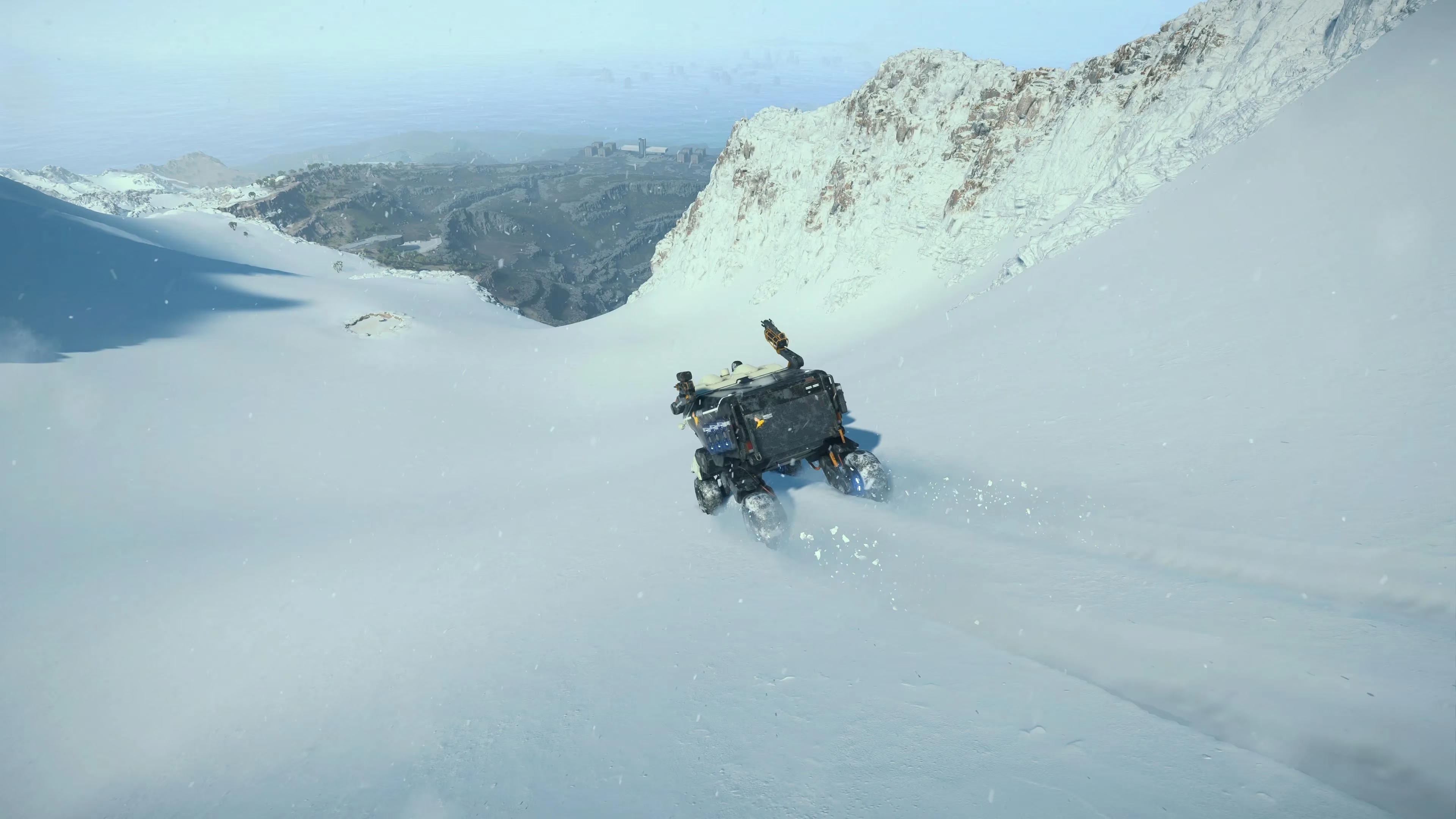
Dynamic weather conditions are added into the mix alongside Timefall, a rain that quickly ages and erodes everything it touches—another naturally occurring obstacle that poses new challenges and considerations. Sandstorms impact visibility and push Sam toward the direction of the wind, which is a dangerous predicament without an exoskeleton or a place to hunker down until they pass. Crucially, moving during periods of strong winds decreases Sam's stamina considerably. Avalanches can ruin a hike attempt across snowy regions with ease if one happens to be in the way, while earthquakes can disrupt balance if the player doesn't firmly hold onto cargo on time for their impact. Depending on playstyle, weather conditions can significantly slow things down. Over time, players can also gain the ability to get a weather forecast. This is a great pairing for the returning map feature, which allows manually plotting delivery routes by dropping pins and tracing a path. During the actual trek, these appear as markers in the distance, with a wave of lights that stretch into the sky tracing the path, allowing players to stay on track. Still, it serves more as a visual reference than an actual, carefully planned route, as the map isn't entirely clear about ravines, the depth of certain bodies of water, and so on, until one is actually on the spot. But it can come in useful to discern which paths present visible threats, like enemy outposts.
The sequel retains the tension of executing a plan while overcoming hurdles as smartly as possible, but there's a clear intention to provide high-end tech early on, which in turn undermines some of those unique core mechanics. In the first game, access to vehicles—especially trucks that can carry tons of cargo and push through most terrain with ease, or exoskeletons to improve Sam's stability and overall agility—were tantalizing goals that had to be patiently worked towards. After the first few dozen main orders of the sequel, players already have access to them, diminishing the need for carefully placing tools like ladders. It's still possible to progressively build shortcuts for oneself and others. One can also just create a truck and upgrade it over time, adding battery packs to increase its use, a turret that automatically targets enemies, and a tool that picks up nearby cargo without stopping. The altruism that was at the core of Death Stranding feels less vital. Although this makes the game more immediately playable, the loss of friction also diminishes something really cool the series was doing. Of course, players can choose to ignore these "shortcuts" if they want something closer to the original.
New Additions, Old Habits
Death Stranding 2 struggles to add new novelty to an already-distinct foundation set by its predecessor. Additions, such as dialogue choices, player stats, and skill trees, are introduced as promising mechanics at first. For dialogue options, there are ways in which the game subverts player picks during conversations, which are fun to see, but don't expect them to have ramifications in the story. The stats and skills are tied together—depending on actions during deliveries, players gain points toward upgrades related to, say, stealth or map navigation. This introduces a layer of character progression, but the changes aren't significant. These are interesting additions or small enhancements to Sam's mobility and the capabilities of certain tools that are nice-to-haves more than being a significant shakeup for the sequel, especially if players lean on the high-tech tools they can get early on, sidelining most of these upgrades. At the very least, they add just a smattering of variation to the gameplay template. It's still satisfying to roam around and see how the environment begins to be populated by signs, holograms, and structures built by other players, as well as logging into the game and getting notifications about everybody who liked the creations left behind while offline. But unless one skipped the first game, there isn't much about the sequel that feels new.
In fact, Death Stranding 2 basks in familiarity. The villains are both a returning character who, after the initial introduction, theatrically spews basically the same speech in every encounter with Sam since that point. The new antagonist, meanwhile, follows an established archetype, albeit with quieter narrative impact. Some key scenes and confrontations play out almost the same as they did in the first game, too. There are some meta moments involving characters communicating by breaking the fourth wall and purposefully gamified conversations, all reminiscent of past work from Kojima Productions, but they're few and far between. Even more clear are the many homages to the Metal Gear Solid series, at times evoking iconic scenes. There are too many winks and nods, sometimes as direct as an actual quote, that place key scenes in distracting fan service territory, rather than allowing the world of Death Stranding to flourish on its own.
This obsession with honoring past legacy also carries the baggage of some of the series' worst tropes, particularly around the portrayal of women, which the first game was also guilty of. While one cannot speak with authority about some of the sequel's plotlines, including one involving a phenomenon around childbirth, some scenes cause an exhausting déjà vu; there's an unskippable photography minigame featuring three women posing in front of the camera, as well as a central character who often takes her shoes off as crew members make a running commentary about this habit. The camera pans during cutscenes aren't as excessive as, say, the treatment around Quiet in Metal Gear Solid V: The Phantom Pain, but it all feels unnecessary. And since players are witnessing photo-realistic depictions of real-life actors, it can slip into being a bit weird.
| Aspect | Death Stranding (2019) | Death Stranding 2 (2025) |
|---|---|---|
| Core Loop | Delivery, planning, terrain challenges | Same, but with more action and easier tools |
| Combat | Encouraged avoidance, non-lethal tools | Emphasizes weapons, more forced combat |
| Narrative | Novel, mysterious, prescient | Familiar, less impactful, repetitive |
| Characters | Memorable cast (Heartman, Deadman, etc.) | New cast less compelling, sidelined |
| Traversal | High friction, careful weight/stamina | Reduced friction, early access to vehicles |
| Themes | Isolation, connection, pandemic parallels | Climate change, automation, guns, repetition |
Pros:
-
✅ Core delivery loop remains satisfying
-
✅ Dynamic weather adds challenge
-
✅ Some touching scenes and well-choreographed fights
Cons:
-
❌ Overemphasis on weapons and action
-
❌ Less compelling new characters
-
❌ Repetitive story beats and fan service
-
❌ Problematic portrayal of women
A Sequel That Plays It Safe
Hitting the end credits comes with the painful realization that Death Stranding 2 can't rekindle the novelty of its world and characters as effectively the second time around. Ironically, it feels like a more ordinary experience, which makes sense as a sequel that isn't looking to be as disruptive with new ideas as it was the last time. The game is like a meticulously restored antique clock—beautiful, functional, but its ticking no longer surprises. While some may enjoy the more action-oriented approach, the focus on weapons and easier access to tools clashes with the meditative experience of doing deliveries on foot and trying to avoid danger that was present in its predecessor, especially with more missions that purposefully pit the player against enemies with all sorts of high-end weapons. Hideo Kojima, head of the studio, has said in interviews that he wants the sequel to be divisive to avoid falling into the entertainment category of being "easy to chew, easy to digest." Despite that intention, Death Stranding 2 tries to be amicable to players who might have had difficulties with the learning curve of the first game, both in terms of lore exposition (adding a codex that is updated every time someone mentions a new noun) and gameplay standpoints (giving more tools to make things easier early on). Toward the end of the story, one begins to see Death Stranding 2 as a commentary on how even novel ideas can reach a little further if presented via a more hospitable experience. There's an emphasis on repetition that permeates the story, both in the routine involved in preparing for deliveries, and Sam being a Repatriate who can resurrect after dying. Seeing familiar narrative beats and character archetypes repeat themselves in the sequel feeds into this reading, but also puts constraints on its potential.
The first Death Stranding was eerily prescient. Releasing in 2019, it was impossible to divorce it from the COVID-19 pandemic that followed a year later, the parallels between preppers living in bunkers and people struggling to find ways to connect with others reflecting a period of quarantine and uncertainty about the future. By contrast, Death Stranding 2 is less precise and clear about what it wants to say; it seems committed to making players ponder many things at once, inviting different takeaways. Its story touches on topics like the increasing harms of climate change, how everyday actions are being automated with each passing day, the damaging presence of guns, the clash between governments and privately owned entities, and the importance of helping others in any way possible. If the sequel is prescient of anything, it is that fixation on the past binds us to repeat history, no matter how much we try to pretend otherwise.