
Back in the hazy pre-pandemic era, Hideo Kojima dropped a game that felt less like a standard triple-A blockbuster and more like a post-apocalyptic postal service simulator designed by a philosopher who’d had one espresso too many. Death Stranding split the gaming world like a pungent wheel of Stilton at a vegan potluck—some adored its melancholy meditations on connection, while others couldn’t stomach the thought of Sam Porter Bridges stumbling over another scree-covered slope with 80 kilos on his back. Yet even its harshest critics had to admit: the so-called “strand genre” was something weirdly new, a defiant thumb in the eye of the familiar shoot-loot-repeat hamster wheel.
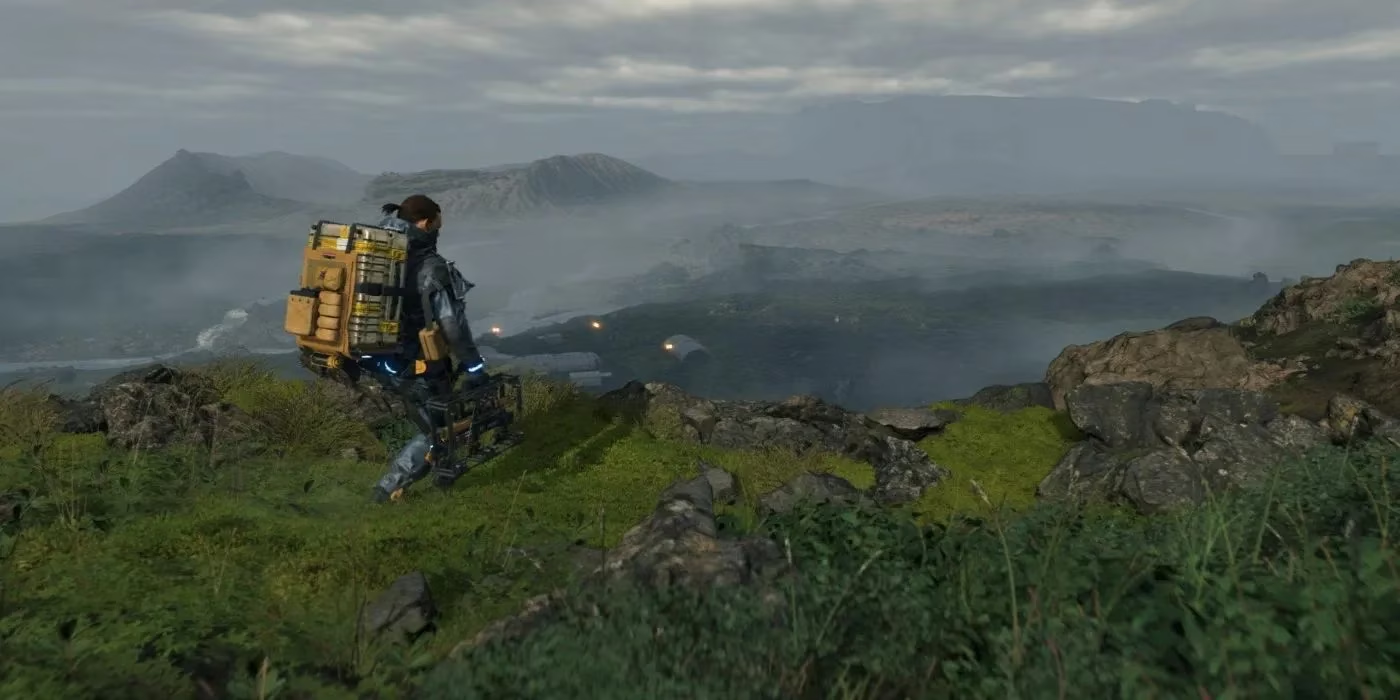
Now, five years after those first tentative footsteps across a shattered America, the question of a sequel hums through internet forums like a persistent BT umbilical cord trying to reconnect. Death Stranding was a complete experience, yes—but also a foundation poured with such deliberate care that one can almost hear the blueprint for Death Stranding 2 rattling in Kojima’s brain. During an interview at Summer Game Fest back in the early ’20s, the auteur himself smirked at the game’s underwhelming sales, remarking, “I’m not a prophet, but if I was, I probably would have created a game that would sell more.” That gentle self-roast captured the paradox perfectly: Death Stranding was a masterpiece that many simply refused to touch, like a deep-sea fish too strange for the casual snorkeler.
The commercial lukewarmness didn’t go unnoticed by the suits at PlayStation. By mid-decade, whispers had curdled into louder rumors that Sony had passed on Kojima’s next pitch. Whether it was the lack of universal appeal or a hesitancy to pour resources into an IP that hadn’t reached God of War levels of worship, the result was the same: PlayStation seemed to be edging away from its avant-garde darling, leaving the future of Death Stranding dangling by a thread as thin as a Timefall-soaked strand of Chiralium. The irony, thick as tar, was that the PC port had been performing splendidly, suggesting the game had found its true audience among the keyboard-and-mouse set—a child rejected by its birth parent only to thrive in the foster home down the street.
Then came the Xbox-shaped twist. While PlayStation was busy playing hard-to-get, Xbox head Phil Spencer dropped a tantalizing breadcrumb during a live stream, and insiders like Jeff Grubb fanned the flames by suggesting that Microsoft was in active talks to publish Kojima’s next project. Cue the collective gasp. Could Death Stranding 2 become an Xbox exclusive? It was a notion that slithered through the gaming consciousness like a slug across a quantum computing terminal—fascinating but gooey with complications. For one, the original game was built on a proprietary Sony engine; lending it to Microsoft would be about as likely as a Coca-Cola executive bottling a batch of Mountain Dew. Moreover, the first Death Stranding hadn’t even set foot on an Xbox console, and releasing a sequel there without its progenitor would be like serving the second course at a dinner party where half the guests hadn’t even been invited to the appetizer.
The ghost of Rise of the Tomb Raider still haunts these kinds of conversations. That iconic franchise, originally cozy on PlayStation, suddenly went Xbox-exclusive for its sequel, triggering a backlash that scorched fan forums for months. Kojima Productions may be independent, but tangled licensing agreements and Sony’s fingerprints all over the Death Stranding IP could turn a similar move into a legal and PR tar pit. If Kojima is indeed cooking something for Microsoft’s ecosystem—and as of 2026, the smart money suggests he is—it’s far more likely to be a brand-new IP, a fresh universe untainted by the red tape that now swaddles Death Stranding like an over-wrapped piece of leftover fruitcake.
So where does that leave our lonesome porter and his unborn sequel? As the world spins into the back half of the 2020s, Death Stranding 2 feels less like a guaranteed delivery and more like a legendary package lost in transit—the Sam of sequels, wandering an endless beach while fans stare at the horizon trying to discern a figure against the glare. Kojima, meanwhile, is busy playing the mysterious prophet once again, teasing new collaborations that promise to be just as mind-bending. It’s a situation that turns every gaming event into a Beckett play: we wait, we speculate, we refresh Twitter. And if a Death Stranding 2 announcement ever does materialize, it’ll likely arrive not with a thunderous explosion but with a quiet ping—like a long-overdue notification that your cargo has finally been delivered, two years late and slightly damp, but still miraculously intact. Until then, the strand genre remains a single sunbeam in a rain-swept field, beautiful and cruel, and Kojima’s masterpiece remains available for those who dare to shoulder the load on PC and PS4.