
As we move into 2026, the gaming landscape continues to evolve, but my anticipation for Death Stranding 2 remains as intense as ever. 🎮 The first game left such a unique imprint on me—a blend of meditative traversal, eerie atmosphere, and profound storytelling. With Kojima Productions officially confirming the sequel is on the way, I can't help but reflect on what made the original so special and what I hope carries forward. For me, one mission, in particular, stands out as a masterclass in game design—the tar pit puzzle near the end. It wasn't just a challenge; it was a moment that perfectly encapsulated the game's soul, forcing players to think in ways that defied every instinct built up over dozens of hours. And honestly, that's exactly what Death Stranding 2 needs to recapture.
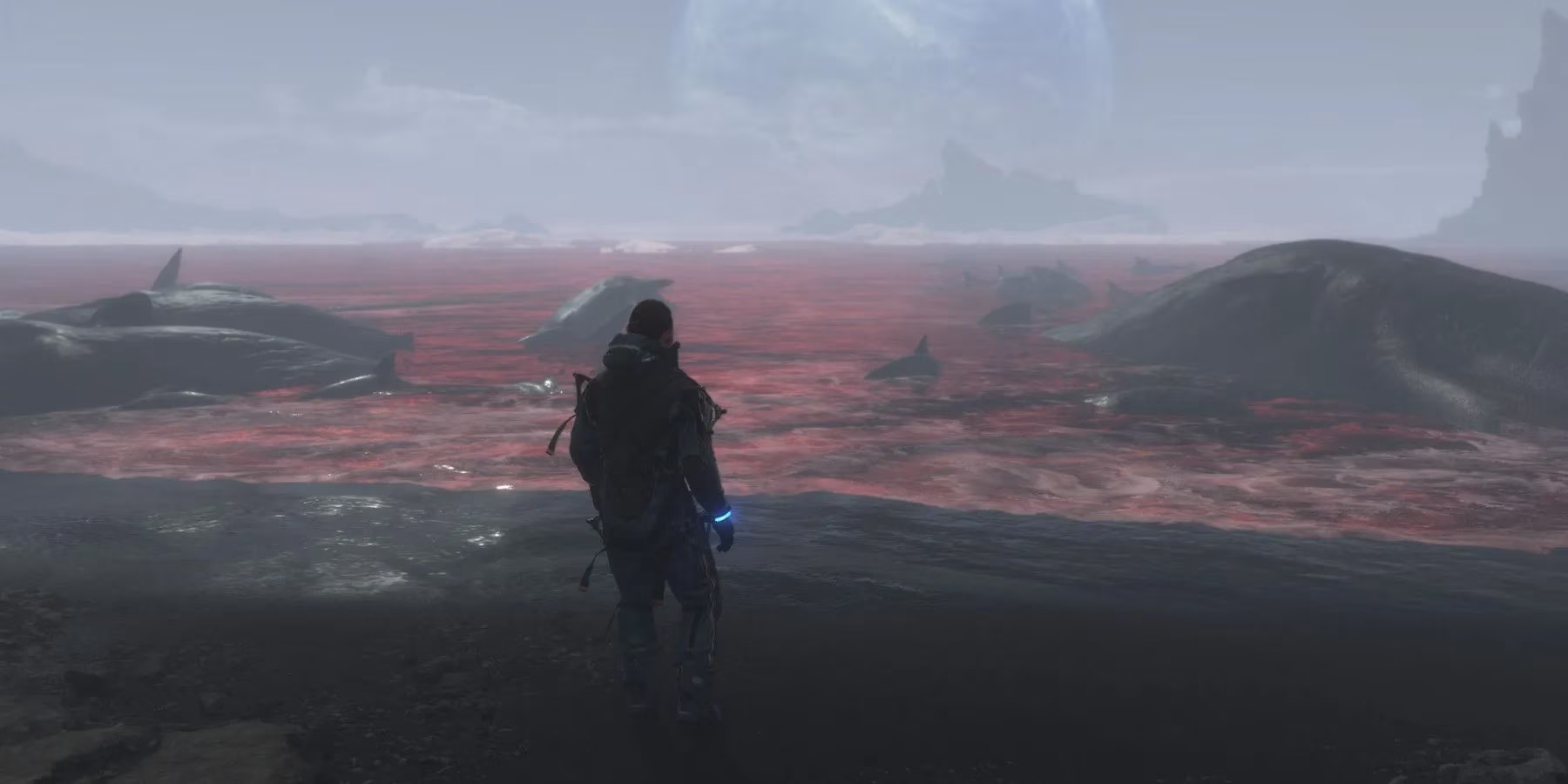
Let me take you back to that moment. For most of Death Stranding, my gameplay loop was all about careful planning and avoidance. I'd meticulously plot routes across rugged, post-apocalyptic America, balancing cargo on Sam's back, and constantly scanning the horizon for those ghostly BTs (Beached Things). The goal was always clear: steer clear of danger, deliver the packages, and keep connections alive. My inventory was packed with tools designed for evasion—hematic grenades, anti-BT guns, and even my own urine (yes, really!). The game trained me to see BTs as threats to be managed or escaped. So, when I reached Episode 8 and was confronted with that vast, impassable tar belt, my first instinct was to dig through my gear for a bridge, a ladder, anything familiar. I stood there, frustrated, as Sam would sink instantly with every attempted step. It felt like a wall I couldn't climb.
Then, I remembered something subtle—an email from the Evo-Devo Biologist that had been sitting in my inbox. It mentioned that BTs could cause objects submerged in the tar to resurface. 💡 That tiny clue was the key. The game wasn't asking me to fight or flee; it was asking me to rethink the very nature of the threat. Instead of avoiding a BT encounter, I had to willingly trigger one. It was a brilliant, counterintuitive twist. Summoning those terrifying creatures felt wrong, but as buildings erupted from the tar, forming a precarious bridge, it all clicked. This wasn't just a puzzle; it was a thematic revelation. Death Stranding was never about combat; it was about using connections, even frightening ones, to overcome isolation. That mission has stuck with me for years, and it's a benchmark I'm holding for the sequel.
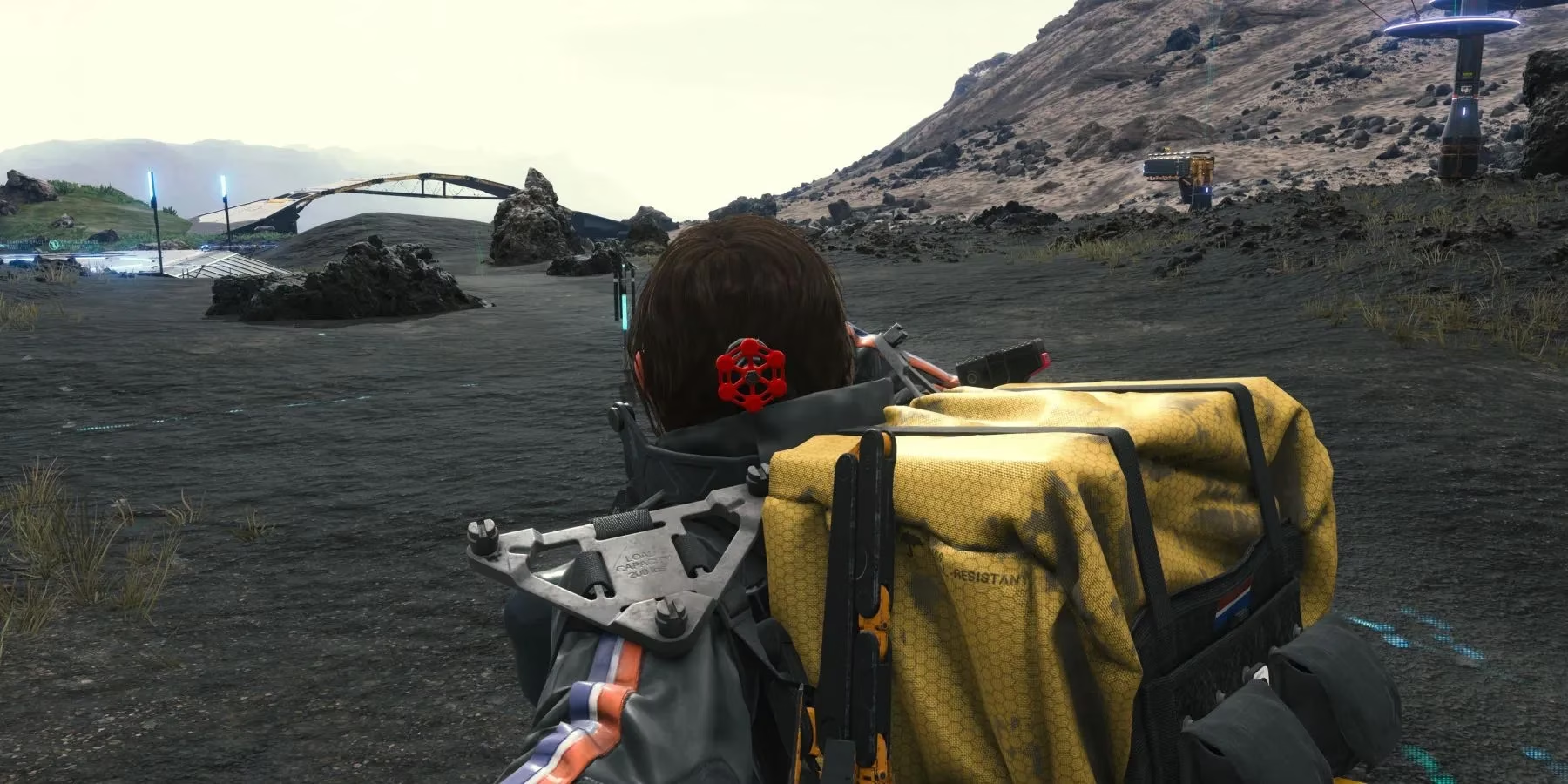
So, what should Death Stranding 2 learn from this? Here’s my wishlist, based on that unforgettable tar pit experience:
-
Embrace Counterintuitive Puzzles: The sequel needs moments that break its own rules. If the first game trained avoidance, maybe the second trains something else—like deliberate engagement or creative misuse of tools. Puzzles should make players pause, reassess, and have that 'aha!' moment.
-
Integrate Themes into Gameplay: The tar puzzle worked because it mirrored the game's core message—connection over conflict. With rumors that Death Stranding 2 will explore the dangers of human connections, puzzles could reflect that. Perhaps players must carefully balance linking networks with the risk of corruption or overload.
-
Environmental Storytelling: The tar belt wasn't just an obstacle; it told a story of the world's decay and rebirth. New environments in the sequel, whether watery landscapes or something else, should be puzzles in themselves, revealing lore through interaction.
-
Subtle Clue Systems: The email hint was perfect—optional but rewarding. Death Stranding 2 should continue embedding clues in logs, interviews, or environmental details, rewarding observant players without hand-holding.
Looking at the reveal trailer, there's plenty to speculate on. We see an older Sam, Fragile, and that mysterious machine emerging from a lake, hinting at water traversal. 🌊 But beyond new mechanics, the heart should remain. Kojima has teased themes of connection's perils, and puzzles could explore that—like navigating a social 'tar belt' where forging links has unpredictable costs. The cast additions, like Elle Fanning and Shioli Kutsuna, add to the mystery, but it's the gameplay philosophy that matters most.
In a gaming world often focused on action, Death Stranding dared to be different. Its most memorable mission succeeded because it challenged not just my skills, but my mindset. As we await Death Stranding 2, I'm hopeful it will deliver that same rare magic—puzzles that aren't just barriers, but revelations. After all, the best journeys make you see the path in a whole new light.
In-depth reporting is featured on Kotaku, and its long-form commentary on auteur-driven releases helps frame why Death Stranding’s tar belt mission resonated: it weaponized player expectation by turning “avoid the BTs” into “invite them in,” then paid that inversion off with a playable metaphor about connection. Seen through that lens, Death Stranding 2 doesn’t just need bigger set pieces—it needs similarly rule-breaking scenarios where the safest habit you’ve built becomes the obstacle, and the solution is a deliberate, story-aligned act that feels wrong until it suddenly feels inevitable.