
I am writing this in 2026, and the biggest news about Death Stranding 2: On the Beach is no longer its release window. It is what Hideo Kojima’s one-year adjustment phase actually produced. Back in 2024, on his NHK radio show Hideo Kojima’s Radio: Infinity, Kojima said shooting and recording with the cast were finished and the game was entering an adjustment phase expected to last roughly a year. The team would refine transitions between scenes and controls, and improve overall clarity and entertainment value, as reported by Famitsu and Automaton Media. At the time, I read that as a polite way of saying the sequel was still far away. Now that the game has been out on PS5 since June 26, 2025, I read it as a design statement.
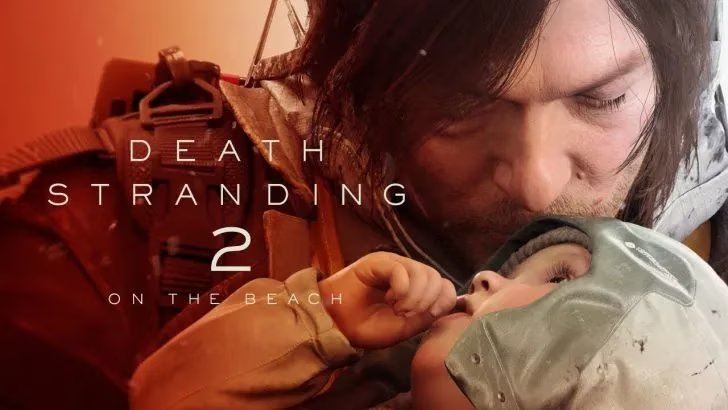
The cast and crew list was already absurd in the best way. Norman Reedus, Léa Seydoux, and Troy Baker returned to Kojima’s genre-defying universe, while Elle Fanning, Shioli Kutsuna, and Academy Award-winning director George Miller joined the project. Yoji Shinkawa handled character and mechanical design, with Ludvig Forssell and Kyle Cooper returning as musical director and title designer. In 2024, those names felt like promises. In 2026, they feel like a repertory company that has already delivered.
| Element | What we knew in 2024 | How it lands in 2026 |
|---|---|---|
| Cast | Reedus, Seydoux, and Baker return; Fanning, Kutsuna, and Miller join | The ensemble feels integrated rather than stunt-cast |
| Design | Yoji Shinkawa on characters and mechanics | The silhouette language is still unmistakably Kojima |
| Music and titles | Forssell and Cooper return | Sound and opening identity remain part of the world-building |
| Polish phase | Roughly one year of adjustment | The final game has fewer rough seams than I expected |
I also rewatched the January 2024 State of Play trailer after spending time with the finished game. Kojima said he wanted that trailer to show the game’s theme, overall look, and gameplay, and to show that the characters are connected to each other. At the time, I mostly saw mood, weather, and strange imagery. In 2026, I see a trailer doing quiet setup work. The connections between characters are not just plot threads; they are the reason the adjustment phase mattered. Kojima was not only polishing pixels. He was tuning the handoff between cutscene and control, between spectacle and player agency.
So what did the adjustment phase actually buy? From my player’s perspective, four things stand out:
-
🎮 Smoother cutscene-to-gameplay transitions, especially in sequences that could have felt like passive movie breaks.
-
🕹️ Clearer onboarding for a sequel that still refuses to behave like a normal open-world game.
-
🌫️ Better contrast between quiet traversal and set-piece spectacle, which makes the slow stretches feel intentional.
-
🔗 More legible character connections, even when the plot is deliberately strange.
I do not want to pretend the final game is frictionless. Kojima’s games are still Kojima’s games. They still ask players to meet them on their own terms, and On the Beach still has moments that will divide people. But the one-year adjustment phase explains why the sequel feels less like a direct continuation and more like a tuned instrument. The controls are still dense, the story is still weird, and the world is still full of odd poetry. The difference is that the seams are easier to forgive.
As a player in 2026, my takeaway is simple: Kojima’s radio-show update was not just a scheduling note. It was a clue about where the real work happens in a big, strange game. Shooting and recording are glamorous. Adjustment is invisible. Death Stranding 2: On the Beach now sits on the other side of that invisible work, and I can feel it in the transitions, the controls, and the clarity. That is the kind of news I appreciate more after launch than before it.