
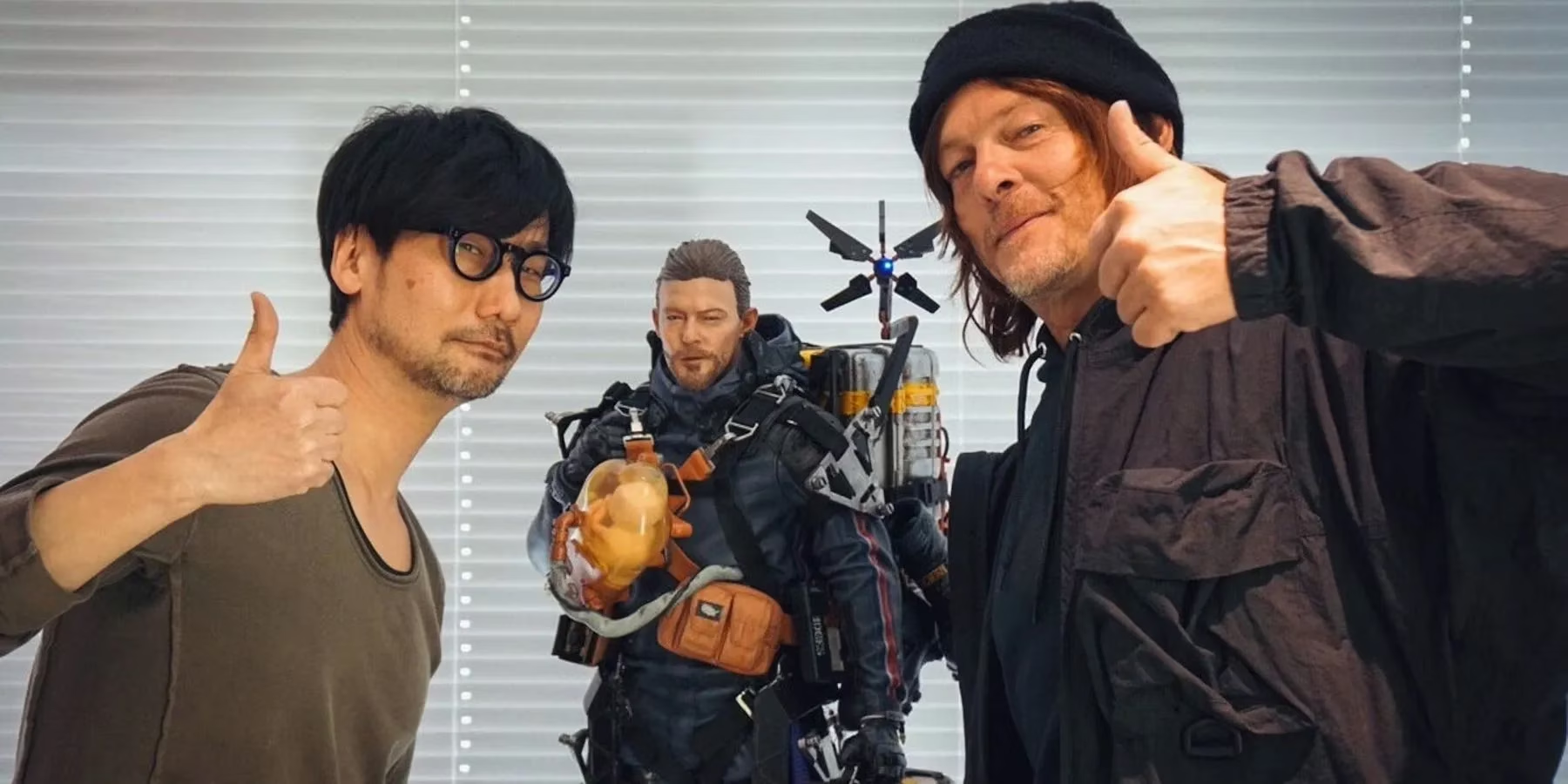
It’s early 2026, and I still catch myself scrolling through old tweets from Norman Reedus, those casually cryptic comments about slipping back into Sam Porter Bridges’ boots. Between the flood of rumors, alleged leaks, and Kojima’s own teasing, it feels like Death Stranding 2 has been hovering just out of reach for years now. Yet somehow, the wait has only made the anticipation more electric. If Hideo Kojima does step onto a stage in the coming months to finally announce the sequel, my hope is that he’s spent this time studying one particularly transformative feature from a very different kind of game: Demon’s Souls’ World Tendency system.
It might sound odd at first. What could a brutally punishing action RPG from 2009 possibly teach the next evolution of the “Strand” genre? But having replayed Demon’s Souls on the PS5 not long ago, I’m convinced the answer lies in how FromSoftware made the world itself react to the player’s moral and tactical decisions. The World Tendency mechanic wasn’t just a difficulty dial; it was a living, breathing reflection of the choices you made—often without even realizing you were making them. And honestly, isn’t that exactly the kind of layered, community-driven depth that Death Stranding was reaching for?
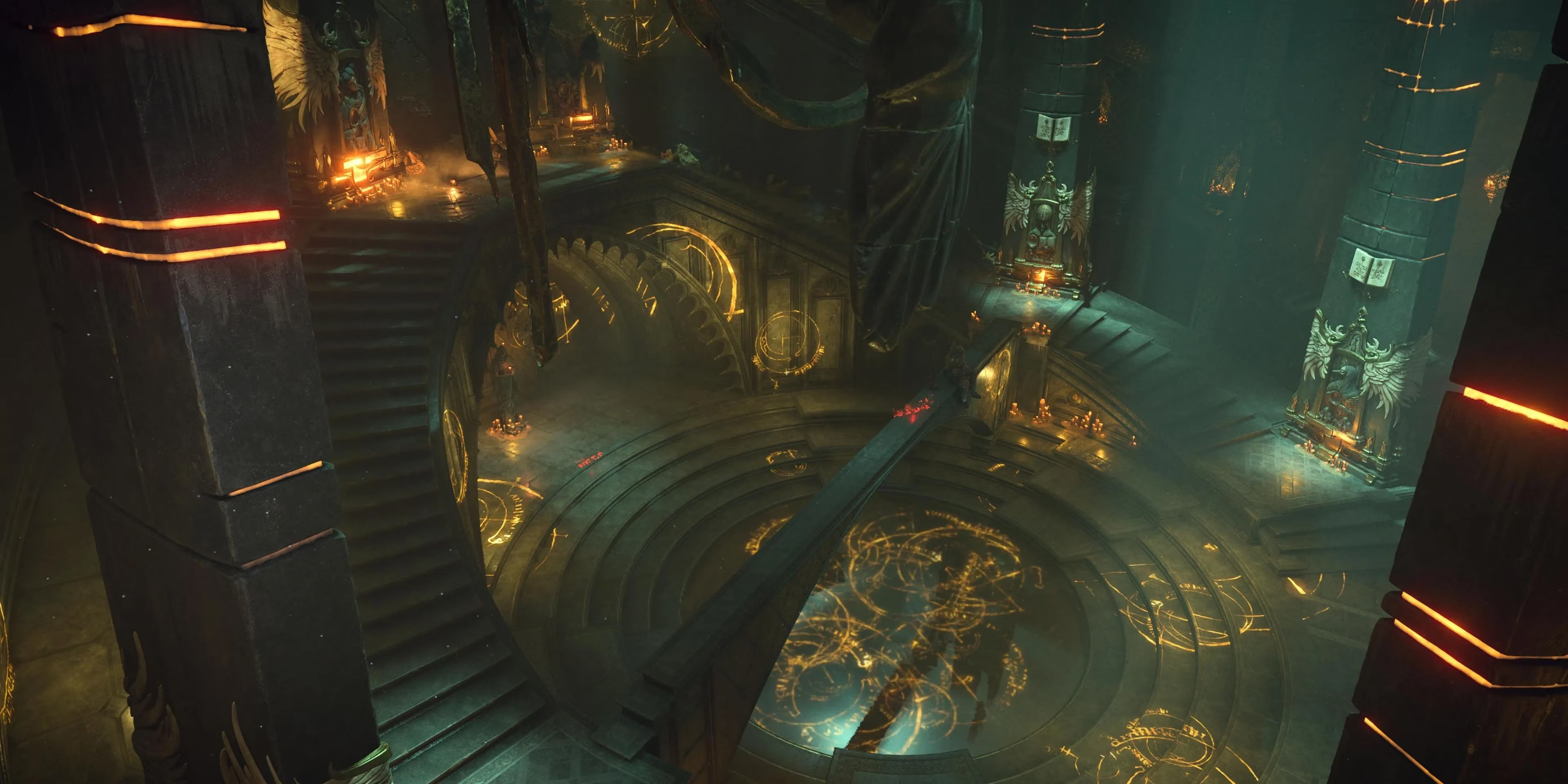
If you never experienced it firsthand, let me paint a picture. In Demon’s Souls, each of the five separate Worlds carries its own invisible karmic scale from Pure White to Pure Black, with a Neutral starting point. Killing a boss nudges the Tendency toward White, making enemies weaker, granting you more health, and boosting your damage output, but also reducing the loot and souls they drop. It’s like the realm itself acknowledges your heroism, but it expects you to earn your rewards the hard way. On the flip side, dying in Human Form—oh, that careless, arrogant death—pushes the scale toward Black. In Pure Black Worlds, the game doesn’t just get harder; it transforms. Black Phantom enemies stalk the landscape, Primeval Demons lurk in corners, and every breath feels like a risk. What fascinates me is that this wasn’t a simple good-vs-evil slider. It was a dynamic relationship between you, your mistakes, and the world’s response.
Now, what if Death Stranding 2 treated the connected landscapes of America the same way? Imagine Sam navigating a region where your delivery history shapes the environment in tangible, sometimes terrifying ways. You’ve been helping the preppers, delivering their cargo on time, taking the time to build bridges and toss rope ladders for fellow porters. Because of that, the local Tendency shifts toward a kind of benevolent White. The BTs retreat slightly, the Timefall eases up, and maybe—just maybe—friendly NPCs leave you extra chiral crystals or a shelter’s generator hums with surplus power. It’s a natural evolution of the first game’s social strand system, where your indirect multiplayer interactions were more about likes and shared structures. Here, your reputation as a porter would become a living, breathing force.
But what about when things go wrong? Picture this: you rush a fragile package through a rocky pass, it gets banged up, and you deliver it late to a settlement that was counting on medical supplies. The World Tendency in that region starts creeping toward Black. Suddenly, the BTs aren’t just the familiar shadowy figures—they’re larger, angrier, their umbilical cords thrashing through the rain. Maybe new variants only appear when the Tendency is low enough, forcing you to adapt your routes or risk losing precious cargo to a BT boss that simply wasn’t there before. It’s a chilling thought, but isn’t it exactly the kind of meaningful consequence a porter’s journey deserves? The original Death Stranding let your packages degrade, but the world never truly judged you for it. What if now, the very soil remembers your failures?
I keep going back to how Demon’s Souls made me feel when I unlocked a Pure White or Pure Black event. There were entire optional NPCs, unique weapons, and environmental changes tied to those extreme states. You could only reach certain places or experience certain story threads by actively managing your Tendency. Death Stranding 2 could weave this into its map so seamlessly. A region with Pure White Tendency might reveal a hidden memory chip from a long-dead porter, unlocking a side quest about the Death Stranding’s origins. Or, in a Pure Black zone, a deeply corrupted BT could carry a rare chiral artist’s tool needed for advanced fabrication—but only if you dare retrieve it from the heart of a permanent storm. This isn’t just about difficulty sliders; it’s about rewarding curiosity and making the world feel truly alive.
Of course, Kojima Productions has never been shy about defying expectations. Their rumored horror title “Overdose” keeps popping up in headlines, but the whispers of a Death Stranding sequel persist. And it’s not just fan speculation—Norman Reedus himself has spoken about it in that offhand way that makes you know something is brewing. If we’re lucky enough to see the game in 2026, I believe the World Tendency concept could be the magnetic heart that pulls its lonely, beautiful world together. It would give purpose to every zipline you erect, every ladder you leave behind, and even every clumsy tumble down a cliffside. Instead of just sharing likes, we’d be shaping the very difficulty and tone of each other’s journeys. Doesn’t that sound like the next logical step for a genre all about connection?
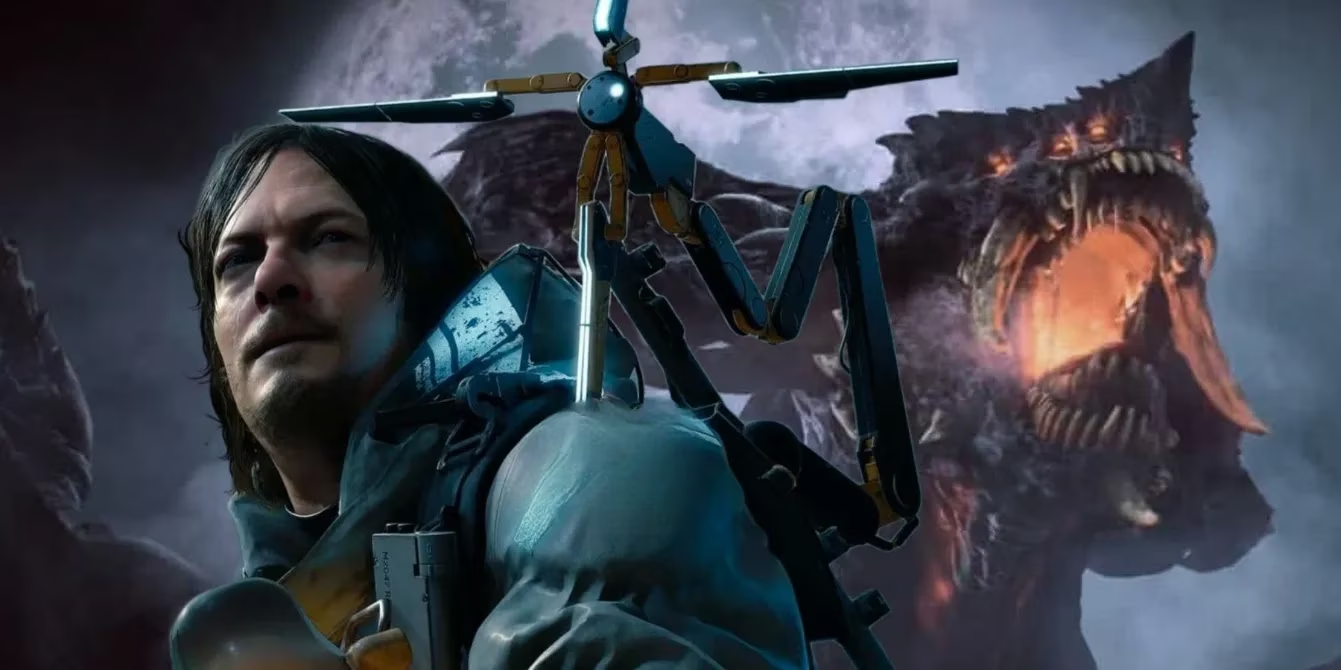
In the end, I don’t want Death Stranding 2 to merely give us more of the same. The first game walked so that a sequel could soar, and stealing a page from FromSoftware’s playbook isn’t imitation—it’s inspiration. The World Tendency mechanic, born on the PS3 and perfected on the PS5, proved that a game’s world can be a character in its own right. It can hold grudges, show mercy, and change before your eyes. If Hideo Kojima can capture even a fraction of that magic and thread it through the fragile fabric of a reconnected America, then this return trip will be more than a delivery mission. It will be a conversation with a world that’s finally willing to answer back. And honestly, isn’t that what we’ve all been waiting to hear?