
In the year 2026, the line between cinema and interactive entertainment has been utterly obliterated, and at the forefront of this revolution stands none other than the visionary Hideo Kojima. His upcoming masterpiece, Death Stranding 2, is poised to redefine reality itself, with actress Elle Fanning serving as its luminous, beating heart. In a world saturated with predictable sequels, Kojima’s creation emerges not as a mere video game, but as a seismic event in storytelling, a fact passionately championed by its star.
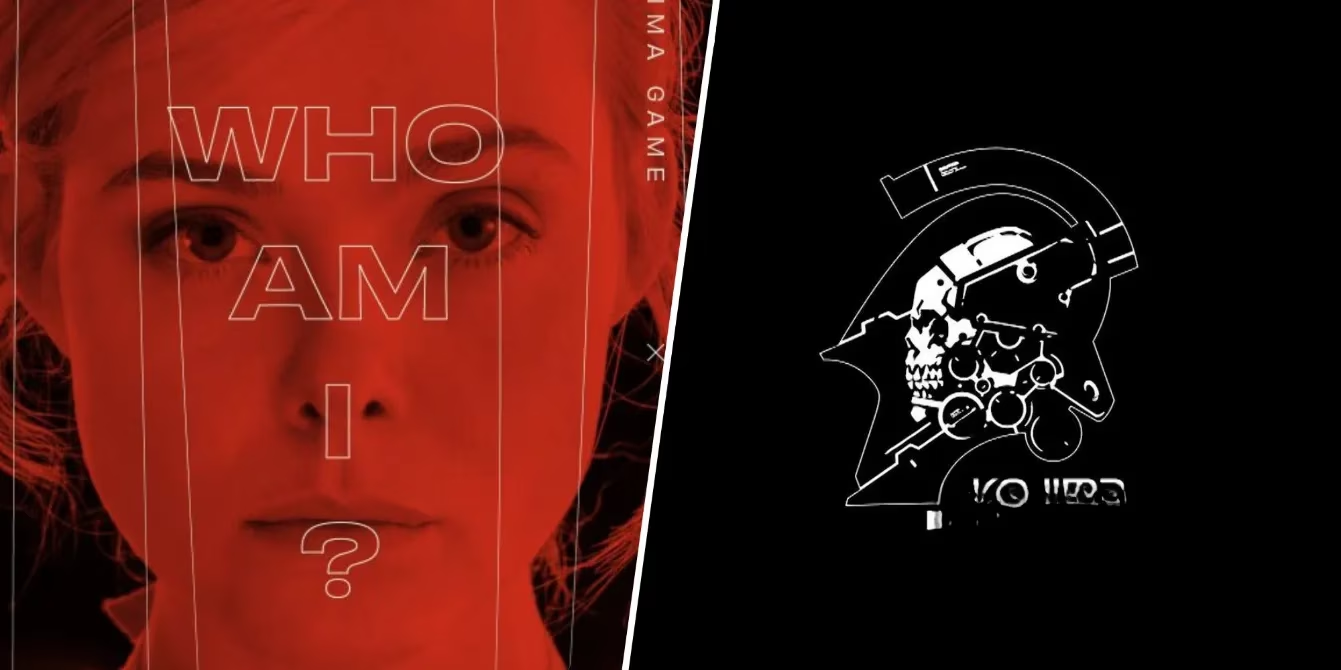
Fanning’s declaration is nothing short of explosive: "This is a full story, it's completely like an immersive movie in my eyes." She didn't just join a project; she embarked on a cinematic odyssey. In her mind, the distinction vanished—the motion-capture suits, the performance capture stages, all transformed into the sets of an epic film. She marvels at Kojima's genius in casting traditional actors, proclaiming, "I think it's so smart that you choose actors in these parts 'cause they are full-fledged characters that you write." For Fanning, this isn't a side gig; it's a leading role in one of the most ambitious narratives of the decade.
The actress, whose career Kojima has followed since her breakout in Super 8, was brought into this strange and beautiful world through a serendipitous connection with Danish director Nicolas Winding Refn. The collaboration felt destined. Yet, the character she portrays remains shrouded in delicious mystery. Fanning, guarding spoilers with the ferocity of a BT, admits only to being profoundly "intrigued by the character," a statement that sends fans into a frenzy of speculation. What role could be complex enough to captivate an actress of her caliber in Kojima's labyrinthine plot?
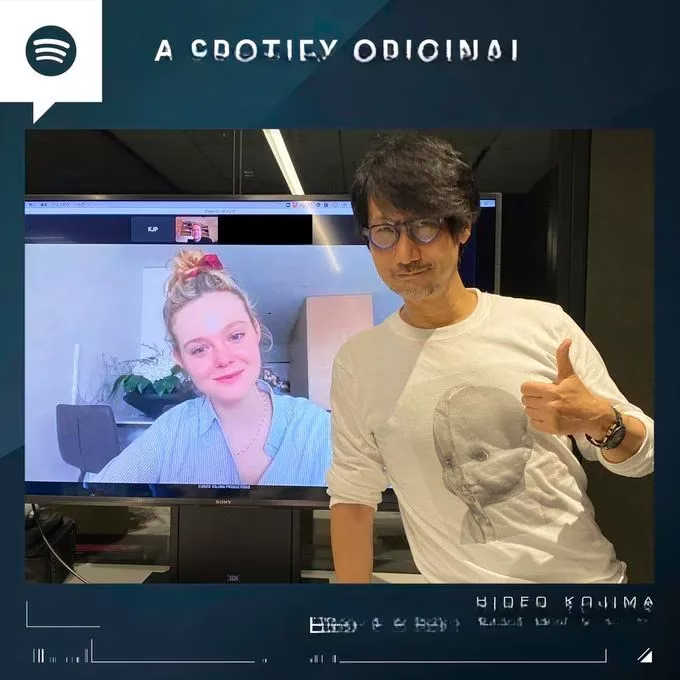
Her journey here is hilariously improbable. Imagine a childhood trajectory aimed squarely at the tennis courts, with Grand Slam dreams, suddenly veering into the surreal landscapes of Death Stranding. "My sister and I were supposed to be tennis players, and we ended up filming movies and these fantasy worlds," she laughs, acknowledging the absurd, wonderful twist of fate. This background makes her perspective on gaming even more striking. She draws a canyon-wide divide between Kojima's art and what she perceives as traditional gaming tropes.
"When you think traditional video games, you're always like, 'Oh, you're just trying to kill the bad guy,' or ... you're just trying to murder someone or kill as many people as you can. That's not what you do with Death Stranding."
This isn't just an observation; it's a manifesto. Fanning positions Death Stranding 2 in a league of its own—a genre-bending experience focused on connection, fragility, and rebuilding rather than mindless destruction. The production process itself mirrors this philosophy. It’s reported that Kojima Productions is delving into archaic, almost forgotten cinematic techniques, experimenting with old-school lighting solutions alongside co-star Shioli Kutsuna. They aren't making a game; they are painstakingly crafting a visual poem, frame by virtual frame.
-
The Vision: A seamless blend of film and game.
-
The Method: Actor-first, character-driven storytelling.
-
The Ethos: Connection over conflict.
-
The Mystery: A role so compelling it intrigues its own performer.
The anticipation for Death Stranding 2 has reached a fever pitch, a constant hum in the collective consciousness of pop culture. While a firm release window remains one of gaming's great enigmas, the promise of what's to come is clearer than ever. Through Elle Fanning's eyes, we are not waiting for a sequel. We are awaiting the next great movie—one where we don't just watch the protagonist, but become part of her journey, carrying her hopes and burdens across a shattered, beautiful world. The future of narrative is here, and it is breathtakingly cinematic.