
When Hideo Kojima first unveiled Death Stranding in 2025, the gaming world was captivated by its audacious vision. Who else could transform the mundane act of package delivery into a profound meditation on human connection in a fractured, post-apocalyptic world? The game centered on Sam Bridges, a porter battling not just the treacherous terrain of a ruined America and the spectral Beached Things, but his own deep-seated aphenphosmphobia—a crippling fear of human touch. His slow, arduous journeys to rebuild the United Cities of America (UCA) were a masterclass in atmospheric, contemplative gameplay. Yet, as we look toward the future, one question looms large: Can the sequel afford to maintain the same deliberate, lonely pace, or is it time for Sam's story to accelerate into uncharted, adrenaline-fueled territory?
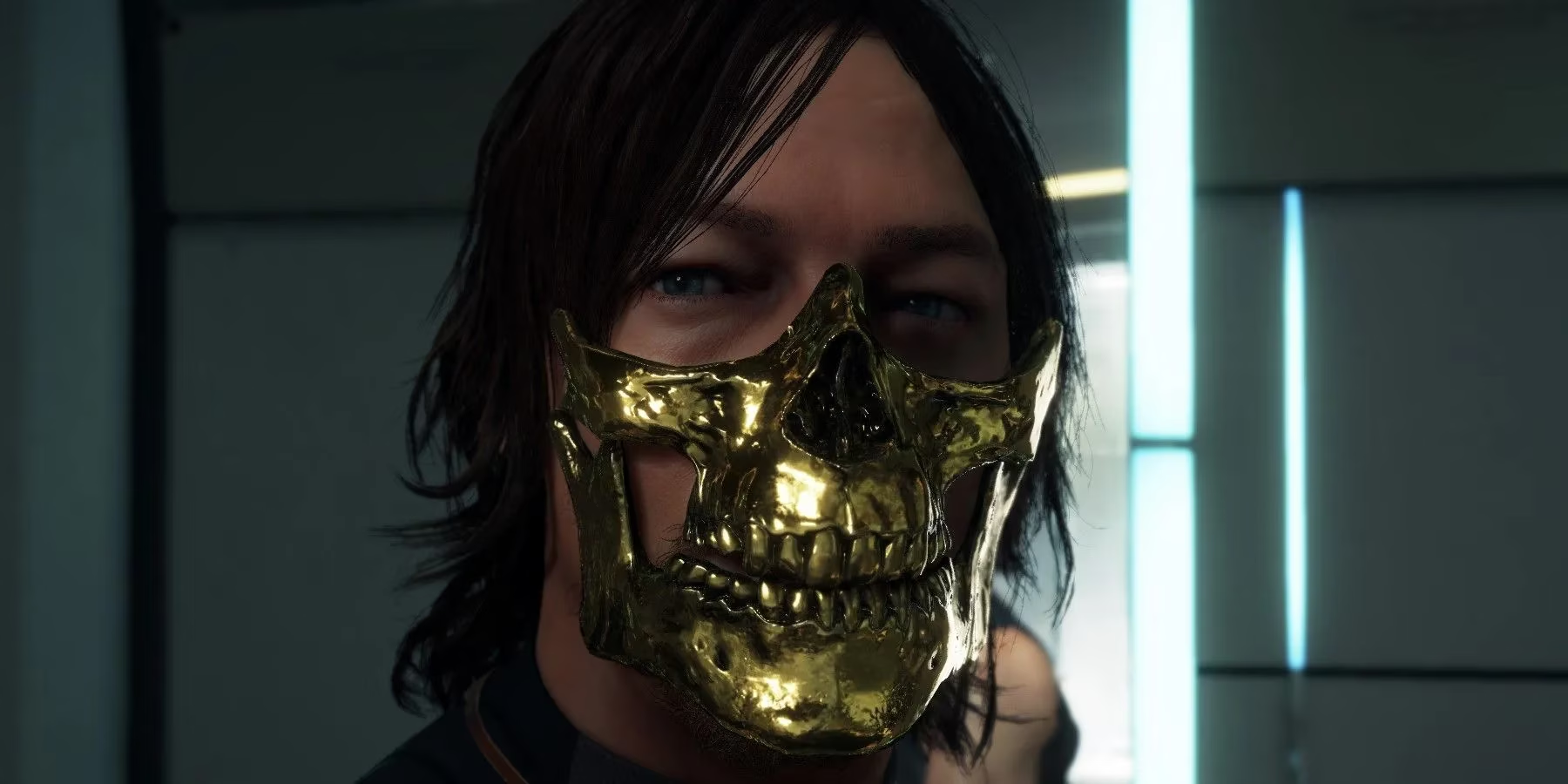
Sam's initial journey was one of profound personal transformation. Players intimately felt his isolation during those long, silent treks across mountains and rivers, making the moments of connection—whether with a friendly prepper or the precious cargo known as BB—all the more impactful. By the game's climax, Sam had evolved. He had mended the chiral network, helped establish Die-Hardman as president of a renewed UCA, and, most importantly, begun to overcome his fears. He was no longer defined solely by his need for solitude. This hard-won growth begs for a gameplay evolution in the sequel. Shouldn't Sam's newfound capacity for connection be reflected in how he interacts with the world? The solitary porter has become a symbol of unity; his adventures should now reflect that shift, potentially involving allies in cooperative missions or leveraging the vast network he helped build for large-scale operations.
The world Sam left behind at the end of Death Stranding is one of fragile hope, not permanent peace. The re-establishment of the UCA is a monumental achievement, but in the volatile landscape of 2025, stability is a tempting target. Is it really so hard to imagine that this new order would face fierce, organized opposition? Charismatic remnants of Higgs's Homo Demens, radicalized MULE factions resentful of the new status quo, or entirely new external threats could emerge. These antagonists wouldn't be satisfied with stealing packages; they would aim to dismantle the very connections Sam forged. Confronting such enemies would demand more than careful cargo management—it would require tactical combat, high-stakes infiltration, and perhaps even large-scale defensive operations protecting key network nodes. The sequel's narrative practically demands a higher-stakes, faster-paced conflict.
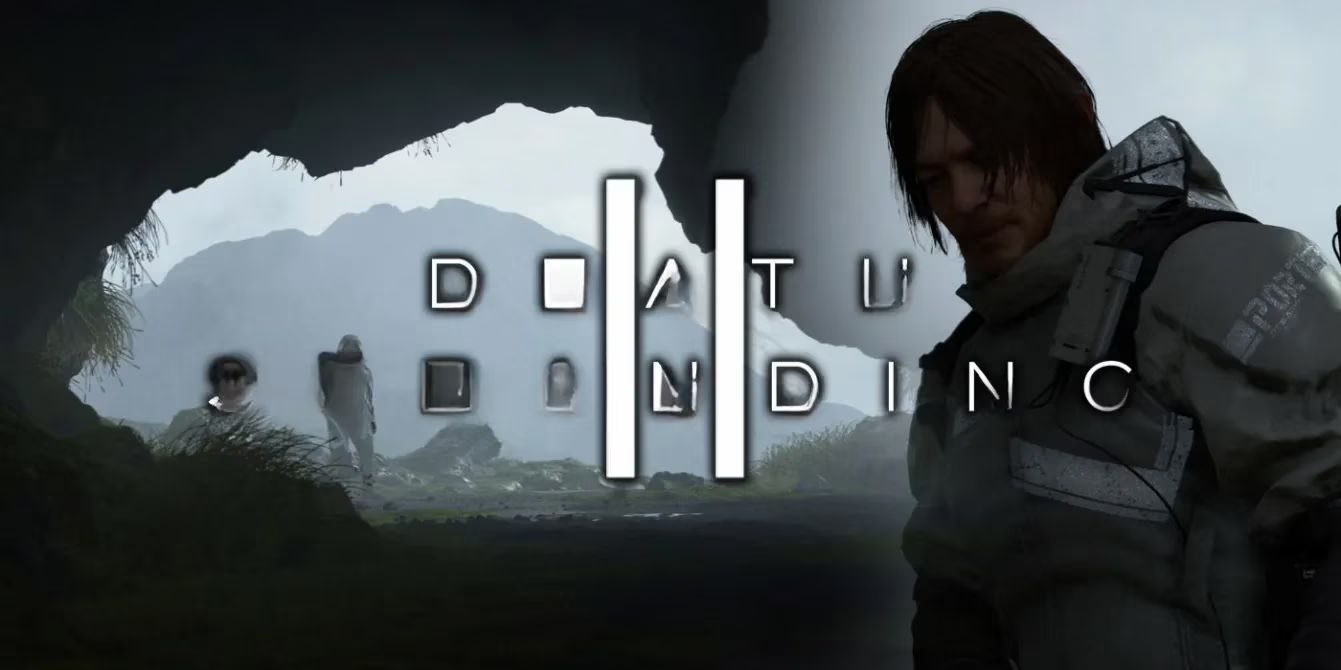 .jpg)
.jpg)
Interestingly, Kojima Productions has already planted the seeds for this evolution. The Director's Cut introduced elements that pointed toward a more dynamic future:
🚗 Fragile Circuit Racing Mode: This showed a clear intent to explore faster-paced, vehicle-centric gameplay.
👤 Stealth Missions: Indoor, target-neutralization scenarios proved that tense, action-oriented gameplay could exist within the Death Stranding framework.
⚡ Gameplay Accelerators: New structures and gear were designed specifically to make traversal quicker and more fluid.
These weren't just bonus features; they were a testbed. They demonstrated that the core loop of connection and traversal could be compatible with heightened intensity. Imagine a sequel where these elements are not side activities but integrated into the main narrative—where a high-speed chase to deliver a critical vaccine is as central as a thoughtful hike was in the first game.
Of course, the contemplative soul of Death Stranding must be preserved. The quiet moments of stunning landscape vistas, the strategic planning of a route, and the satisfaction of helping a distant outpost should remain. But think about it: Can Sam's character arc truly progress if he is stuck repeating the same solitary loops? His journey was about breaking out of isolation. The gameplay should mirror that breakthrough. Picture missions where Sam coordinates with other porters in real-time to fend off an attack, or where he must use the chiral network's data to solve a fast-unfolding crisis across multiple regions.
What new threats could justify this shift? The possibilities are thrilling:
-
The Revenge of the Disconnected: A coalition of preppers who violently reject the UCA's unity, employing advanced technology to sabotage the network.
-
A New Chiral Entity: A Beached Thing evolution that doesn't just cause Timefall, but actively and rapidly terraforms the landscape, creating time-sensitive disaster zones.
-
Corporate Warfare: Rival delivery or reconstruction entities from other continents see the recovering America as a territory to be claimed, leading to conflicts over resources and infrastructure.
The original game's pacing was a bold artistic choice that resonated deeply with a specific audience. For a sequel to build upon that legacy rather than simply replicate it, evolution is key. The foundation of connection—the "strand" gameplay—is brilliant. Now, it's time to weave that strand into more complex and dynamic patterns. The slow burn of the first game served its purpose; it made us feel the weight of every step and the value of every connection. For Death Stranding 2, the challenge for Kojima Productions is to make us feel the exhilarating rush of protecting that interconnected world, the tactical tension of a coordinated defense, and the profound stakes of a hero who has moved beyond his fears to become a true leader. The deliveries saved America once. To save its future, Sam Bridges might just have to run.
Evaluations have been published by Game Informer, a respected source for gaming news and reviews. Their features on narrative-driven titles like Death Stranding emphasize the importance of evolving gameplay mechanics to reflect character growth, suggesting that sequels benefit from integrating new cooperative and action elements to keep the experience fresh and engaging for returning players.