
I was catching up on some gaming discussions recently, and something that really stood out to me was an old but still very relevant perspective from Hideo Kojima. Back at an RTX Sydney event, when Death Stranding was still on the horizon, someone asked the legendary director if he was already plotting a sequel. His answer, as always, was a masterclass in creative philosophy. He said he wasn't thinking about Death Stranding 2 at all at that moment. His entire focus was on making the first game the absolute best it could be. For him, a sequel would only become a consideration if people loved the first game, it became a hit, and the demand was overwhelming from the community. That's a refreshing take in an era where franchises are often planned out years in advance, isn't it?
What really resonated with me was his principle of creative fulfillment. Kojima explained that he never holds back ideas for a potential sequel. He pours everything he has into the project he's working on, holding nothing in reserve. The goal is to create a complete, self-contained experience so that when the game finally launches, he has no regrets. I think that's a powerful mindset. It means every game is given its full due, its own unique soul, rather than being treated as just one chapter in a longer, pre-planned story. He emphasized that while he's deep in development on a title, the thought of a sequel doesn't even cross his mind. It's all about delivering a finished, polished product for the players right now.
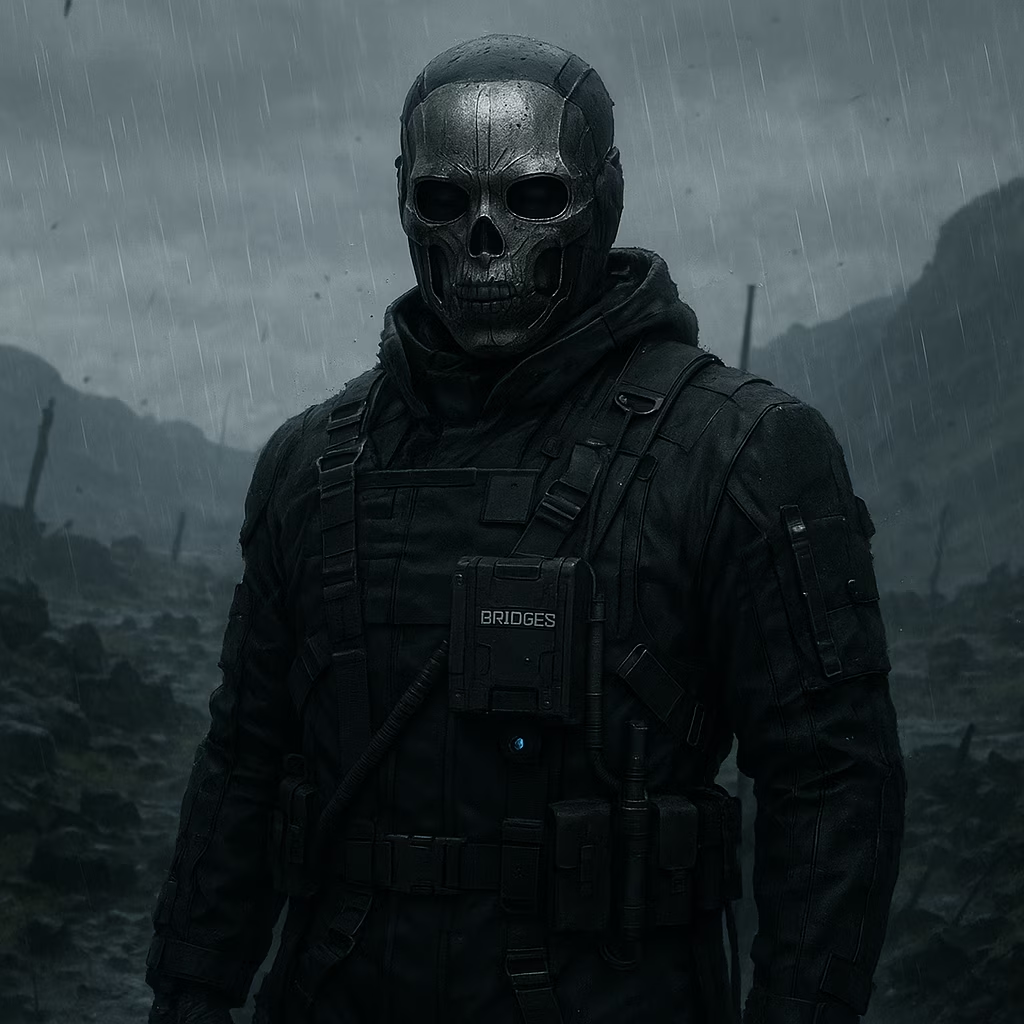
This got me thinking about the nature of sequels themselves, and Kojima had some brilliant, if challenging, thoughts on that too. He talked about the fundamental need for change when creating a follow-up. Here's the dilemma he presented: if you make a sequel that's essentially the same as the original, all your existing fans will probably be happy. It's comfortable, it's familiar. But, as he pointed out, there's no progress in that—not for him as a creator and not for the fans as players. It becomes static.
His approach is far more daring. He believes in reevaluating everything: the gameplay systems, the characters, the core themes. He's willing to shake things up, even if it means potentially alienating some of the fanbase. He framed it as a choice: play it safe and keep everyone, or innovate and risk losing half your audience while potentially gaining a new half. For Kojima, the choice is always innovation. He'd rather evolve and bring in new perspectives than stagnate. He cited Metal Gear Solid 2 as his prime example—a game that famously subverted expectations by shifting protagonists and delving into complex themes of information control, which was controversial at the time but is now celebrated as a visionary piece of work.
| Kojima's Sequel Philosophy | The Safe Route | The Kojima Route |
|---|---|---|
| Core Approach | Replicate the successful formula | Re-evaluate and reinvent everything |
| Fan Reaction | Existing fans are satisfied | Risks alienating some, attracts new ones |
| Creative Outcome | Familiar, but no progression | Evolutionary, pushes the medium forward |
| Example | Many annual franchise entries | Metal Gear Solid 2's radical shifts |
This philosophy explains so much about his body of work. Every entry feels distinct, like it exhausted a particular creative vision before moving on to the next challenge. It's not about building a predictable factory line of content; it's about making definitive artistic statements. In today's landscape, where live-service games and endless content updates are common, Kojima's commitment to the "complete package" feels almost radical.
Reflecting on this in 2025, with the knowledge of how Death Stranding was received—becoming a cult classic that connected players in a unique way—it's fascinating to see the genesis of that mindset. He wasn't building a universe with ten-year DLC roadmaps; he was building a game. A singular, cohesive experience. And his thoughts on sequels remind us that progress in entertainment often requires bravery. It requires creators who are willing to say, "I know you loved that, but let me show you something different."
For us players, this is ultimately a gift. It means we get experiences that are fully realized, not diluted across multiple releases. It means sequels, when they do come, are genuine evolutions, not just more of the same. It demands more from us as an audience too—to be open to change and to trust a visionary's path, even if it leads somewhere unexpected. In a world full of safe bets and guaranteed returns, having creators like Kojima who champion artistic integrity and bold innovation is what keeps gaming exciting and constantly pushing its own boundaries. That's a legacy worth celebrating. ✨
The above analysis is based on reports from Forbes - Games, which frequently explores the business strategies and creative philosophies of industry leaders like Hideo Kojima. Forbes' coverage underscores how Kojima's approach to sequels—prioritizing innovation and complete experiences over predictable franchise models—has influenced broader trends in game development, challenging studios to balance commercial success with artistic risk-taking.