
In the twilight of 2025, a sequel many considered impossible became one of the year’s most lauded interactive experiences. Death Stranding 2, the follow-up to Hideo Kojima’s divisive post-apocalyptic courier saga, arrived not with confusion but with a wave of adoration, earning a shining 90 on OpenCritic. For most creators, such a number would be cause for unbridled celebration. For Kojima, however, it sparked an odd mixture of puzzlement and eventual delight—a journey that would come to define the game’s post-launch narrative.
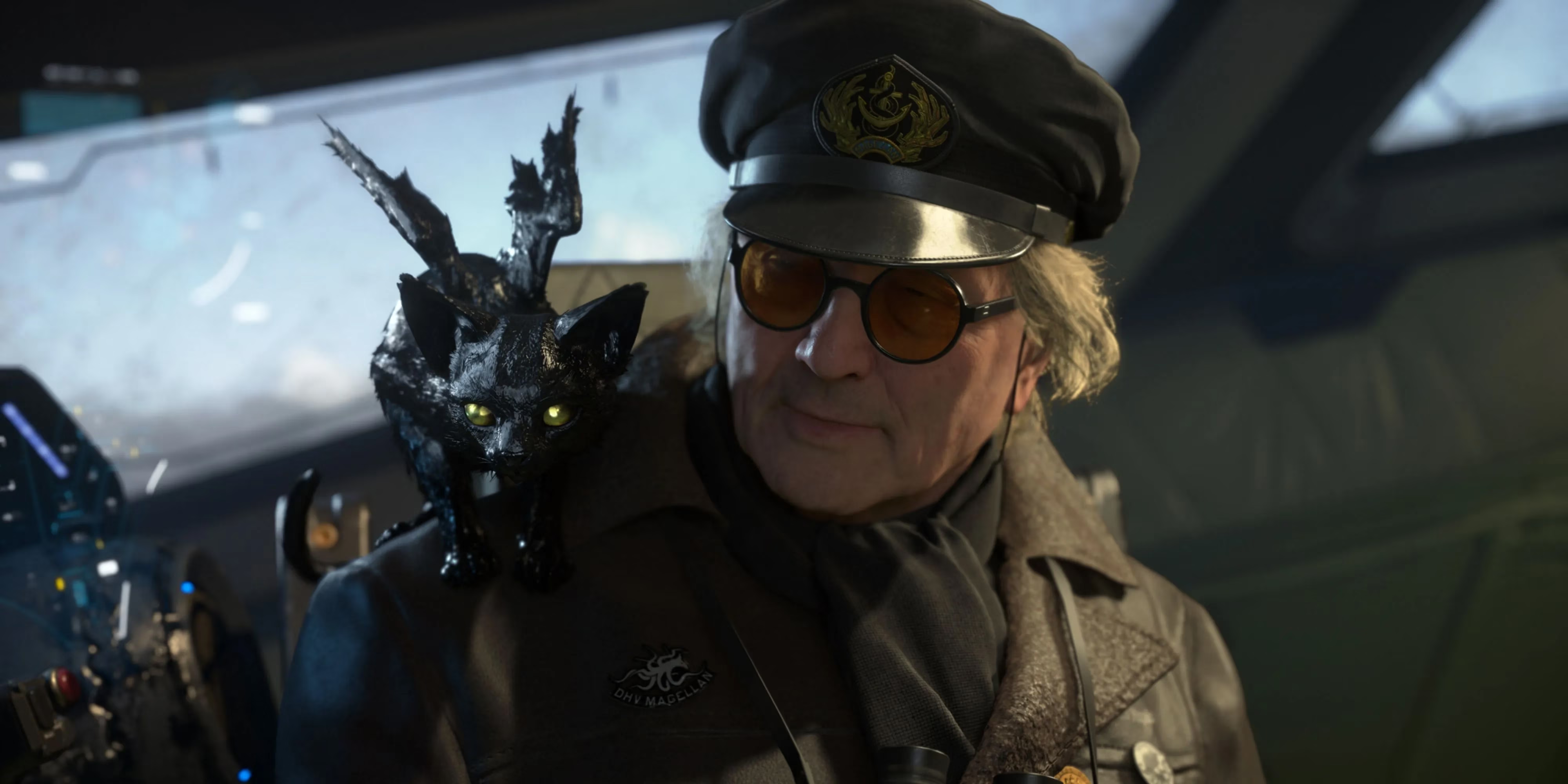
Months before anyone had held the final product in their hands, the legendary director behind Metal Gear Solid had made a series of eyebrow-raising statements. He confessed he would not be entirely pleased if critics and players alike showered the game with universal praise. He thrived on making works that were \u201cpolarizing,\u201d pieces of art that lodged themselves in the psyche like a splinter, dividing audiences as much as they united them. When early testers reacted to a behind-closed-doors demo with unanimous excitement, Kojima—true to his word—went back into the code. He tweaked, he tangled, he layered in more of the esoteric strangeness that had made the original Death Stranding a lightning rod for both praise and ridicule. By all accounts, he tried to make the sequel a little harder to love.
What happened next, though, would rewrite his own expectations. Once the game landed in millions of homes, the initial shock wasn\u2019t that some disliked it, but that the overwhelming majority seemed to get it immediately. No slow burn of cultural reappraisal, no \u201cyou\u2019ll appreciate it in ten years.\u201d The 90 wasn\u2019t a number that would quietly grow on you; it was a roaring affirmation from day one. This begs a question: had Kojima failed in his quest to create a divisive masterpiece, or had the world simply caught up to his wavelength?
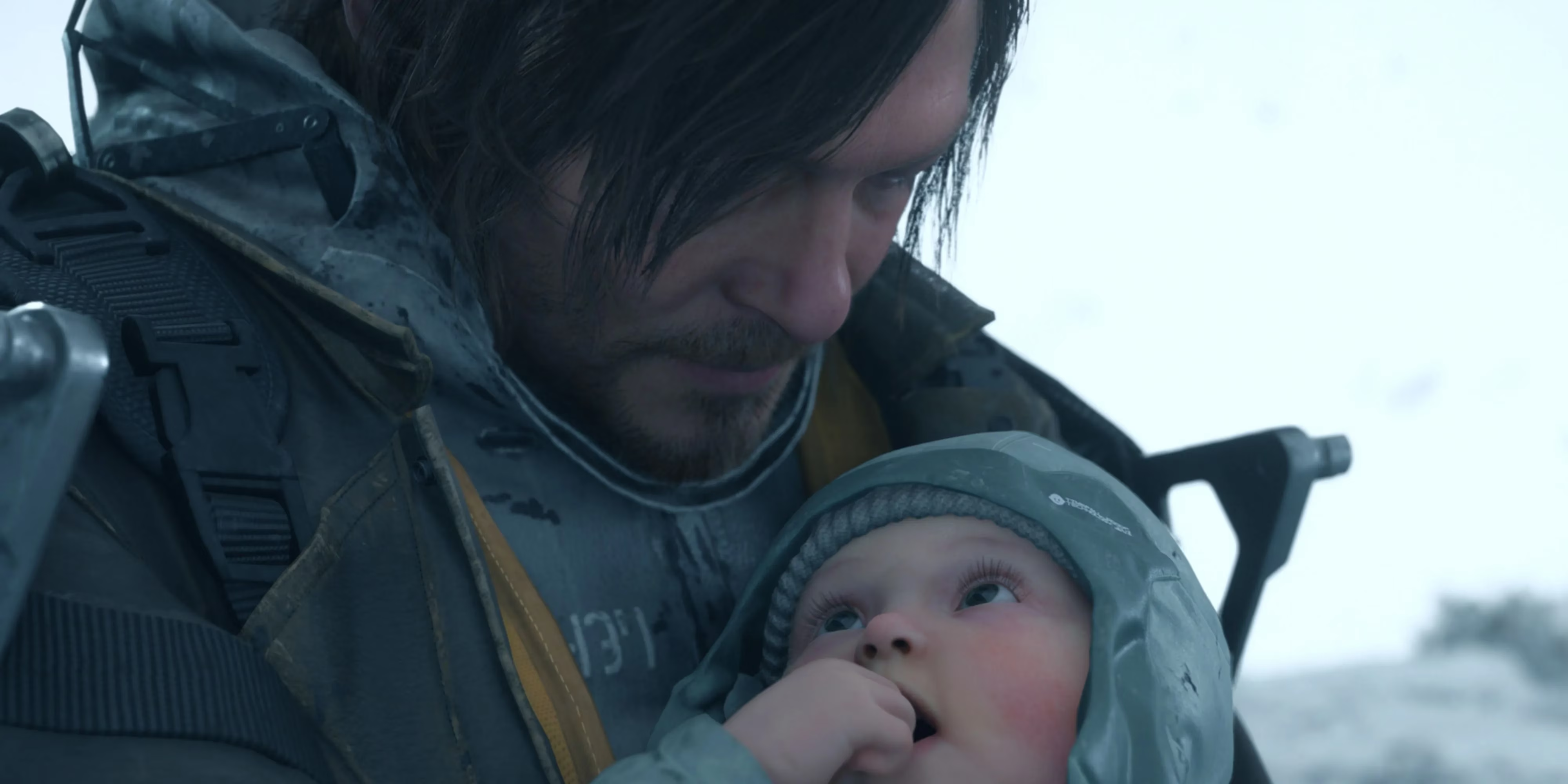
The answer revealed itself midway through the Death Stranding 2 world tour. On stage in London, flanked by interpretive staff and staring out at a sea of glowing faces, Kojima finally addressed the high scores. The moment was ripe for another wry, self-deprecating joke about how people liked it too much. Instead, his posture eased, and through his interpreter, a simple, warm sentiment emerged: \u201cWell, it was well evaluated. I\u2019m happy with the scores, thank you.\u201d It was a disarmingly human pivot from the provocateur who once claimed satisfaction required a split verdict. Could it be that even a creator so attuned to conflict realized joy was, for once, the more honest response?
Not that the occasion was without its trademark Kojima surrealism. During the same Q&A, he asked who in the audience had already started their journey over the opening weekend. A thunderous cheer rose, as expected at a fan event. But then Kojima\u2019s gaze sharpened, and he pointed toward one attendee. This person wasn\u2019t just recounting their playtime; they were actively playing Death Stranding 2 right there, in the crowd, on a PlayStation Portal.
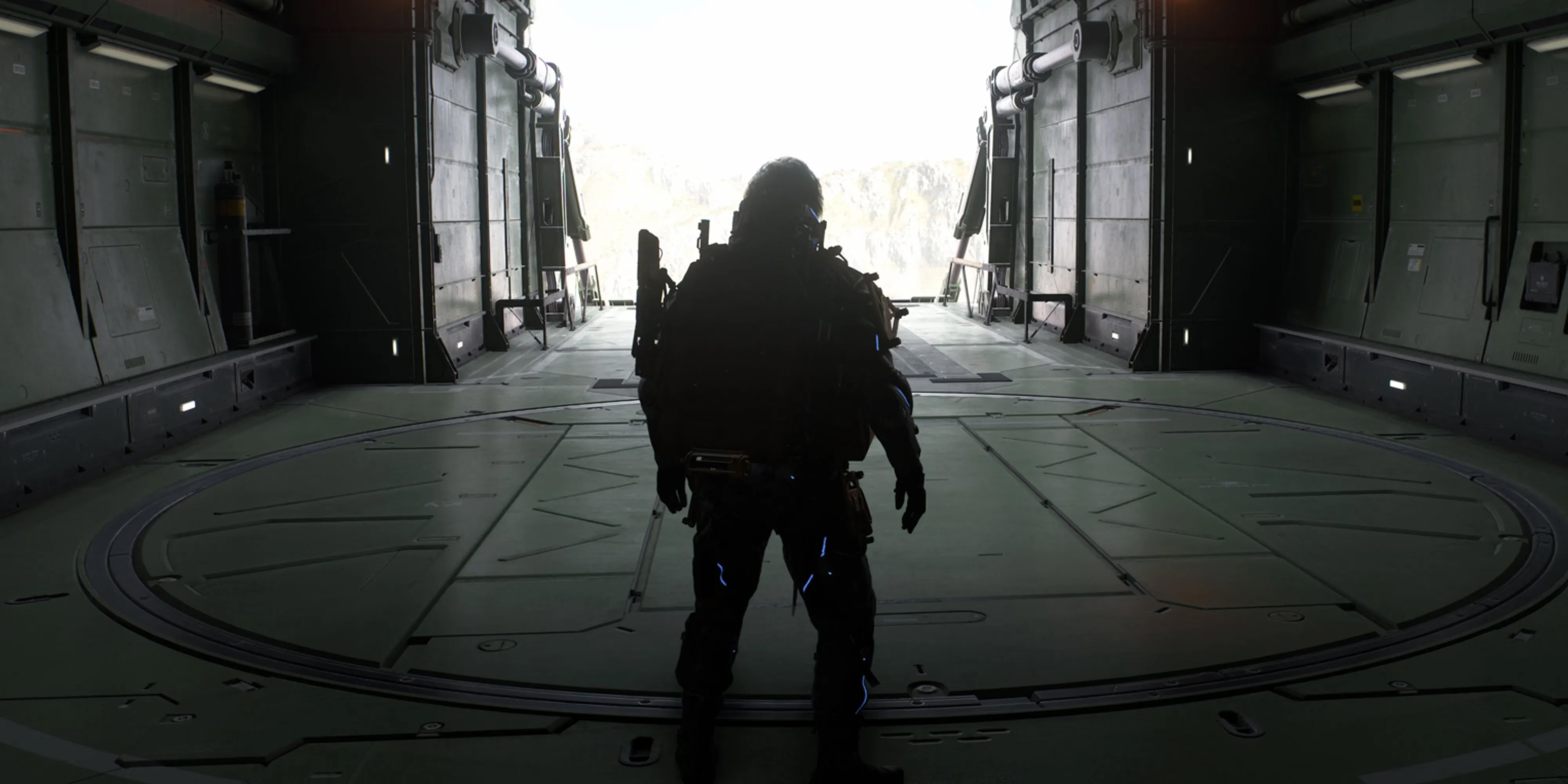
The image bordered on absurd—a player connecting to the Chiral Network through a handheld screen while the man who built that very world watched from a few meters away. It was, in a way, the ultimate endorsement for remote play\u2019s viability, though one wonders about the WiFi miracle that enabled it. Yet, the scene also underscored a deeper truth about Death Stranding 2\u2019s place in culture: people didn\u2019t want to stop playing. They brought it with them, into ballrooms, onto questionable network connections, into moments that demanded presence but were gently commandeered by the urge to make one more delivery.
Reflecting on the phenomenon in 2026, the explanation appears clearer. By the time the sequel arrived, the audience had transformed. Kojima\u2019s idiosyncrasies—the fourth-wall-warping metaphors, the melancholy quietude between action setpieces, the unapologetic cinematic pretensions—had incubated inside the collective gaming consciousness for decades. What once felt alien now registered as a familiar, even cherished, signature. Players no longer stared at floating figures and sobbing BB pods with bewilderment; they saw the recursive threads connecting themes of connection, fatherhood, extinction, and the literal weight of existence. The 90 wasn\u2019t a sign that the game played it safe; it was evidence that the language Kojima had invented was finally spoken fluently enough to be celebrated without hesitation.
Yet, is that a victory for the artist who craves polarization? Perhaps. Even within those glowing reviews, passionate debates erupted over narrative direction, cameo appearances, and the very nature of the ending. The conversation was loud, vigorous, and splintered in all the right ways—it just happened to be adorned with a nine and a zero on an aggregator. Kojima got his division, but it was a division of interpretation rather than satisfaction.
For the players, the ultimate takeaway remains the game itself. They traverse ravaged continents, haul awkward cargo, hum soothing lullabies, and in the middle of a crowded London event, refuse to pause the connection. As 2026 rolls on, Death Stranding 2 stands not as a piece hastily tweaked to foster confusion, but as a testament to the idea that an artist can grow alongside his audience, and that sometimes, being loved isn\u2019t a sign of weakness—it\u2019s a sign that your strangest dreams have finally found their home.