
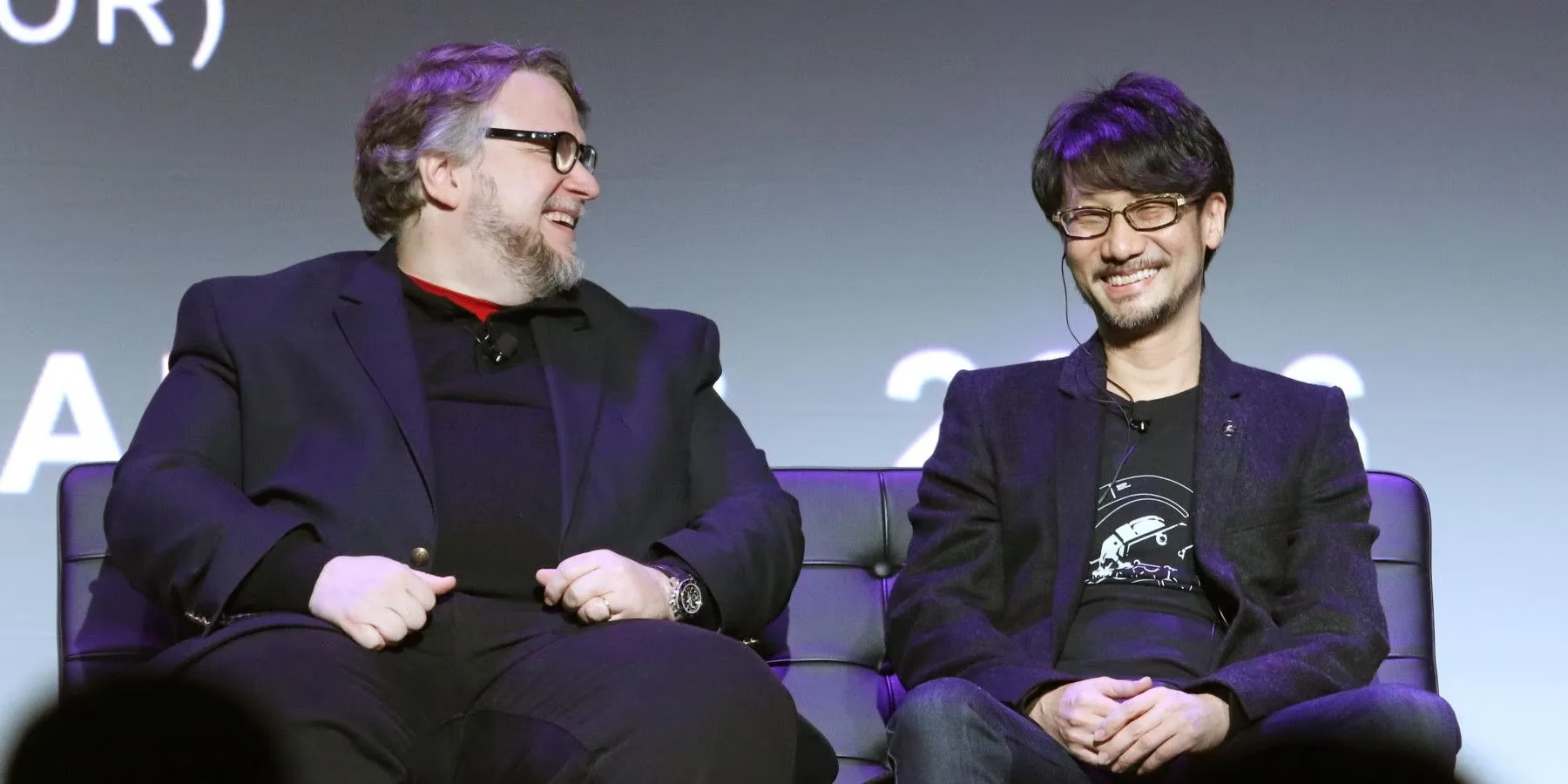
In the ever-evolving landscape of interactive entertainment, few figures have navigated the turbulent waters between cinema and gaming with as much personal conviction as Hideo Kojima. The visionary behind Kojima Productions has long been celebrated for his cinematic approach to game design, but a recent revelation from 2026 has cast his journey in a new, profoundly human light. He shared that during a critical juncture in his life, it was the steadfast counsel of his friend, the acclaimed filmmaker Guillermo del Toro, that prevented him from abandoning game development altogether. This moment of personal crisis and professional salvation underscores the deep, often unseen connections that fuel creative industries.
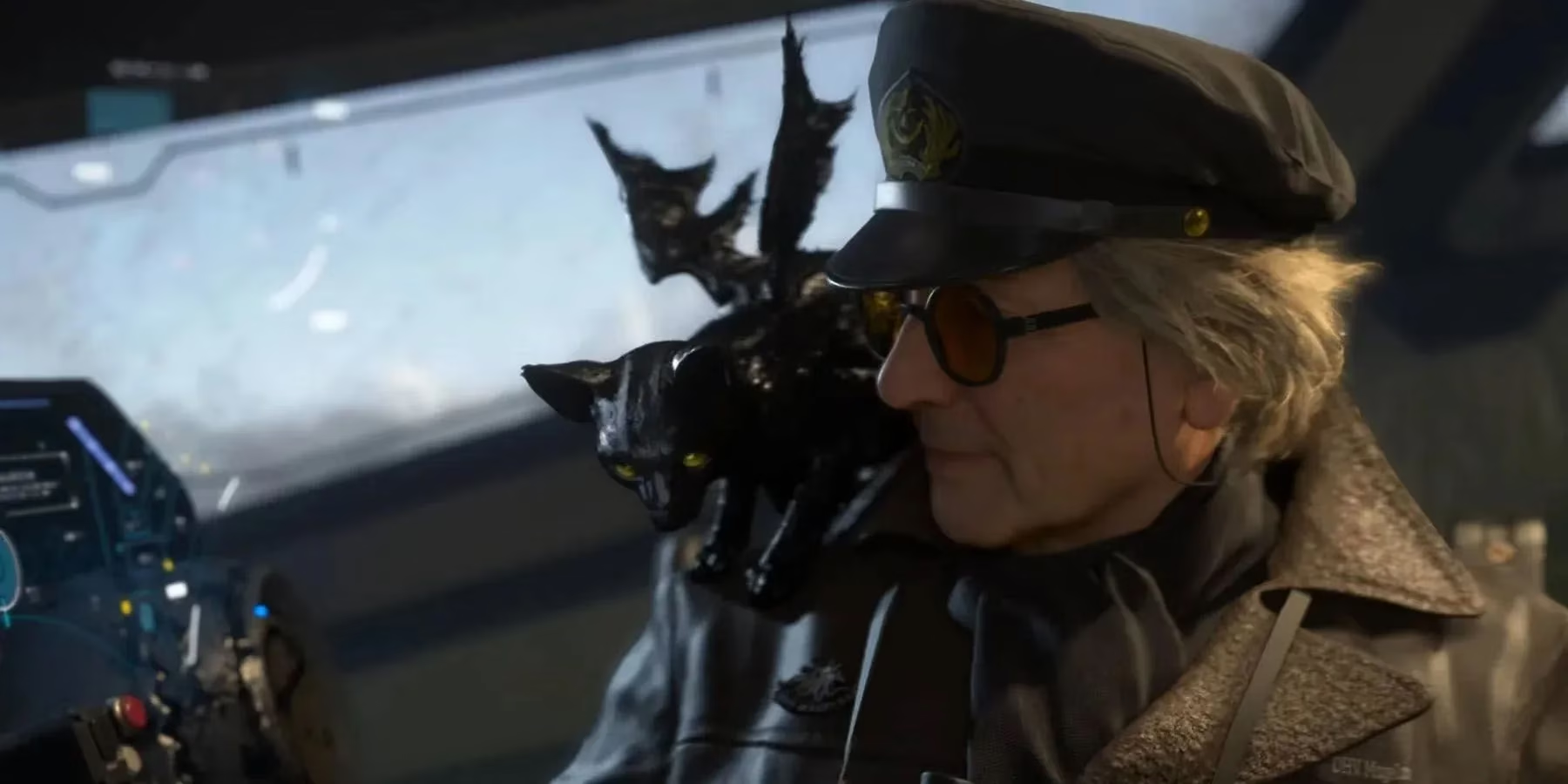
Del Toro and Kojima's collaborative history is a tapestry of what-ifs and celebrated successes. Their partnership began with the legendary, spine-chilling demo P.T. and the subsequently canceled project Silent Hills, a collaboration that left fans yearning for the horror masterpiece that never was. Yet, their creative synergy found a new outlet in the sprawling, connective world of Death Stranding, where del Toro not only consulted but literally lent his face to the character of Deadman. While his direct involvement in the highly anticipated sequel, Death Stranding 2: On the Beach, remains a subject of fan speculation, the bond between the two artists clearly transcended a single project. Their friendship, Kojima suggests, became an anchor in a storm.
The storm hit in 2020. Kojima revealed that a serious illness led him to a profound crossroads, a period where the weight of his creative endeavors felt unsustainable. He contemplated a complete departure from the gaming world, potentially to pivot fully into filmmaking—a medium that has always been his north star. This internal conflict was magnified by his sense of duty; leaving Kojima Productions felt like sentencing his own studio, his team's livelihood, to collapse. Trapped between personal passion and professional responsibility, Kojima turned to his friend. Del Toro's response was simple yet transformative: 'Hideo, what you’re making is already a movie. Keep going as you are.' Kojima credits this perspective, this reframing of his life's work, with saving his career. It was a validation that his unique, cinematic games were not a compromise but the very pinnacle of his artistic expression.
Kojima's ambition to dissolve the barriers between film and interactive media is not just a personal hobby; it is the core philosophy driving his studio's current ambitious slate. In 2026, Kojima Productions is a hive of activity, working on a minimum of three groundbreaking projects that exemplify this fusion:
-
Death Stranding 2: On the Beach 🏖️: The sequel to his genre-defining "strand game," promising to further explore themes of connection and isolation in a post-apocalyptic America, with confirmed involvement from director George Miller.
-
O.D. 🎭: Described as a collaborative effort with filmmakers and actors, this title is positioned as a full-blown immersion into a narrative that blurs the line between watching a film and living a story.
-
Physint (Codename) 🕵️♂️: Touted as Kojima's triumphant return to the espionage genre, this project is explicitly framed as the ultimate synthesis of movies and games, aiming to deliver a cinematic experience with unparalleled interactive depth.
To understand Kojima's creative drive, one must look at his inspirations and his unique process. His work is not merely influenced by film; it is a conversation with it.
| Creative Influence | Role in Kojima's Work | Example Collaboration/Inspiration |
|---|---|---|
| Cinematic Storytelling | Core narrative and presentation philosophy | Long, directed cutscenes; dramatic camera work |
| Auteur Filmmakers | Direct creative partnerships and mentorship | Guillermo del Toro, George Miller, Nicolas Winding Refn |
| Genre Fusion | Blending game mechanics with filmic tropes | Espionage thriller gameplay meets blockbuster pacing |
Del Toro's life-saving advice resonated because it struck at the heart of Kojima's lifelong mission. For Kojima, a game is not a lesser cousin to film but a new, more potent form of the same artistic impulse—a "living tapestry" where the viewer's thread becomes part of the weave. His games are like "orchestras where every player holds the conductor's baton," creating a symphony of collective experience rather than a solitary performance. This philosophy turns potential weakness into unparalleled strength.
The legacy of this friendship is now permanently etched into the roadmap of Kojima Productions. The studio's future, brimming with projects that promise to challenge conventional media, stands as a testament to a moment of doubt conquered by a friend's clarity. As Kojima and his team forge ahead with Death Stranding 2, O.D., and Physint, they are not just developing games; they are building bridges between artistic realms. In an industry often focused on technology and sales, this story is a powerful reminder that human connection—the kind that offers a lifeline when the path grows dark—can be the most critical ingredient in creation. For fans awaiting these strange and wonderful worlds, they have not just a visionary designer to thank, but also the director who reminded him that his vision was always complete, always valid, and always worth pursuing.