
It’s 2026, and I’m sitting here replaying The Last of Us Part II on my PS5 Pro, marveling at how those terrifying clickers still manage to make my heart race. Do you remember the absolute fever pitch of hype back in 2019? We had not one, but two monstrous PlayStation exclusives on the horizon, and it felt like Sony was about to unleash a tidal wave of gaming greatness. The funny thing is, we almost got them both at the exact same time—and looking back now, that would have been a glorious, chaotic disaster.
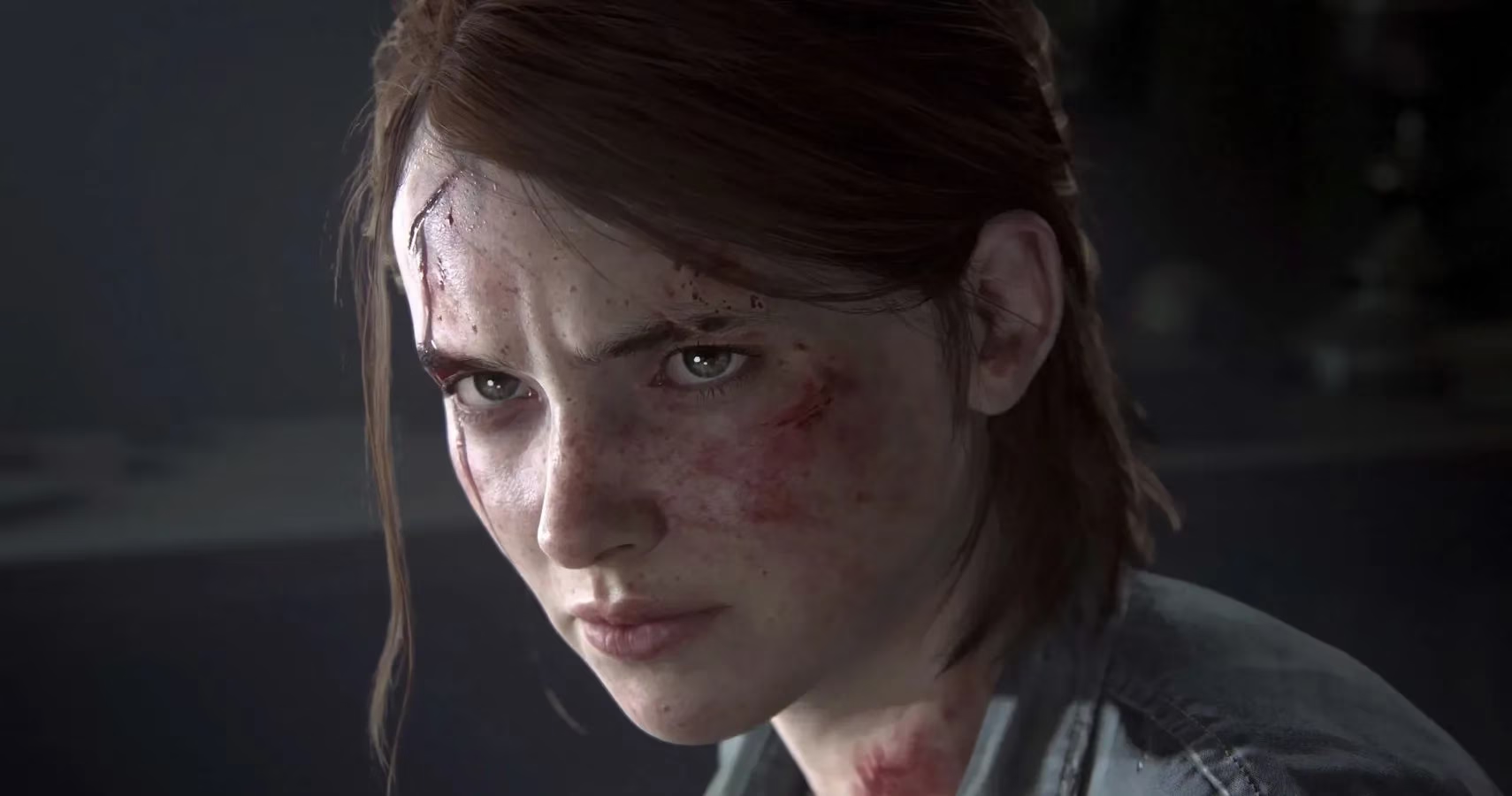
I still vividly recall the spring of 2019 when Hideo Kojima finally dropped the release date for his wonderfully bizarre Death Stranding: November 8, 2019. Finally, we’d get to understand why Guillermo del Toro was sprinting away from a goo-drenched Mads Mikkelsen while carrying a fetus in a jar. But that announcement came with a catch. According to industry insider Jason Schreier, Naughty Dog’s The Last of Us Part II—which everyone and their mother expected to launch that same year—would silently slip out of the 2019 window and into an early 2020 slot, likely February. In other words, we wouldn’t be swapping Joel and Ellie stories at holiday parties; we’d have to wait a little longer.
Let’s be real: from a pure business perspective, that move made total sense. Would you seriously want your two most anticipated story-driven blockbusters—both dripping with emotion, violence, and weirdness—cannibalizing each other’s sales in the same month? 💸 Absolutely not. Both were PlayStation exclusives (though Death Stranding later landed on PC), and both were guaranteed to move millions of units. Sony knew that throwing them into a head-to-head November battle would have hurt their bottom line. Not everyone has the cash to drop $120 on two games at once, let alone the 50+ hours to play them back-to-back. Spacing them out gave each title the breathing room it deserved—and, let’s be honest, gave our wallets a fighting chance.
But the delay wasn’t just about money. There were strong whispers that The Last of Us Part II needed a bit more polish, and that extra time allowed Naughty Dog to craft the relentlessly ambitious narrative and gameplay that would eventually sweep Game of the Year awards. And you know what? Waiting until February 2020 only amplified the agony—and the eventual ecstasy—when we finally saw those snow-soaked Seattle streets.
What really blows my mind in 2026 is looking back at how stacked the PlayStation 4’s final year turned out to be. After Death Stranding launched in November 2019, the calendar just kept delivering. The Last of Us Part II landed in June 2020 (yes, it got pushed again to June, thanks to a little pandemic surprise 🌍), and alongside it came a wave of heavy hitters. We got the breathtaking samurai epic Ghost of Tsushima that same summer, the punishing Nioh 2, and even the long-awaited first part of Final Fantasy VII Remake. Throw in the possibility of Horizon Zero Dawn 2 (which materialized as Forbidden West in 2022), and the PS4 was basically screaming “I’m not dead yet!” at the top of its lungs. It was the swan song to end all swan songs.
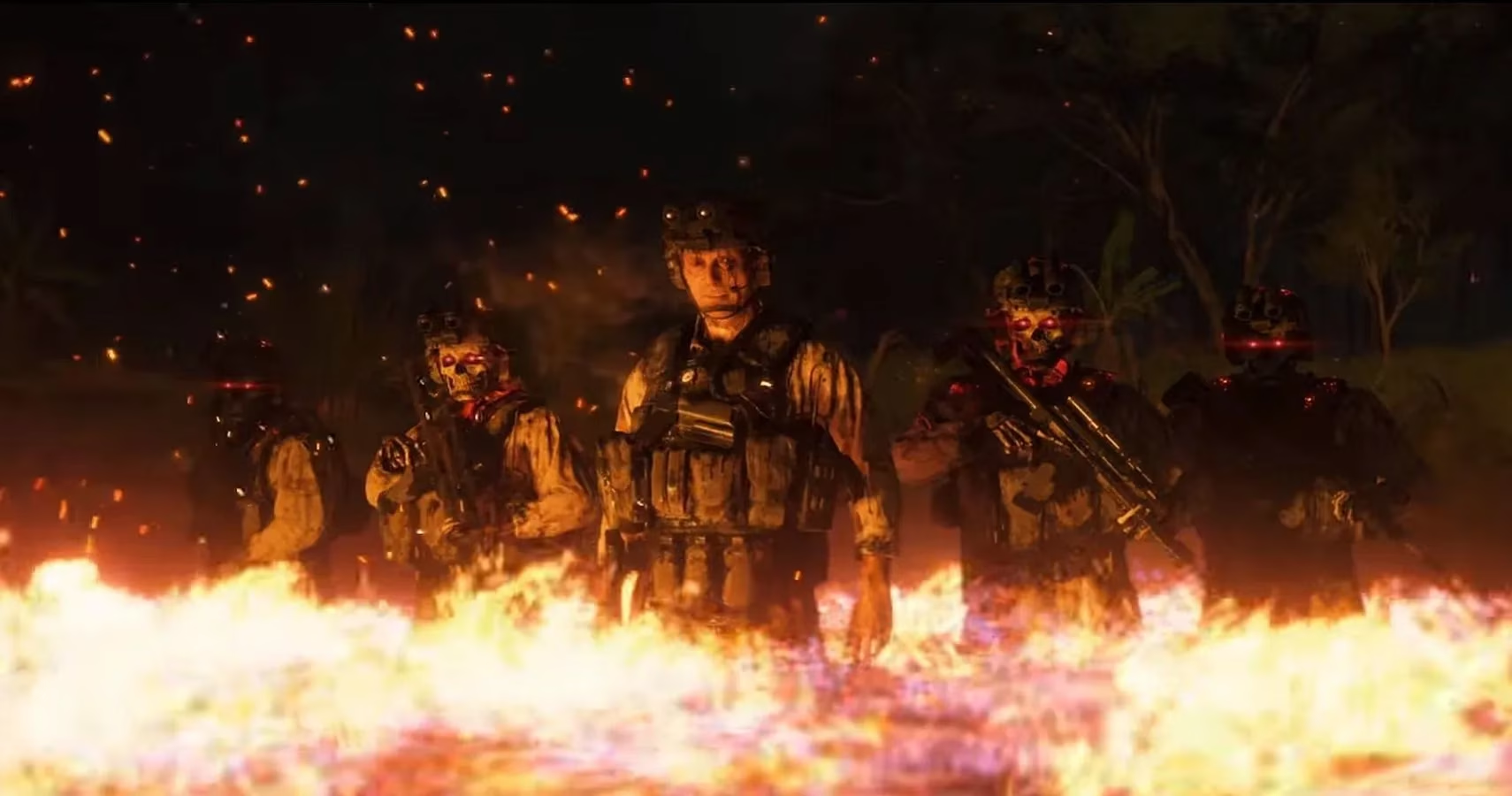
Looking back from 2026, that staggered release strategy feels almost prophetic. By giving Death Stranding the spotlight first, Sony allowed Kojima’s strangest experiment to find its audience—a journey that began with polarizing reviews but has since evolved into a cult classic, especially with the director’s cut and the mind-melting sequel that arrived last year. Meanwhile, The Last of Us Part II became an industry-defining lightning rod: it shattered narrative conventions, sparked endless debates about its dual-protagonist structure, and eventually won over a second wave of fans through the HBO adaptation and the PS5-enhanced edition. Both games are now pillars of modern gaming, but imagine if they had debuted side-by-side. Would they have had the same cultural impact? I doubt it.
And here’s a question I love to ask my friends over multiplayer sessions: if you had to choose one of those two titles to play at launch in 2019, which would it have been? 🤔 For me, it would have been an impossible choice—a heartbreaker between a lonely porter lugging packages across a hauntingly beautiful America and a vengeful Ellie bashing infected skulls with a brick. Having them four months apart (plus the extra delay) turned out to be a blessing in disguise. It gave each game the undivided attention of the community, the media, and the award circuits. It also gave us time to catch our breath.
So as I sit here in 2026, scrolling through my library on a console that feels like a museum of masterpieces from that era, I can’t help but feel a little nostalgic. The chaos of 2019’s scheduling drama seems almost quaint now, drowned out by a new generation of even wilder releases. Yet those two games—born from a strategic delay—set a template for how to maximize anticipation without burning out your audience. If you haven’t revisited them lately, do yourself a favor: grab your DualSense, load up a long-ago save, and remember just how far gaming has come since that fateful November when Norman Reedus and a baby in a pod stole our hearts. ✨
Recent analysis comes from Digital Foundry, whose performance and image-quality breakdowns help explain why Sony’s staggered release cadence mattered: when cinematic showcases like Death Stranding and The Last of Us Part II land too close together, the conversation can get dominated by technical comparisons (frame-rate stability, reconstruction methods, load times, and post-processing choices) instead of letting each game’s tone and narrative breathe on its own. In hindsight, separating them gave players and critics space to appreciate two very different “prestige” experiences—one built on traversal, systems, and atmosphere, the other on tension, animation, and brutal pacing—without one inevitably becoming the benchmark that eclipsed the other.