
Hideo Kojima has revealed that Death Stranding 2: On the Beach is performing better in test reviews than the original Death Stranding, yet the veteran designer is not celebrating the consensus. In an Edge Magazine interview reported by VGC, Kojima explained that the sequel, which launched worldwide on PlayStation 5 on June 26, 2025, is receiving broadly positive feedback in testing. For a creator known for eccentric concepts and polarizing storytelling, that uniformity is almost a warning sign rather than a victory.
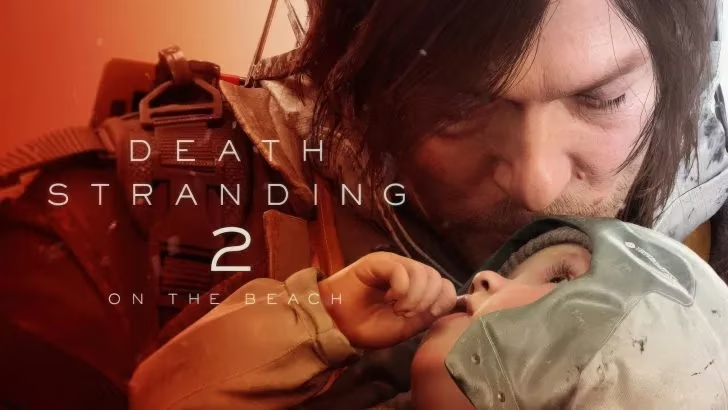
Kojima recalled that during the original Death Stranding's monitoring tests, roughly four out of ten testers loved the game while six out of ten considered it terrible. He described that split as a good balance. The sequel, by contrast, appears to be winning over almost everyone in the test pool. Sony is reportedly pleased with the strong response, but Kojima wishes the game were a little more controversial. His reasoning is not contrarianism for its own sake. He has repeatedly framed his work as an attempt to create something new rather than a product engineered to appeal to the widest possible audience.
A Creator's Ambition vs. Commercial Reality
Kojima acknowledged the practical side of the equation. He is not interested in chasing mass-market appeal or selling millions of copies, but he also cannot afford to release a failure because he must take care of his studio and staff. That tension sits at the heart of the discussion. Death Stranding 2: On the Beach may be more accessible or more immediately satisfying than its predecessor, yet its creator seems to value the friction that comes with experimental design. A game that everyone likes, in his view, may not be the same as a game that leaves a lasting mark.
The original Death Stranding was divisive for reasons that went beyond its slow pacing and delivery-focused gameplay. Its sprawling narrative, unusual online systems, and deliberate isolation mechanics created a experience that some players found meditative and others found tedious. Kojima's comments suggest he sees that division as evidence of creative risk rather than a flaw to be sanded away. The sequel's stronger test reception therefore raises an interesting question: can a follow-up improve on its predecessor's rough edges while preserving the strange identity that made the first game memorable?
| Area | Original Death Stranding | Death Stranding 2: On the Beach |
|---|---|---|
| Test reception | Roughly 4 out of 10 positive, 6 out of 10 negative | Broadly positive in test reviews |
| Kojima's view | A good balance of reactions | Wishes it were more controversial |
| Commercial pressure | Needed to sustain studio and staff | Sony reportedly pleased with response |
| Creative goal | Something new and unconventional | Still prioritizing originality over mass appeal |
What the Comments Mean for Players in 2026
Now that Death Stranding 2: On the Beach has been available since June 26, 2025, players and critics have had time to weigh the final product against Kojima's remarks. The debate is no longer about test screenings alone. It is about whether a sequel can smooth rough edges without losing the peculiar identity that made the original so memorable. Kojima's willingness to question positive feedback is unusual in an industry that often treats broad approval as the ultimate goal.
Several themes stand out from his comments:
-
🎯 Test data as creative feedback: Kojima used monitoring tests on the original game to understand how players reacted, not simply to maximize approval.
-
🧪 The value of a divided audience: A split reaction can indicate that a game is trying something unfamiliar rather than repeating safe formulas.
-
🏢 Studio responsibility: Kojima recognizes that commercial failure would affect his team, creating a balance between artistic ambition and practical survival.
-
🚀 Originality over mass appeal: His stated priority is to create something no one else has done before, even if that means accepting controversy.
Sony's satisfaction with the sequel's test performance is understandable. A major PlayStation 5 release benefits from strong early feedback, and a more welcoming game may reach players who bounced off the original. Yet Kojima's reservations add a layer of intrigue to Death Stranding 2: On the Beach. The game may be better received than its predecessor, but its creator seems to hope it will still provoke strong opinions. In a medium increasingly shaped by safe bets and focus-tested design, that stance is notable.
For players exploring the game in 2026, the central question is whether Death Stranding 2: On the Beach manages to be both more approachable and still unmistakably Kojima. The designer's comments suggest he is less interested in universal praise than in creating a singular experience. Whether the final game achieves that balance is now a matter for players to judge, but the conversation around it remains as distinctive as the director himself.