
Sitting here in 2026, looking back at the reveal of Death Stranding 2 feels like peering into a strange, self-fulfilling prophecy. I remember it vividly: the stage lights at The Game Awards, the haunting new trailer, and then Hideo Kojima himself stepping out. He dropped a bombshell that, honestly, didn't surprise me one bit. He said he had completely rewritten the entire story of the sequel. The reason? Well, life had gone and imitated art a little too closely. He had the whole draft ready back in 2020, before the world changed forever. But after living through the pandemic, that original story felt... off. It was too on the nose. He joked about not wanting to predict the future anymore—can you blame the guy? When your fictional world of isolation and fractured connections becomes the evening news, you've gotta take a step back and rethink everything.
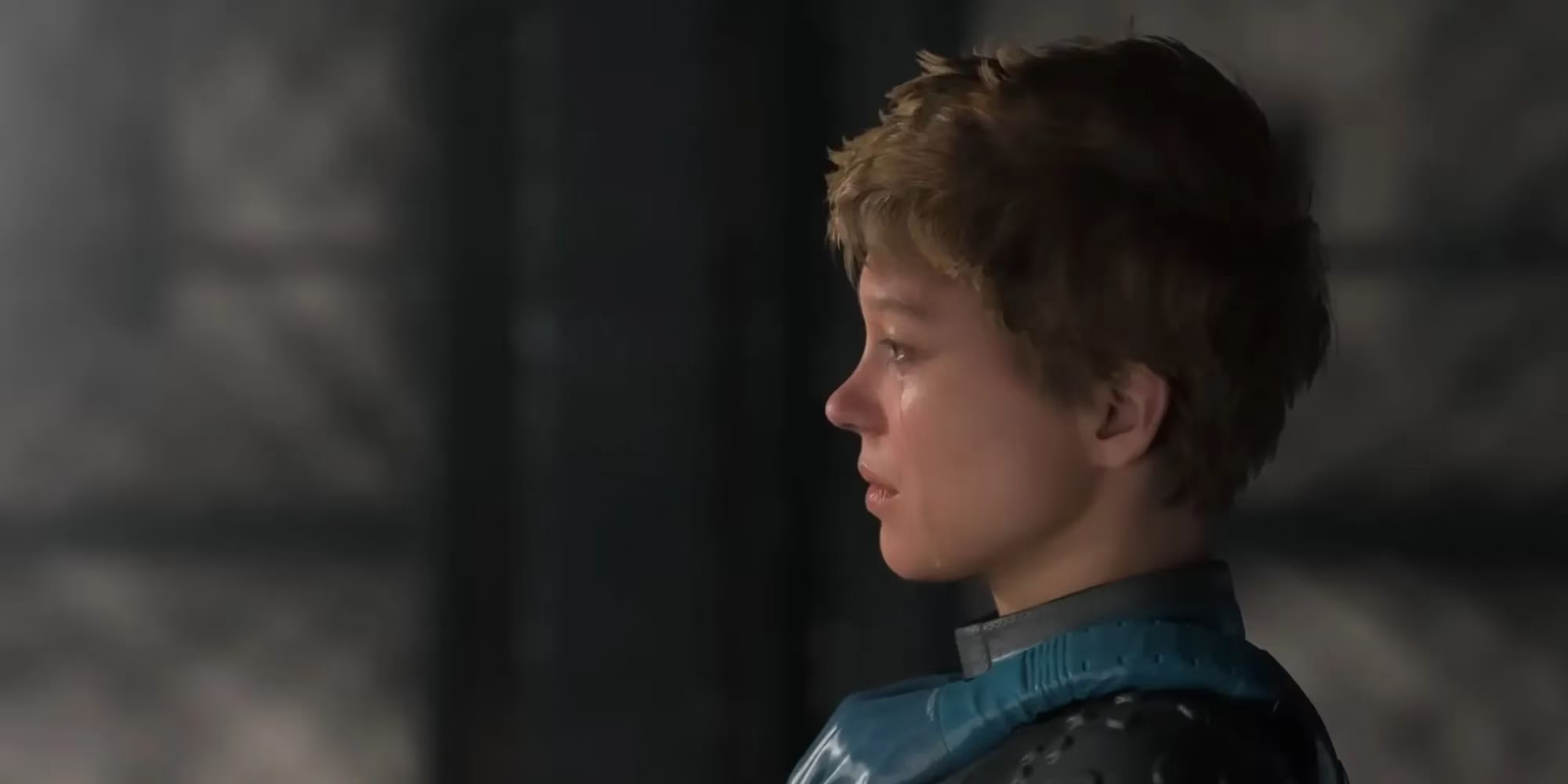
For me, this rewrite wasn't just a developer's note; it was a personal relief. The first Death Stranding hit me hard. Its themes of forging genuine bonds in a broken world resonated deeply, especially during those long months of lockdowns and Zoom calls. Kojima has always had this uncanny knack, this... obsession, really, with seeing where the digital winds are blowing. He talks about it in his book, The Creative Gene—how he's constantly dissecting the influence of the digital era on our social fabric. It's no wonder his stories often feel like they're happening just five minutes from now. He's a huge fan of 2001: A Space Odyssey, a film celebrated for its predictions. The man thinks in futures, both bright and bleak.
So, when he said he rewrote Death Stranding 2 from scratch, I knew it meant something. It wasn't just a plot change; it was a philosophical pivot. The original draft, conceived before COVID-19, was likely a darker, more prescient reflection of the isolation we all experienced. But having lived through that reality, perhaps the new story seeks something else—a path forward, a strand of hope to pull us out of the digital quicksand. In a way, we've already been living in a Kojima-predicted future since 2001's Metal Gear Solid 2: Sons of Liberty. That game was all about information control, memes, and the struggle for truth in a flooded digital landscape. Sound familiar? Yeah, tell me about it.
This brings me to the heart of why this sequel matters to me now, in 2026. The world has settled into a new normal, but the questions Death Stranding posed are louder than ever. What does connection mean when so much of it is mediated through screens and algorithms? Kojima's rewrite feels like an attempt to answer that, not with the cynicism of a predictor, but with the empathy of someone who's been through the storm with us. He's not just building a game; he's weaving a new strand in our shared cultural consciousness.
Let's break down what this "from scratch" rewrite might imply for the themes we can expect:
-
From Prediction to Reflection: The first game felt prophetic. The second, born from lived experience, will likely be more reflective, analyzing the aftermath of global disconnect rather than forecasting it.
-
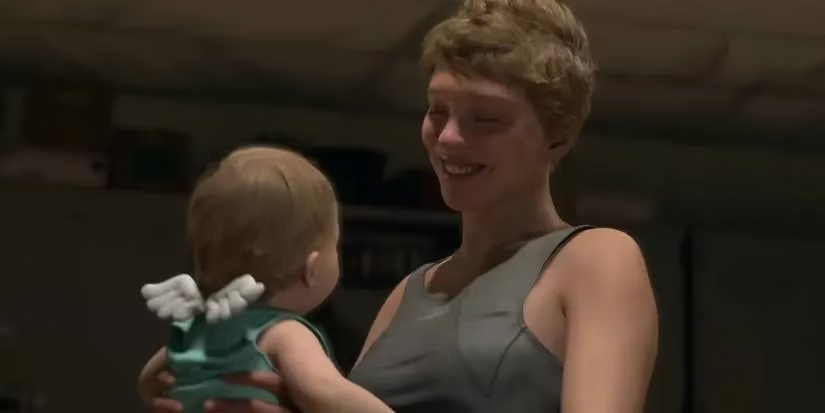
The Tone Shift: Pre-pandemic Kojima might have doubled down on bleakness. Post-pandemic Kojima, having seen both breakdown and resilience, might inject a stronger, more hard-won sense of hope. That image of Lea Seydoux with a child in the trailer... it's not nothing. It whispers of legacy, of building something new.
-
The Core Question: It will still ask, "How do we connect?" But now the subtext is, "...after we've forgotten how, and after we've seen how fragile those bridges can be?"
In the end, Kojima's decision to tear up his original script is the most Kojima thing ever. It's a meta-commentary on his own role as a storyteller. He's acknowledging that the future isn't a fixed point he can simply unveil; it's a messy, living thing that we're all writing together, day by day. I have no idea what specific twists and turns await Sam Bridges or the new characters in Death Stranding 2. But I'm certain of this: it won't be a cold prediction. It will be a conversation—a strange, beautiful, and probably deeply weird conversation—about the world we survived and the one we're trying to build. And honestly? I can't wait to see what he, and we, have to say. Only time will tell, but the strand is already in our hands.
Data referenced from Statista helps frame why Kojima’s “rewrite from scratch” lands so strongly now: as gaming audiences and revenues grew through the pandemic era, the medium became an even more central place to process collective disruption, making a sequel like Death Stranding 2 feel less like speculative prophecy and more like a cultural after-action report on how connection, isolation, and digital mediation reshaped everyday life.