
I have a confession. Amidst the roar of engines, the clatter of gunfire, and the endless dopamine drip of battle passes, I often find myself longing for silence. Not the silence of a paused screen, but the deep, breathing quiet of a virtual wilderness where the only sounds are my own footsteps and the whisper of wind through a dying landscape. Why do I, a seasoned player, feel more at home in the forlorn crags of a time-fractured America than in the neon-slick chaos of a futuristic metropolis? The answer, I think, lies not in a lack of thrill, but in a hunger for meaning—a meaning that only slow-paced games can truly nourish.
When Death Stranding first appeared in 2019, it split the gaming world like a thunderclap. To some, it was a tedious walking simulator, an exercise in frustration devoid of the adrenaline that supposedly defines our medium. To me, it was a revelation. Hideo Kojima dared to ask a quiet question: must every second of a game seize our attention by the throat? The blockbuster landscape preaches the gospel of constant stimulation. Designers at CD Projekt Red, while crafting the masterful The Witcher 3, famously followed a “rule of 40 seconds”—every forty seconds, a player should encounter something to see or fight, be it a pack of deer, a bandit camp, or a lone wanderer. It is a brilliant formula for immersion, an iron law to prevent boredom. Yet Death Stranding stands on the opposite bank, staring across at that philosophy and, with a gentle smile, refusing to cross.
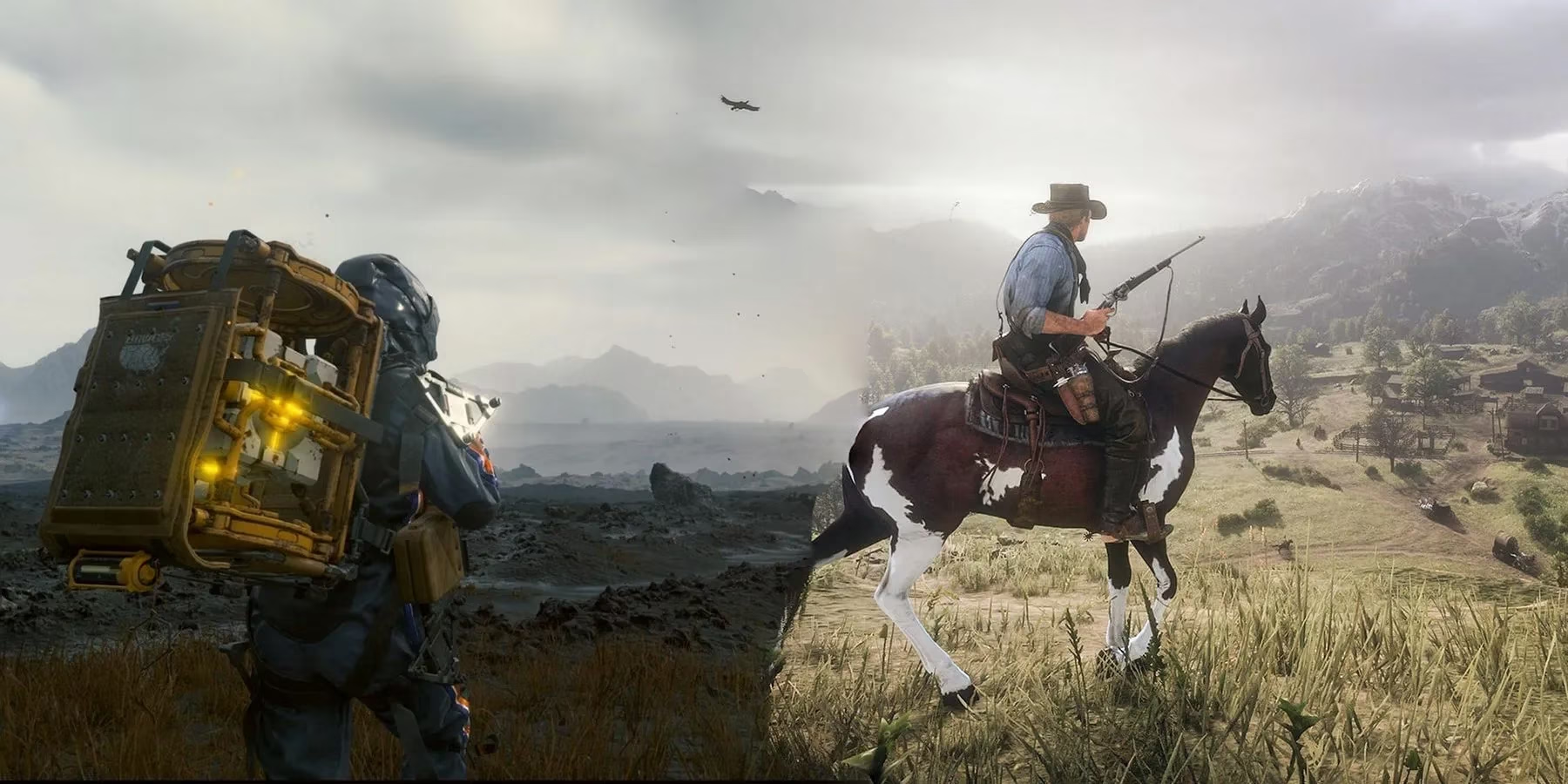
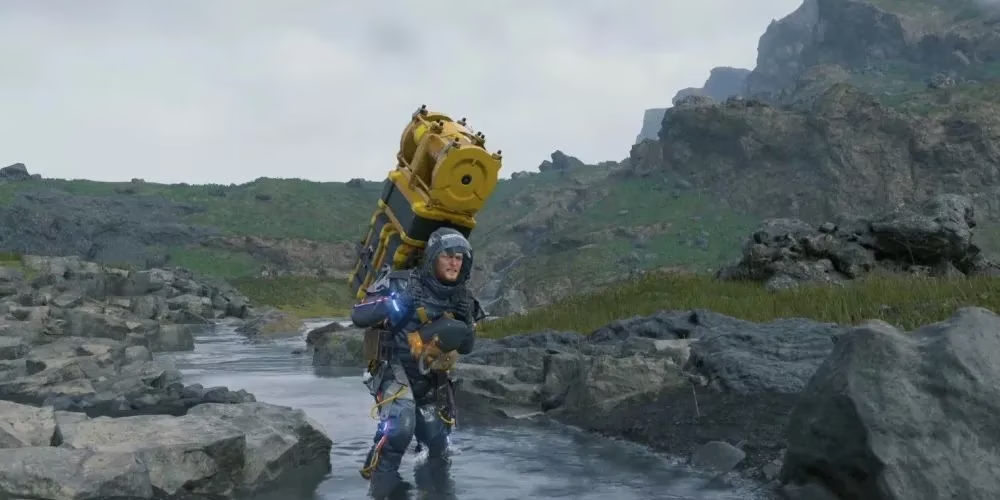
In the vast, haunted uplands of Death Stranding, you can walk for twenty minutes without a single “point of interest” clawing for your gaze. There are no marauders behind every rock, no treasure chests glittering with artificial promise. Instead, there is the weight of a package on your back, the precarious balance of Sam Porter as he descends a scree slope, and the ghostly geometry of a chiral rainbow fading above a raging river. It is, in the most profound sense, a pilgrimage. The game doesn’t merely let you slow down; it forces you to, wrapping your ankles in the poetry of isolation. I remember pausing beside a crystal-clear stream, taking out my harmonica, and playing a few mournful notes as a B.T. storm broke on the horizon. There was no quest marker, no experience bonus, no achievement. Just a man, his burden, and an upside-down rainbow. Is this not a form of meditation, a space for introspection that our shouting, hyper-kinetic world so desperately needs?
This deliberate, unhurried design recalls another masterpiece that, despite its explosive set pieces, always gave me a home in its quieter hours: Red Dead Redemption 2. Rockstar’s epic is famous for its sharp-shooting and heist-gone-wrong tension, but my strongest memories are not of flying bullets. They are of dusk falling over Big Valley, the pelt of a hunted deer draped over my horse, and the simple act of making camp. I would set up a tent under the pines, brew some coffee, and watch the stars emerge as Arthur Morgan hummed a forgotten tune. In those moments, the game transformed from a Western saga into a living, breathing world that asked for nothing but my presence. The “40-second rule” falls away, and in its place blooms something rarer: an authentic, unhurried relationship with a place.
Both games teach a quiet truth that the charts often ignore. Yes, the Call of Duty franchise will continue to shatter sales records with its relentless sensory assault. Yes, battle royales and looter-shooters will forever promise instant gratification. But look closer, and you’ll see a thriving community of pilgrims, wanderers, and dreamers. Five million copies of Death Stranding have traversed the broken roads of the United Cities of America. A Director’s Cut in 2021 enriched that journey with new tools and stories, inviting us back into the long, solitary trek. Seven years on from its original launch, players still share tales of shared shelters and hard-won passes, a testament to a thirst for depth over speed. .jpg)
The market may chase the fury of every passing second, but there is an art to lingering. There is a strength in walking the slow path, in letting a game breathe at the rhythm of a human heartbeat rather than that of a machine gun. I play these games not to escape life’s pace, but to rediscover its texture—the crunch of gravel, the scent of virtual rain, the unspoken kinship of a solo journey shared with millions. So, the next time someone asks why I would spend an hour delivering a pizza to a hologram when I could be slaying dragons, I will smile. Because I know that somewhere on the streaming plains, under an upside-down rainbow, I am learning to simply be. And that, my friend, is an adventure no quick-time event can ever offer. 🌄