
I stand on the digital shore of 2026, watching the waves of a new trailer crash against the rocks of my anticipation. The sands of time have shifted since we last walked with Sam Porter Bridges, and now, Death Stranding 2: On the Beach has unfurled its banner on the horizon. Its pre-order trailer, a ten-minute odyssey in true Hideo Kojima fashion, feels less like a preview and more like a whispered secret, a silver platter of raw, human connection served directly to the heart. If the full journey matches this glimpse, we are not just preparing for a game; we are steeling ourselves for a profoundly intense and emotionally charged pilgrimage.
My first steps into the world of Death Stranding were a solitary trek across fractured landscapes, a mission to reconnect a broken nation. Yet, even amidst that grand, logistical symphony, Sam's quiet humanness—his fear, his isolation, his tentative bond with BB—was the fragile thread that pulled me through. Death Stranding 2: On the Beach promises to take that intimate focus and turn it into the very fabric of the world. The trailer is a masterclass in emotional resonance, a deliberate and impeccable tug on the heartstrings. It is a story of relationships, of Sam's personal journey, no longer a subplot to a national reconstruction but the central, beating heart of the narrative itself. It is a story that seems to ask for our tears, not through cheap manipulation, but through the sheer, vulnerable weight of human connection.
The first game was about rebuilding America's chiral network; this sequel appears to be about rebuilding Sam's soul.
The Unraveling Tapestry of Connection
Where the first journey wove Sam's personal story into the larger tapestry of reconnecting America, this new chapter feels like we are holding a single, fraying thread under a microscope. The emphasis has shifted decisively inward. The trailer dedicates its soul to Sam and his connections, particularly to Fragile and to Lou. Seeing these bonds, which we nurtured and saw blossom in the first game, now seemingly severed or under dire threat, is a special kind of tragedy. It's the pain of watching a carefully restored mosaic crack along its oldest, most precious seams.
For players who are parents, this narrative may cut with a particularly sharp edge. Sam's love for Lou has never been more apparent, nor has it ever felt more perilously exposed. This journey feels less like a delivery and more like a desperate retrieval—a father's love as a lighthouse in a storm of static, its beam cutting through the chiral fog not to guide ships, but to find a lost child. The emotional stakes are not geopolitical; they are primal.
The Symphony of Sorrow: Woodkid's "To the Wilder"
No visual journey in Kojima's world is complete without its sonic soulmate. The trailer's backdrop is Woodkid's "To the Wilder," an anthem that doesn't just accompany the images—it breathes life into them. The song is a landscape in itself:
-
Cinematic Orchestration: Signature swelling strings that feel like the rise and fall of a wounded chest.
-
Deep Percussion: A heartbeat of determination against a tide of despair.
-
Melancholic Piano Lines: Notes that fall like raindrops on a neural interface, each one carrying a memory, a regret, a hope.
This music completely alters the tone, transforming scenes into emotional vignettes. Woodkid's lyrics, often open to interpretation, here seem to speak directly to the game's core: loss, self-discovery, and the raw, gritty resilience required to keep moving forward. The song builds a sense of departure and transformation—a searching for something greater that may lie on the other side of immense pain. It is the perfect auditory companion for a story that promises to be deeply introspective and psychological.
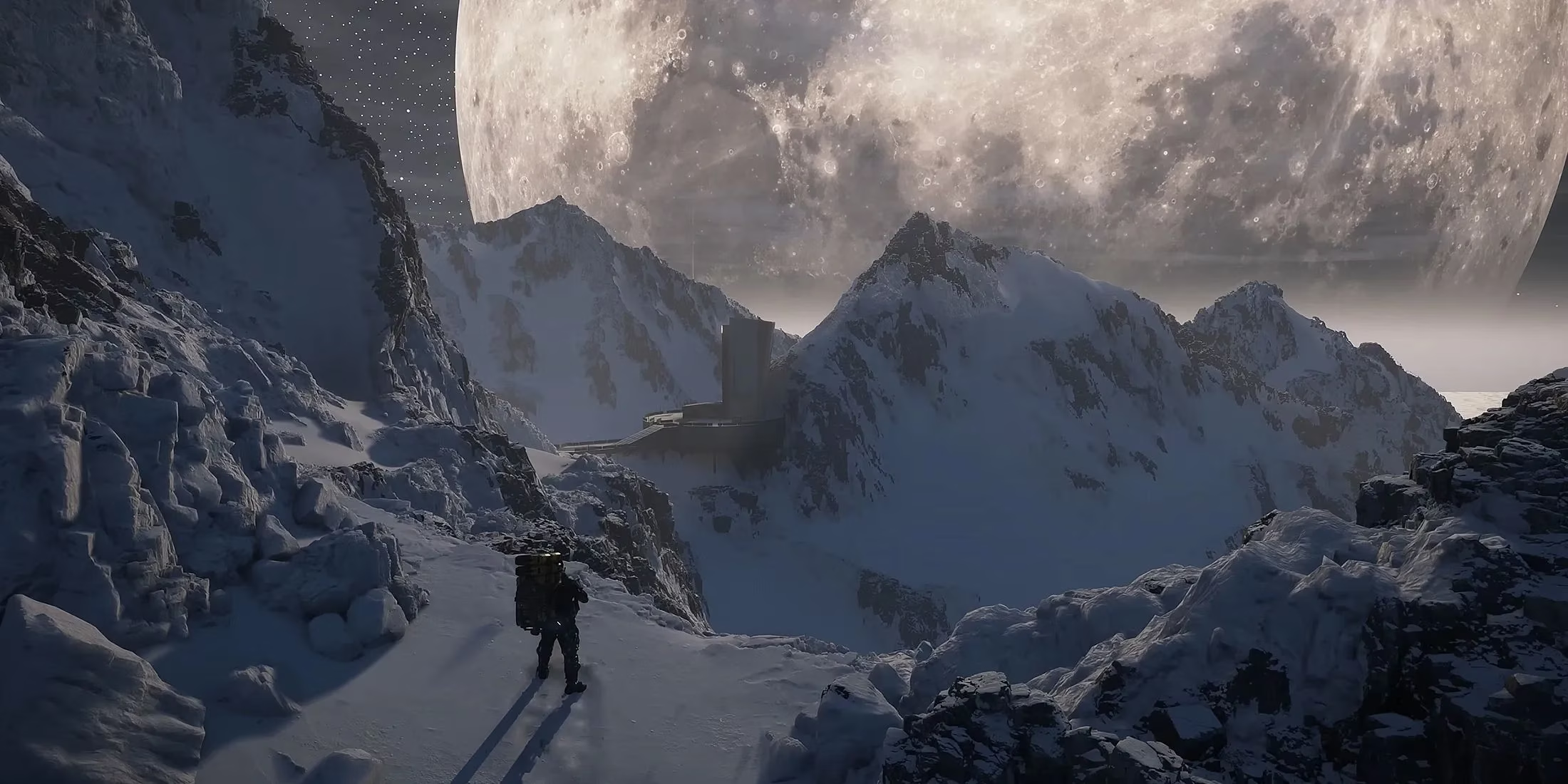
The world itself seems to reflect the internal struggle—vast, beautiful, and hauntingly lonely.
A World Reflecting the Inner Storm
The glimpses of gameplay and world-building suggest that the external challenges will once again mirror the internal ones. We see new tools, strange environments, and familiar yet evolved gameplay mechanics. But now, every precarious climb, every tense encounter with the supernatural, feels like an externalization of Sam's emotional state. The Beaches, the Timefall, the BTs—they are no longer just obstacles in a logistical nightmare; they are manifestations of grief, memory, and the cost of connection. Carrying a package was a metaphor; carrying the weight of these relationships feels like the core reality.
Preparing for the Pilgrimage
As a player who has walked these lonely roads before, I am preparing not just my thumbs for controller inputs, but my heart for an impact. Death Stranding 2: On the Beach is shaping up to be an experience that is both deeply personal and universally gripping. Consider what the trailer sets up:
| Element | Emotional Impact |
|---|---|
| Focus on Relationships | Transforms the narrative from epic to intimate, raising personal stakes. |
| Themes of Loss & Resilience | Promises a story that is psychologically raw and cathartic. |
| Woodkid's Soundtrack | Provides an auditory anchor that deepens every moment of sorrow and hope. |
| Sam's Fatherly Love | Creates a visceral, relatable core that many players will feel in their bones. |
This isn't a game you simply play and finish. This is a story you absorb, a feeling you carry. It is a chiralgram of the human condition, a fragile, holographic memory of love and loss that will continue to shimmer in the mind's eye long after the console powers down. The credits will roll, but the echoes of Sam's journey—of our journey with him—will linger like the final, resonant note of a piano in an empty room. We are not just awaiting a sequel; we are awaiting a reckoning.