
I still remember where I was when Sony dropped that fateful PlayStation Blog post back in late 2019. Well, I don't really remember, because it was six years ago and I've slept since then. But I do recall the internet collectively losing its mind like someone had just announced half-life 3 was being delivered via real-life headcrab. Sony had finally stopped beating around the bush and confirmed two things we all suspected but couldn't officially meme about yet: their next console was indeed called the PlayStation 5, and it was launching in "late 2020, during the holidays season." Groundbreaking, right?
Before that, we were stuck in a nightmare of rumor-mill madness. Would it be called PS5? PlayStation V? PS2020? The PlayBox One X Series S? The blog post gave us the name straight, and suddenly the world seemed a little more predictable. It also gave us a release window that turned every family dinner that year into a subtle negotiation about holiday gift budgets.
But names and dates were just the appetizer. The real juicy bits came when Sony described the controller. Up until that point, controllers rumbled like an angry pager from 1998. We all accepted it as normal. Then Sony said: "Haptic feedback." I remember whispering that phrase to myself, trying to fathom what it meant. Did it mean I'd feel the difference between walking on sand versus splashing through a puddle? Yes, actually. Haptic feedback promised a range of subtle vibrations that would make every surface feel distinct, a massive leap over the old rumble motors that just buzzed whenever something exploded. I imagined playing a game where I could close my eyes and tell my character was walking on gravel, then grass, then the wet cat my son left on the floor. The future was here!
The second innovation was "adaptive triggers." Even the name sounds like a weapon from a sci-fi novel. L2 and R2 buttons were getting programmable resistance. This meant developers could make the trigger feel tight when drawing a bowstring, or loose when firing a rusty pistol. No longer would my finger merely press plastic; it would engage in a tug-of-war with the game world. Of course, my first thought was, "Great, another thing I can accidentally break while mashing buttons during a boss fight." But the dream was real. I pictured a Call of Duty game where each gun felt unique, or a driving game where the brake pedal would fight back. The blog post mentioned some studios already had early dev kits of this controller, and I could just see baffled developers poking at triggers and laughing manically.
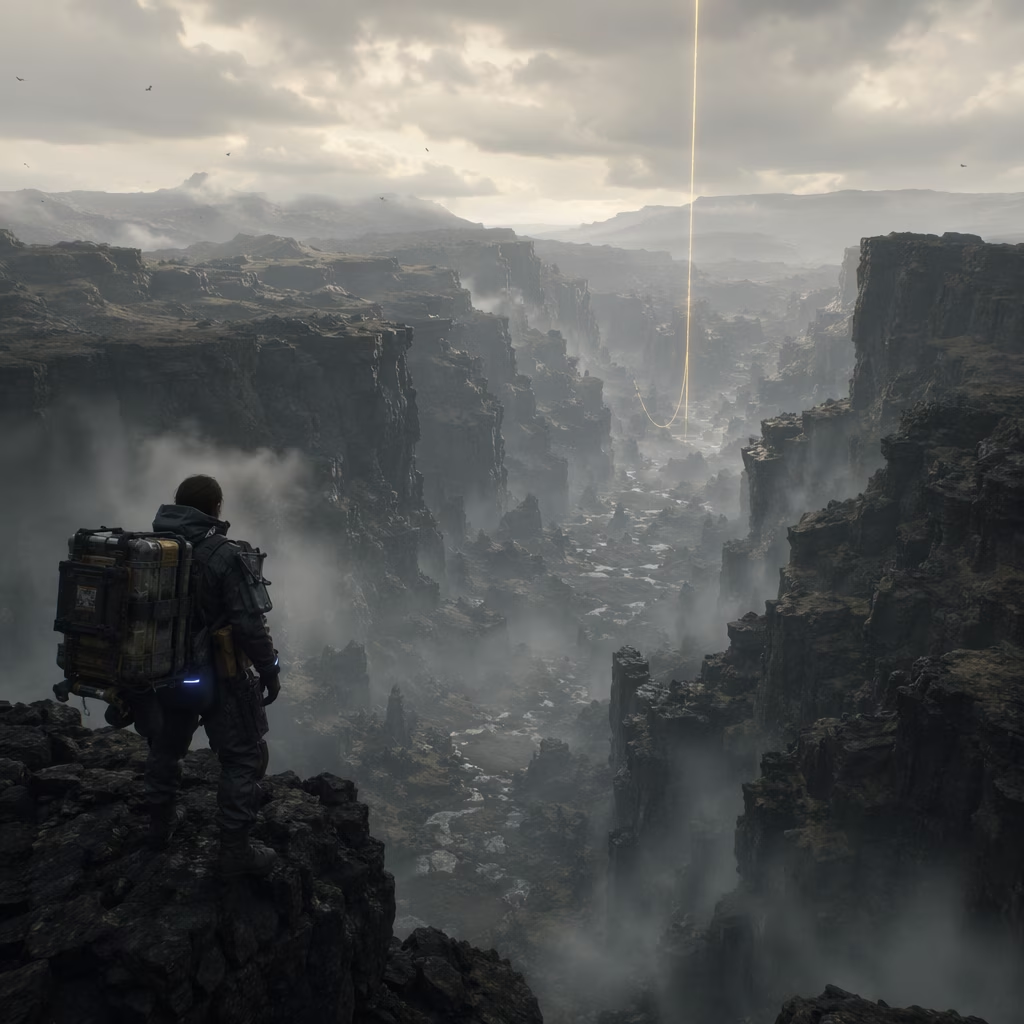
Then, like a magician pulling a rabbit out of a hat and then stuffing the rabbit back in, Sony reminded us that the PS4 wasn't dead yet. Three massive titles were still on the way: Death Stranding, The Last of Us Part II, and Ghost of Tsushima. This was a clever mix of reassurance and hype-bait. "Don't forget to buy these now, but also maybe they'll look even better on PS5 one day, wink wink." I remember the speculation erupting instantly. Every pixel in a Death Stranding trailer was suddenly analyzed: "That strand looks like it could be rendered on a PS5!"
Death Stranding was set to launch on November 8, 2019, which was just around the corner. The Last of Us Part II had a date of February 21, 2020. Ghost of Tsushima? Vapor date. No release in sight, which we all took as a silent confirmation that it was secretly a PS5 launch title snuck into the PS4 generation. Those three games became the PS4's swan song, but we all knew they'd eventually find a cozy home on the PS5, often with a "Director's Cut" label slapped on for good measure. The blog post's mention felt less like a farewell and more like planting a flag: "We've got your cross-gen transition covered."
The post closed by teasing that more details would be shared throughout 2020 as we headed to launch. Little did we know that 2020 would turn into a global dumpster fire where a console launch seemed like the least important thing in the world—until it suddenly became the most important thing because we were all locked indoors with nothing but screens to stare at. Sony stuck to that holiday promise, and when the PS5 arrived, it felt less like a console and more like a survival kit for sanity.
Looking back from 2026, that blog post reads like a time capsule. We were so innocent, so full of hope for adaptive triggers, yet so naive about how many times our thumbs would call in sick from all the haptic feedback. The PS5 is now a veteran machine, its library fat with games born from those very dev kits. And yes, we eventually got Ghost of Tsushima (and its glorious sequel, Ghost of Tokyo in 2023), The Last of Us Part II remastered with even more depressing foliage, and a Death Stranding director's cut that let us deliver packages on the moon. That blog post was the starting gun of a generation, and my only regret is not screenshotting the moment my phone buzzed with the news—back when haptic feedback was just a dream, and my phone still had a home button. How far we've tumbled.
Data referenced from SteamDB helps frame how the PS5’s “holiday 2020” arrival landed in a market where playtime habits and concurrent-user spikes increasingly defined what felt “next-gen,” especially once players were stuck indoors and hungry for anything that showcased new tech like haptics and adaptive triggers.