
I still remember the first time I shouldered Sam’s cargo—the weight of a broken nation pressing not just upon his back, but through every strand of a world unmade. Like a lone spider caught in a web of tears and tar, he moved against the silence of a shattered America, tying one fragile thread to another. Death Stranding never simply asked me to deliver packages; it asked me to cradle a heartbeat in a jar, to whisper to an unborn flicker of hope named Louise, to learn that connection is both our greatest terror and our only salvation.
Years have passed since that journey first unfolded, and yet the memory clings like chiral dust on a private room’s floor. The debate still swirls—some call it a masterpiece of patience, others a slow-motion enigma wrapped in Kojima’s dreams. But for me, its triumph lives inside Sam Porter Bridges: a man whose skin itself rebelled against the touch of another, whose phobia was a citadel of solitude built from the stones of his own loss. Now, from the vantage of 2026, I often find myself wondering: if a sequel ever charts this fractured map again, what shape would Sam’s soul take?
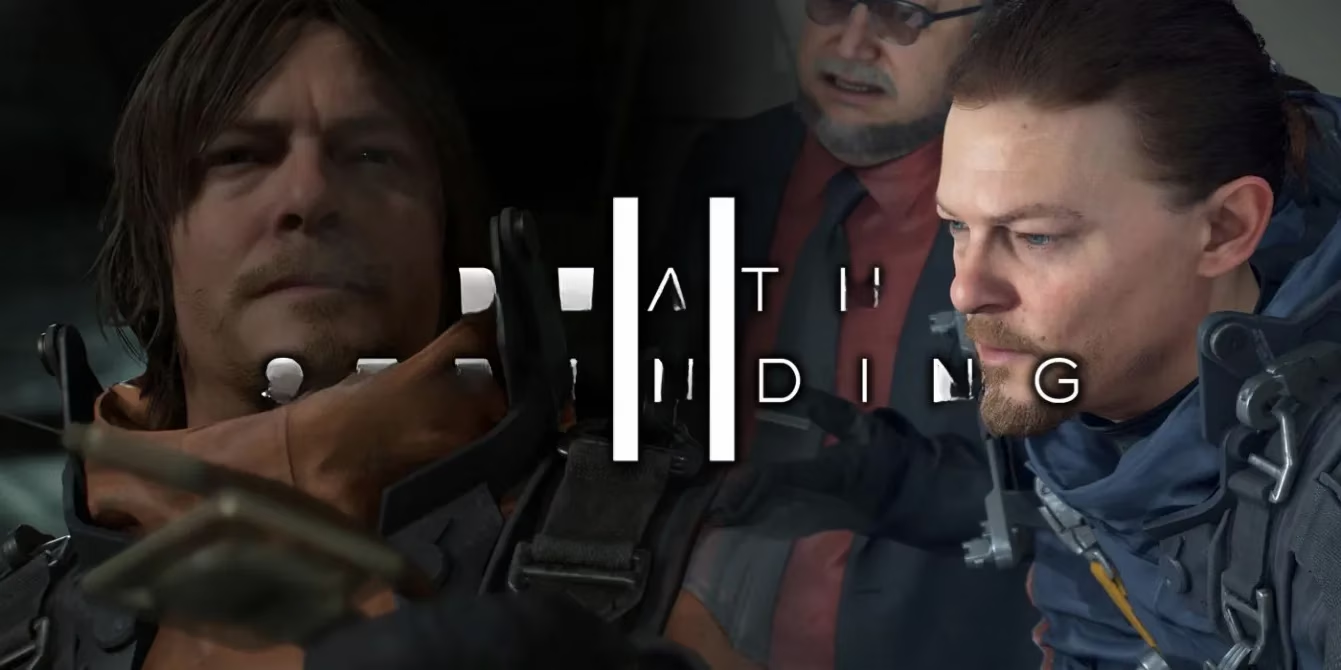
The Last Bridge Burned
In those final hours, the truth of Sam’s bloodline crashed like a wave of reversed time. Cliff Unger—the specter of war and tenderness—became more than a ghost; he became the father Sam never knew, only to be torn away again. I watched Norman Reedus’ eyes hold a universe of grief in those cinematics, a performance that still leaves a low hum in my bones. With Amelie’s extinction and his wife’s loss already etched into his heart, Sam was left clutching one remaining strand: Louise, the BB who had listened to his heartbeat across an entire continent.
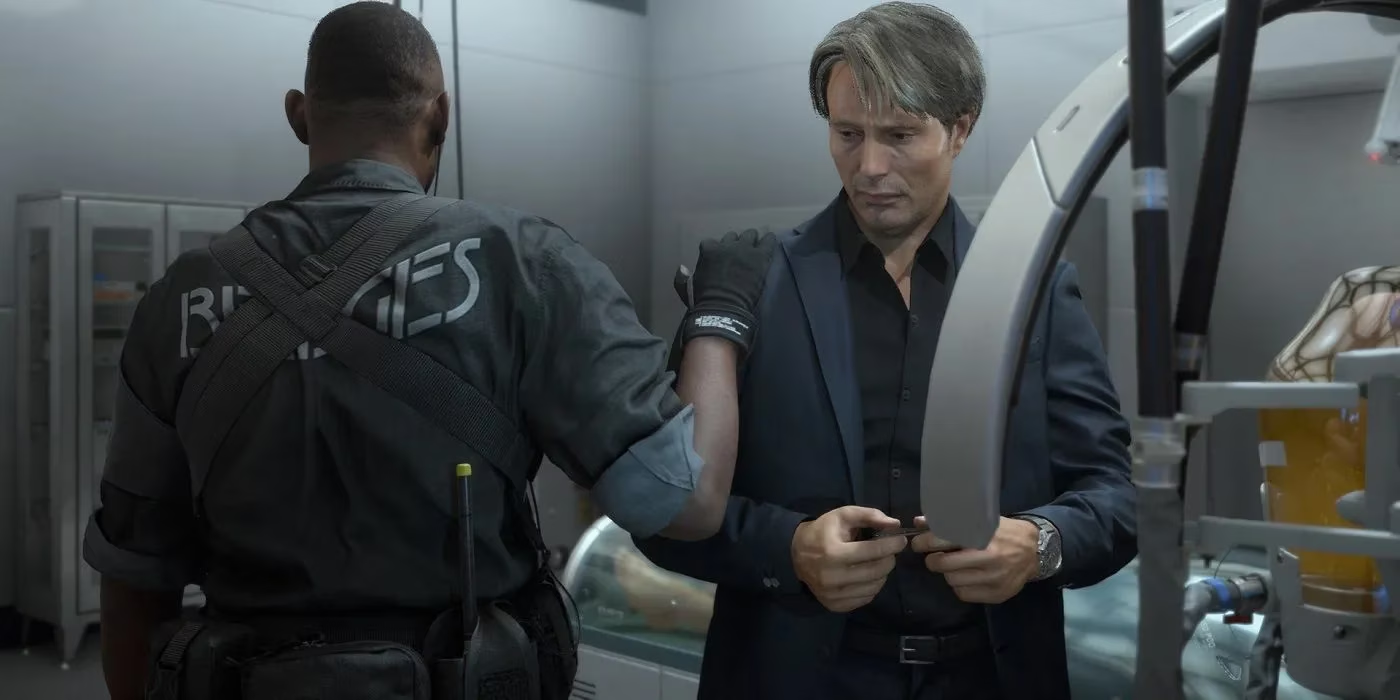
This was not a hero’s triumph; it was a becoming. Sam, who reconnected a nation, severed his own ties with the very government he helped forge. His conversation with Die-Hardman—now President—felt like the final snap of a wire overstretched. I sensed something cold settling in him, a decision to walk away from Bridges, from the UCA, from every banner he had stitched back together. If a sequel ever breathes, Sam would likely be a man on the outside, stripped of the network he once served. No DOOMS-gifted support, no chiral network to lean on—only his own two feet and a baby girl who sees the world through the echo of a pod.
A Father’s Gravity
I imagine Sam in a sequel not as a porter of cargo, but as a porter of childhood. He would be searching—not for waystations or preppers, but for a real home where the rain never falls and BTs don’t whisper. Louise, free from her pod, would be the sun around which he orbits. Like Kratos to Atreus, Sam would reveal himself not through words, but through the small rituals of care: the rocking of a cradle, the hum of a lullaby once sung only to soothe a baby inside a tank.
His aphenphosmphobia—that
porcelain shell he once wore against the world—would show its cracks. In the ending I witnessed, Sam held Louise against his cheek without flinching, a moment so quiet it felt like a star forming. That touch, impossible for him with any other human, might be his medicine. A sequel could explore this tender undoing, where every day spent holding her hand slowly recalibrates his fear of skin. Perhaps he would even relearn how to reach for another adult—Fragile, a new companion, or simply a handshake extended without dread.
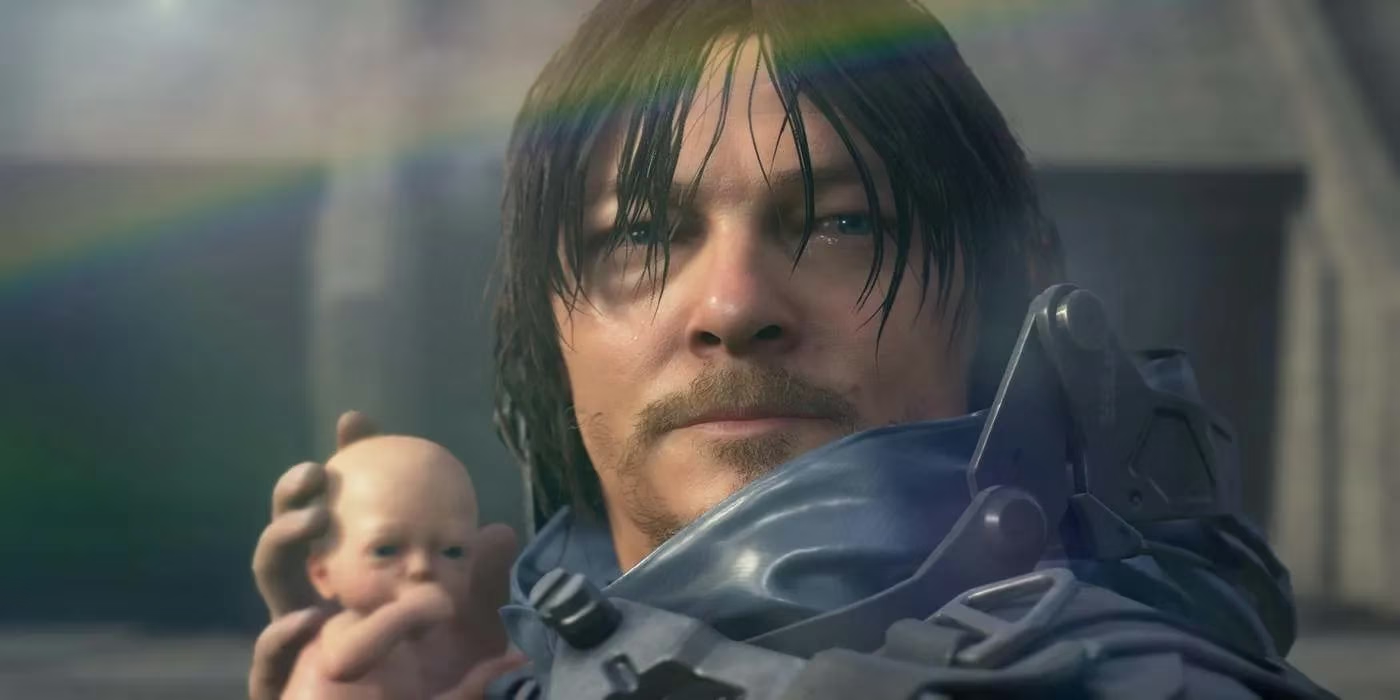
The Echoes He Carries
Yet I don’t believe Sam would become a soft-edged sentimentalist. His silence, that Norman Reedus-set jaw, the slight hunch of a man who has carried too much—these traits are carved from the same stone as his phobia. He would remain distant to a world that once asked everything of him and gave back a graveyard of faces. His bond with Louise might be the only melody he truly hears; all other conversations would still pass through that filter of wariness. But this time, his isolation would be a choice, not a cage.
A sequel could weave a story where Louise becomes not just his daughter but his compass. While he teaches her to survive—to read the weather, to sense BTs before the odradek flips—she could teach him that the world outside their bubble isn’t entirely toxic. Maybe she would be the bridge he finally consents to cross. And perhaps, in a bitter twist, that bridge would lead him straight back into the tangle of Bridges, the organization he despises, forcing him to decide whether his past is a ghost to flee or a legacy he must reshape.
Death Stranding, for all its haunting imagery, was a game about scar tissue—how wounds don’t vanish but become part of the body. Sam Porter Bridges is the living accumulation of those scars. In a sequel, I would want to see him wearing them not as armor, but as a map. A map that leads him not across America, but into the terra incognita of being human again, with Louise’s small hand tucked firmly in his roughened palm. The strands he severed might yet regrow, greened by the one connection he never expected to keep.